
First-year baby costs typically run $12,000-15,000 at a minimal level and $30,000-35,000 with full-time daycare, which alone averages around $17,000 a year. The biggest swing factors are childcare, medical delivery costs, and one-time gear, and most of these are predictable enough to save for in advance.
First-year baby costs run $12,000-15,000 even at a minimal level, and full-time daycare adds around $17,000 a year on top of that. The spread is wide enough that it is worth mapping the numbers well before the due date.
The Monthly Budget Template helps you track baby expenses alongside your regular budget.
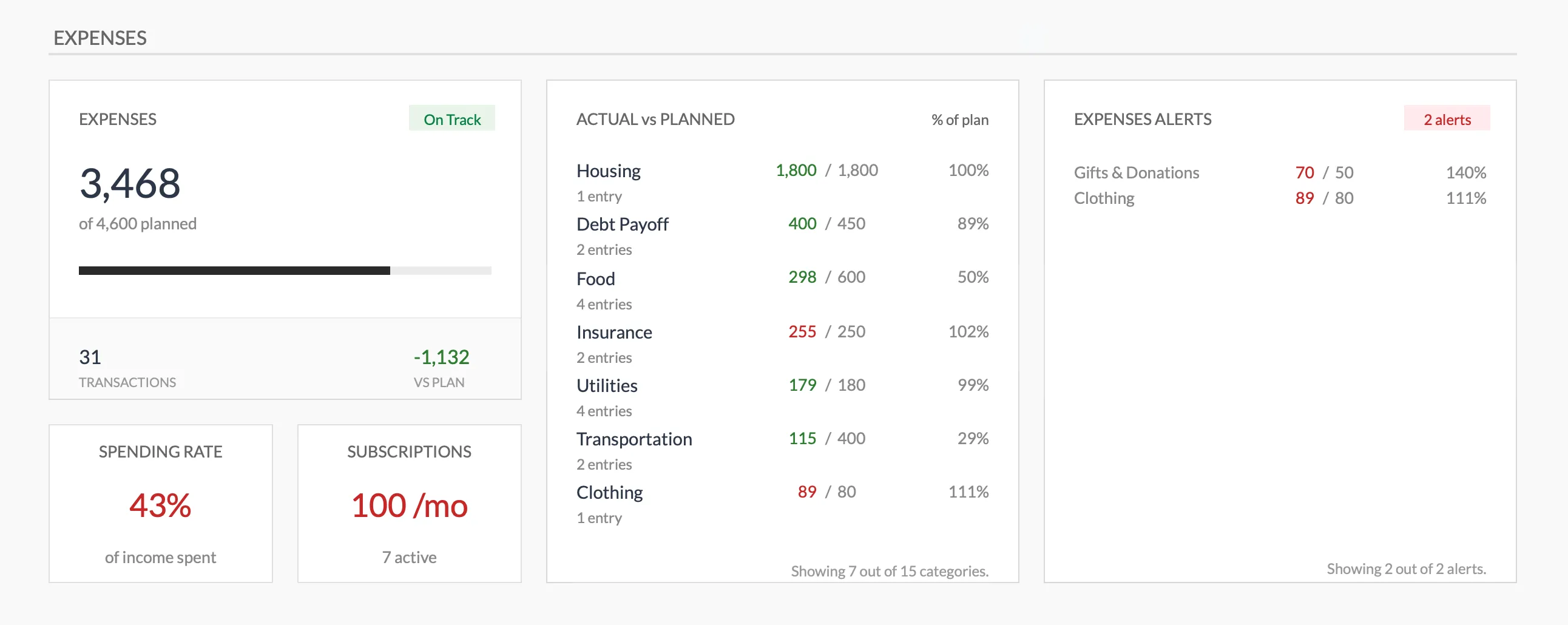
The Monthly Budget Template (Premium tier) tracks each category against a plan, so the Children line it ships with, or a jump in the Food total, shows up against everything else you spend.
The Big Picture
The financial impact of a new baby varies dramatically based on your choices and circumstances. First-year costs can range from $12,000-15,000 at a minimal level to $30,000-35,000 if you need full-time childcare. Location, childcare arrangements, and purchasing decisions all factor in. The Financial Planning Template works at a longer range: its Projection tab carries assets, debt and net worth out to a chosen end year from monthly income and expenses assumptions, so a lower income figure or a higher expenses figure changes the long-run picture. A baby is one of the bigger major life changes a budget goes through, and the buffer-first, rebuild-the-budget pattern is the same one those transitions share.
Understanding the range helps you plan realistically rather than being blindsided by costs.
Pre-Birth Costs
Medical expenses represent the first major cost. With insurance, expect prenatal care co-pays of $500-1,500 and delivery out-of-pocket costs averaging $2,000-3,500, for a total of roughly $2,500-5,000. Without insurance, costs are dramatically higher - prenatal care runs $2,000-4,000, uncomplicated delivery $15,000-20,000+, and C-sections $25,000-35,000+.
Worth checking your policy for deductible requirements, out-of-pocket maximum, in-network versus out-of-network costs, and hospital stay coverage length. Understanding your coverage before delivery helps avoid surprises.
One-Time Baby Gear Costs
Baby gear adds up quickly, but there’s a wide range between essentials and nice-to-haves. Total essential gear runs $1,200-2,500+ depending on your choices.
| Item | Budget Range | Notes | |------|--------------|-------| | Car seat | $100-350 | Required; buy new for safety | | Crib | $150-400 | Can buy used with safety check | | Crib mattress | $50-150 | Buy new | | Stroller | $100-500 | Many options; consider lifestyle | | Baby carrier | $30-180 | Multiple types available | | Bassinet | $50-200 | Optional; baby can sleep in crib | | High chair | $50-200 | Needed around 6 months | | Changing table | $80-250 | Dresser with pad works too |
Items worth skipping or minimizing include wipe warmers, diaper disposal systems, designer nursery items, multiple stroller types at first, and expensive baby clothes (they grow fast). Accept hand-me-downs except car seats, shop secondhand for clothes, skip the themed nursery, buy bundle deals for essentials, and wait until after the baby shower to fill gaps.
Monthly Baby Expenses
Ongoing monthly costs add up significantly. For diapers, disposables cost $70-100/month ($840-1,200/year) - newborns use 8-12 diapers daily, averaging 2,500-3,000 diapers in year one. Cloth diapers require $200-500 initial investment but ongoing costs drop to $30-50/month for water and detergent, which puts the first year at $560-1,100 against $840-1,200 for disposables. The gap runs from cloth costing a little more to saving a few hundred dollars, depending on which end of each range you land on.
Formula feeding runs $150-300/month for standard formula ($1,800-3,600 annually), with specialty formulas costing more. Breastfeeding has lower ongoing costs, mainly a pump ($0-300, often covered by insurance) and supplies ($100-200), though it requires significant time.
Other monthly costs include wipes ($15-25), baby toiletries ($15-30), clothing replacement ($25-50), medical co-pays ($20-50), and baby food after 6 months ($50-100).
The Childcare Question
Childcare is typically the largest baby-related expense. This single decision can more than double your first-year costs or remove a major expense category entirely. Regional variation is wide, so national averages are a starting point rather than a quote for your area. The 2026 Cost of Care Report from Care.com, based on 3,000 parents surveyed in November 2025, puts the weekly averages here:
| Type | Weekly Average | Annual | |------|----------------|--------| | Daycare center | $332 | $17,264 | | Family care center (in-home) | $323 | $16,796 | | Nanny, one child | $870 | $45,240 |
Options include daycare centers (structured environment), family care centers or in-home daycare (smaller setting, priced close to centers on the national average), nannies (one-on-one care, the highest of the three), nanny shares (splitting one nanny’s cost with another family), family care if available, or a parent staying home (lost income but no childcare bill).
Tax Benefits for Parents
Several tax benefits help offset baby costs. The Child Tax Credit is worth up to $2,200 per qualifying child under 17. A Dependent Care FSA lets an employee exclude up to $7,500 in 2026 for childcare expenses ($3,750 if married filing separately), which reduces taxable income. The Child and Dependent Care Credit is worth a percentage of childcare expenses on up to $3,000 for one qualifying individual, or $6,000 for two or more, with the percentage set by adjusted gross income (20% to 35% on 2025 returns).
Before baby arrives, some parents adjust W-4 withholding. Worth considering whether increasing retirement contributions makes sense (lowers AGI), whether FSA contributions fit your situation, and how your tax bracket might change with the new dependent.
Income Changes to Consider
Baby arrival often affects income as well as expenses. Potential lost income includes unpaid parental leave (if not fully covered by employer), reduced hours after returning to work, and one parent staying home. Some employers offer bonuses or paid leave, and tax credits reduce tax liability.
If you won’t receive full pay during leave, one approach is to estimate the income gap, save that amount in advance, and plan for a reduced income period. Having the cash set aside prevents the financial stress from adding to new parent stress.
Building Your Baby Budget
Start by calculating one-time costs - list all gear needed and estimate totals. Then estimate monthly expenses by adding up diapers, formula or food, supplies, medical costs, and childcare. Account for any lost income during leave.
Having 3+ months of baby expenses saved provides cushion for the transition, on top of your regular emergency fund. One approach is creating a baby sinking fund, saving monthly before arrival. If you’re 6 months to due date and need $5,000, that’s about $833/month. At 9 months out, it’s roughly $556/month. The earlier you start, the more manageable each monthly contribution.
Where to Cut Baby Costs
High impact savings opportunities include family childcare versus daycare center (if available), breastfeeding versus formula (if possible), secondhand clothes and gear, and minimal nursery setup. These choices can save thousands of dollars.
Moderate savings come from generic diapers versus name brand, making baby food versus buying jars, and borrowing rarely-used items like baby swings. Money traps to avoid include complete nursery sets, buying every size of clothes before they’re needed, premium versions of basic items, and overbuying before knowing what you’ll actually use.
Related
- Financial Planning Template - Long-range projection of assets, debt and net worth
- Annual Budget Template - First year planning
- Monthly Budget Template - Track baby expenses
- Emergency Fund Calculator
- Sinking Funds Explained
- When to Recalculate Emergency Fund
- Family Budget Meeting: How to Get Everyone On Board - Getting both partners aligned on the new numbers
A new baby changes your budget significantly. The key is realistic planning - know the costs, build savings in advance, and adjust your budget as you learn what your family actually needs. Every baby is different, and your actual costs will become clear in the first few months.
Frequently asked questions
How much should we have saved before baby?
Beyond a regular emergency fund, many parents set aside $3,000-5,000 for baby-specific costs such as delivery out-of-pocket, gear, and the first months of supplies. The right cushion depends on your insurance deductible and whether leave is paid.
When should we start buying baby items?
After the 20-week anatomy scan is common. Many families hold off on the full list until after showers to see what they receive before filling the gaps.
Is the first year really the most expensive?
It depends on childcare. Medical costs and one-time gear purchases are highest in year one, but childcare costs continue and often increase until school age.
Should one parent stay home?
It's a personal and financial calculation. The comparison is childcare costs against the lost income, alongside non-financial factors like career impact and time at home.
Are breast pumps covered by insurance?
Many health plans cover a breast pump at little or no cost, though the type covered and timing vary. Worth checking your specific policy's benefits before buying one outright.
Which baby items should be bought new versus used?
Car seats and crib mattresses are generally bought new for safety reasons. Cribs (with a safety check), clothes, and many other items are commonly bought secondhand or accepted as hand-me-downs.
Sources
- Child Tax Credit - Internal Revenue Service
- Publication 503, Child and Dependent Care Expenses - Internal Revenue Service
- Topic no. 602, Child and Dependent Care Credit - Internal Revenue Service
- Publication 15-B, Employer's Tax Guide to Fringe Benefits (2026) - Internal Revenue Service
- How Much Does Child Care Cost? 2026 Cost of Care Report - Care.com
About this article
Child Tax Credit, Dependent Care FSA, and Child and Dependent Care Credit figures verified against IRS.gov on 2026-09-10 (Publication 503, Publication 15-B for 2026, Topic no. 602, and the Child Tax Credit page). Childcare averages taken from the Care.com 2026 Cost of Care Report, based on 3,000 parents surveyed in November 2025, checked on 2026-09-10. Template sheets, inputs and outputs checked on 2026-09-10 against the shipped Monthly Budgeting Google Sheet (Summary, Budget Plan, Categories, Goals tabs) and the Financial Planning Google Sheet (Goals, Cashflow, Projection tabs). Cost ranges are planning estimates that vary by insurance, region, and choices; not quotes for any specific family. Last reviewed September 2026.