Michigan
Plantilla de planificación fiscal para Michigan
Planifica tus impuestos federales y estatales de Michigan en Google Sheets. Michigan utiliza una tasa fiscal plana con algunos impuestos sobre la renta a nivel municipal.
In Depth
Las Reglas de Año de Nacimiento de Michigan y los Impuestos Municipales
Michigan utiliza un impuesto estatal sobre la renta plano del 4.25% y, durante años, su característica más distintiva fue un conjunto de niveles de ingresos de jubilación basados en el año de nacimiento. Una implementación gradual que comenzó en 2023 terminó con el año fiscal 2026, así que los jubilados de cualquier año de nacimiento ahora comparten un único límite ajustado por inflación sobre los ingresos de jubilación y pensión que pueden restar. Los residentes nacidos antes de 1946 conservan una sustracción ilimitada para las pensiones públicas, que es el principal ámbito donde el año de nacimiento todavía cambia el resultado.
Alrededor de dos docenas de ciudades de Michigan imponen sus propios impuestos sobre la renta, separados del impuesto estatal. Detroit tiene la tasa de impuesto sobre la renta municipal más alta, y se aplica tanto a residentes como a no residentes que trabajan en la ciudad (a una tasa más baja para no residentes). Grand Rapids, Lansing, Flint y varias otras ciudades también gravan impuestos sobre la renta local. Para los residentes de estas ciudades, la tasa combinada estado-más-ciudad es notablemente más alta que la tasa estatal únicamente.
El Crédito de Impuesto Predial Homestead es una característica notable del sistema fiscal de Michigan. Se reclama en la declaración de impuesto sobre la renta estatal y proporciona alivio cuando los impuestos sobre la propiedad exceden un porcentaje de los ingresos del hogar. Los inquilinos también pueden calificar, ya que una parte del alquiler se considera que representa impuestos sobre la propiedad. Este crédito es reembolsable, lo que significa que puede generar un reembolso incluso si no debe impuesto estatal sobre la renta.
Michigan
Planificación Fiscal en Michigan
Michigan tiene un impuesto estatal sobre la renta plano con impuestos sobre la renta municipal adicionales en algunos municipios. Detroit y varias otras ciudades gravan su propio impuesto sobre la renta además de la tasa estatal.
Impuesto sobre la Renta Plano
Michigan tiene una tasa de impuesto sobre la renta plana que se aplica a todos los ingresos gravables, haciendo que los cálculos de impuestos estatales sean sencillos.
Impuestos Municipales sobre la Renta
Algunas ciudades de Michigan gravan sus propios impuestos sobre la renta, con Detroit teniendo la tasa local más alta. Alrededor de dos docenas de ciudades en Michigan imponen impuestos sobre la renta local, con diferentes tasas para residentes y no residentes que trabajan allí.
Ingresos de Jubilación
Michigan eliminó gradualmente sus niveles de jubilación por año de nacimiento entre 2023 y 2026. Para el año fiscal 2026, los jubilados de cualquier año de nacimiento pueden restar los ingresos de jubilación y pensión hasta un único límite ajustado por inflación, mientras que los residentes nacidos antes de 1946 conservan una sustracción ilimitada para las pensiones públicas.
Crédito de Impuesto Predial Homestead
Michigan ofrece un Crédito de Impuesto Predial Homestead para residentes elegibles cuyos impuestos sobre la propiedad son altos en relación con sus ingresos. Esto se reclama en la declaración de impuesto sobre la renta estatal.
Obtener el Planificador Fiscal Anual
Primeros Pasos
Configurando el Planificador Fiscal para Michigan
Anota tu límite de deducción por jubilación
Si recibes ingresos de jubilación, el año fiscal 2026 es el primero en el que todos los años de nacimiento comparten un mismo límite sobre los ingresos de pensión y jubilación que pueden restarse. Los residentes nacidos antes de 1946 todavía tienen una sustracción ilimitada para las pensiones públicas, y quienes nacieron después de 1952 pueden optar en su lugar por la deducción estándar para personas mayores de 67 años. Anota en la plantilla qué opción te corresponde para que tus proyecciones de ingresos de jubilación reflejen el tratamiento estatal correcto.
Verifica si tu ciudad grava un impuesto sobre la renta local
Si vives o trabajas en Detroit, Grand Rapids, Lansing, Flint u otra ciudad de Michigan con impuesto sobre la renta local, registra la tasa aplicable. Los residentes pagan una tasa; los no residentes que trabajan en la ciudad pagan una más baja. La mayoría de las ciudades de Michigan no tienen impuesto sobre la renta local, por lo que muchos residentes solo lidian con la tasa estatal del 4.25% [1].
Rastrear impuestos sobre la propiedad para el Crédito Homestead
Ingresa tu monto de impuesto sobre la propiedad (o la porción del alquiler que califica) en la plantilla. El Crédito de Impuesto Predial Homestead de Michigan depende de tus ingresos del hogar en relación con los impuestos sobre la propiedad pagados. Rastrear ambas cifras durante todo el año ayuda a estimar si calificarás y por cuánto - el crédito es reembolsable, por lo que puede exceder tu impuesto estatal adeudado.
Separa el ingreso obtenido del ingreso de jubilación
La tasa plana de Michigan se aplica a la mayoría de los ingresos, pero los ingresos de jubilación pueden estar parcialmente exentos según el año de nacimiento, y los impuestos municipales generalmente se aplican solo a los ingresos obtenidos. Separar estas categorías en la plantilla te proporciona proyecciones precisas para cada capa fiscal - federal, estatal y municipal (si corresponde).
Revisa la proyección combinada de múltiples capas
Utiliza el panel para el seguimiento federal y la sección de notas para los cálculos fiscales estatales y municipales de Michigan. Para los residentes de Detroit, la tasa combinada estado-más-ciudad sobre los ingresos obtenidos es notablemente más alta que la tasa estatal únicamente, lo que hace que la imagen completa sea importante para monitorear durante todo el año.
Véalo en Acción
Cómo se ve el planificador fiscal
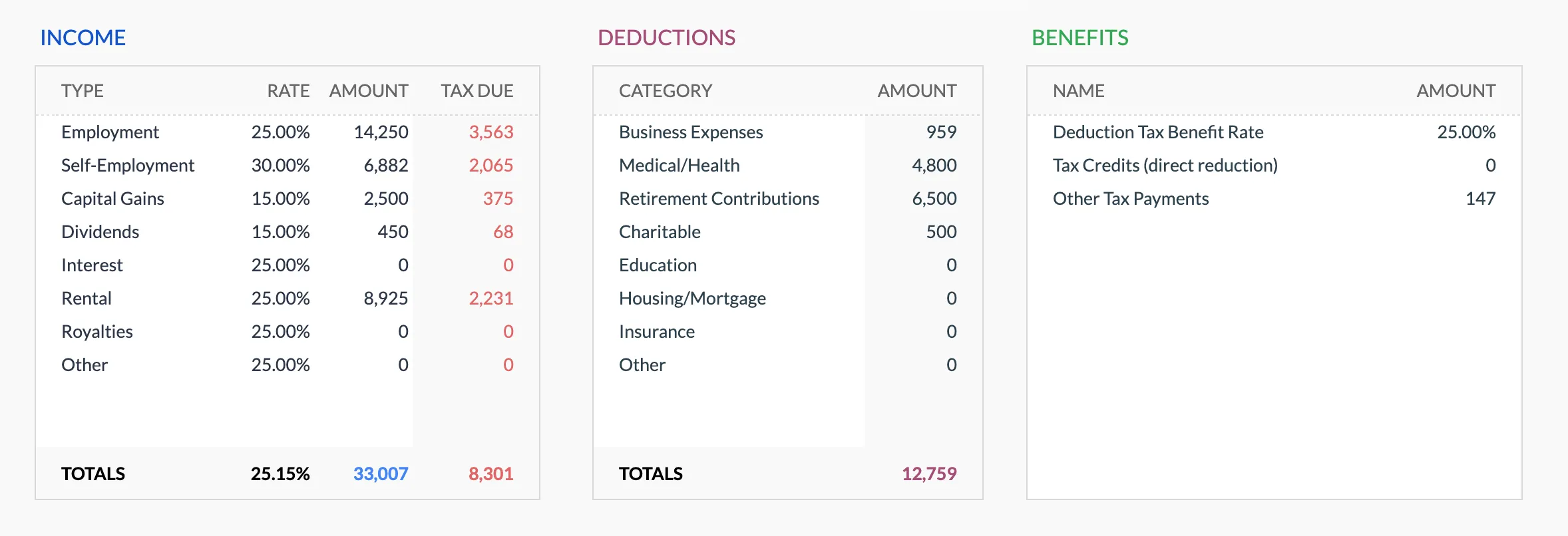
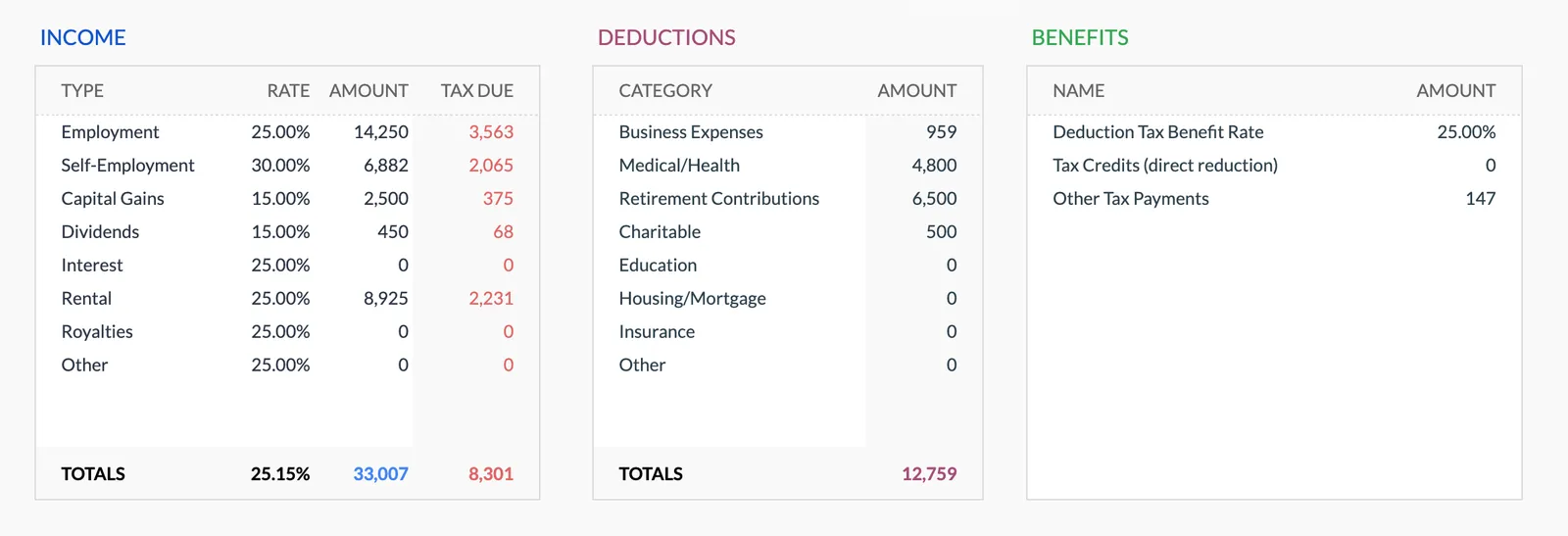
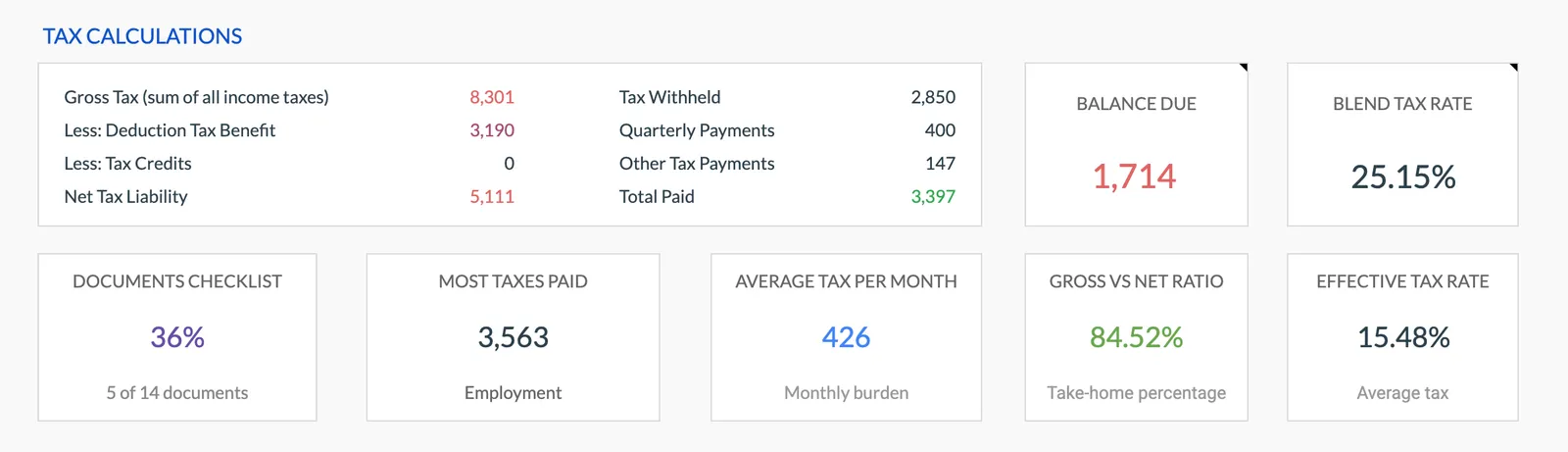
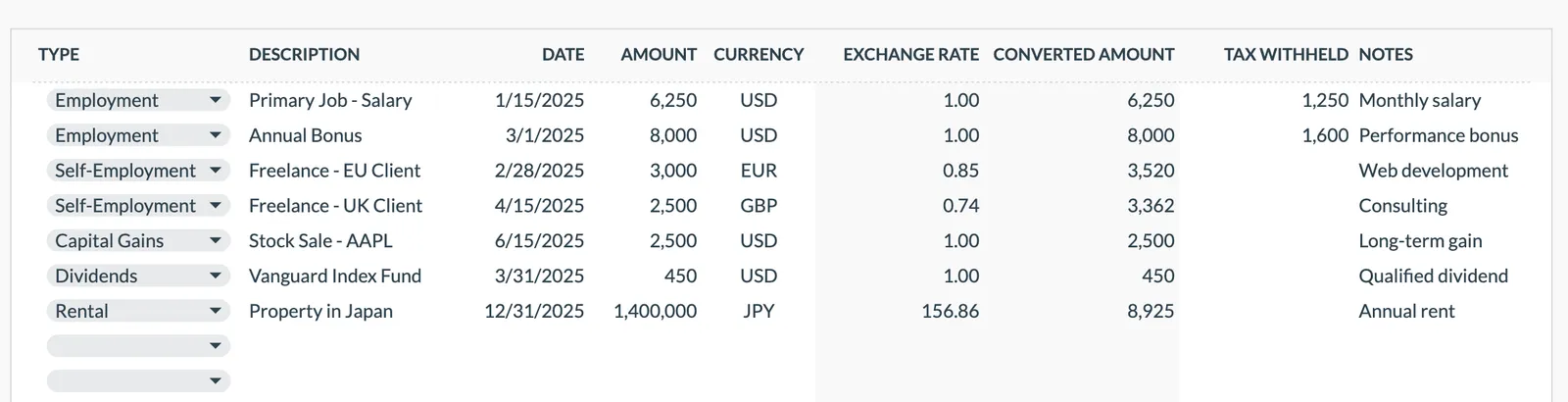
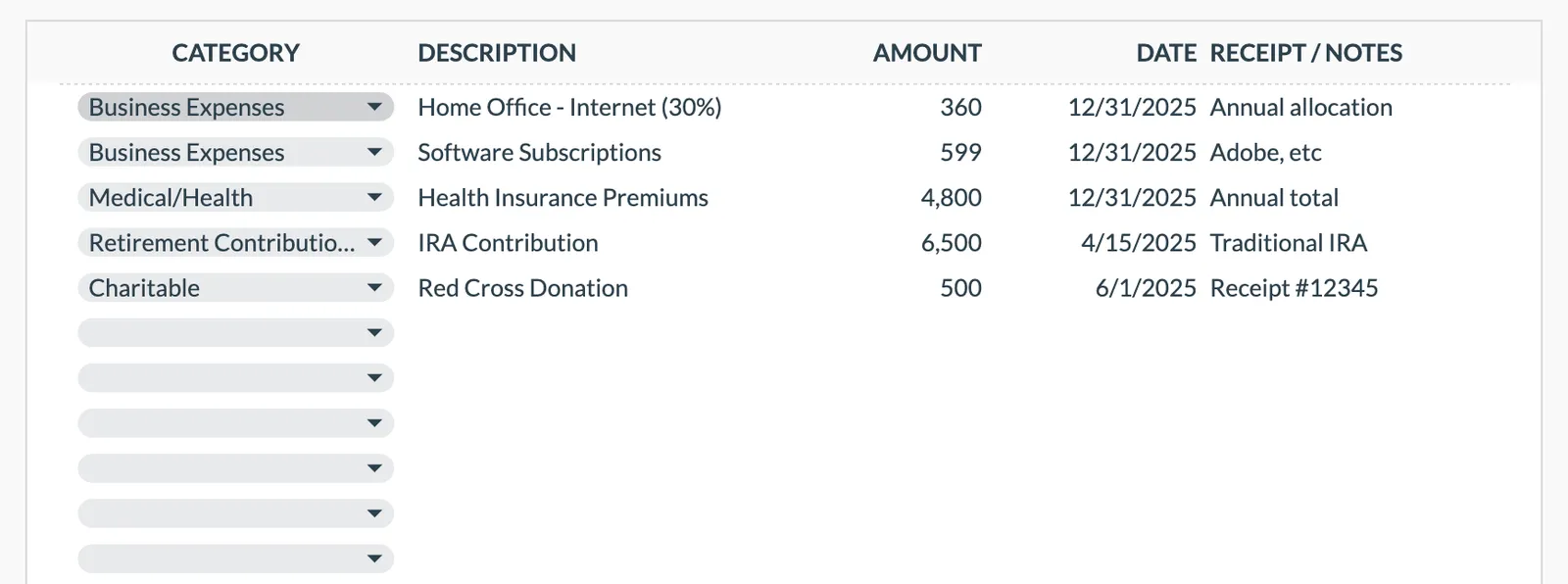
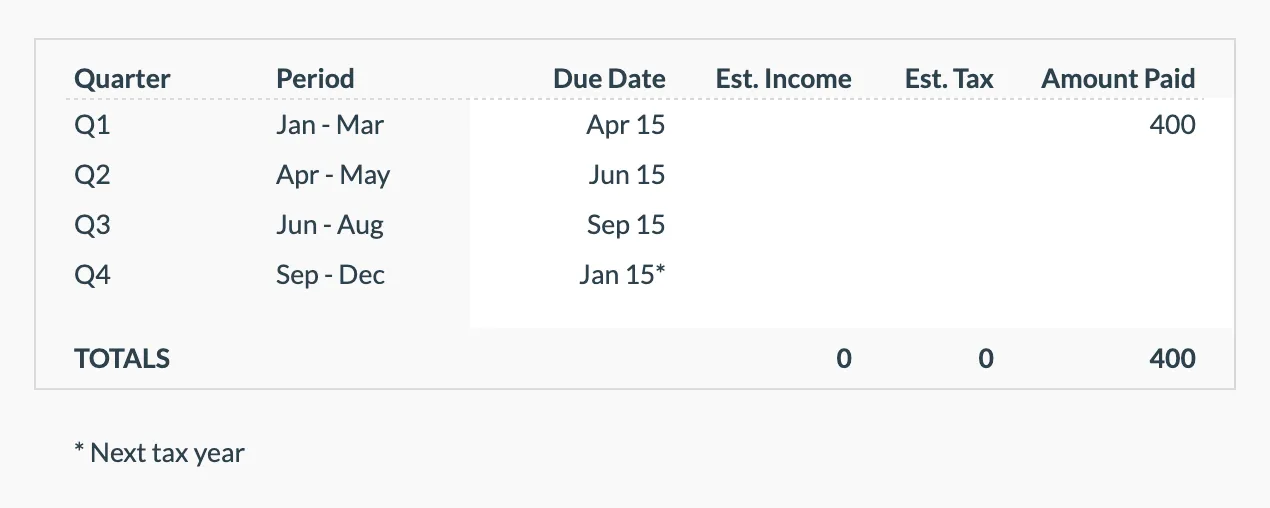
Explora la plantilla para ver cómo registra ingresos, deducciones, créditos y pagos trimestrales estimados.
- Panel de resumen fiscal anual
- Seguimiento de ingresos por fuente
- Organizador de deducciones y créditos
- Rastreador de pagos trimestrales
Annual tax overview with key figures
Detailed tax breakdown and projections
Track all income sources for tax purposes
Organize and track tax deductions
Plan and track quarterly estimated tax payments
Preguntas Frecuentes
Planificación fiscal en Michigan - Preguntas Frecuentes
¿Cómo afectan las reglas de año de nacimiento de Michigan los impuestos sobre ingresos de jubilación?
Los niveles por año de nacimiento de Michigan se eliminaron gradualmente a lo largo de cuatro años, y la implementación terminó con el año fiscal 2026. Para 2026, los jubilados de cualquier año de nacimiento pueden restar los ingresos de jubilación y pensión hasta un único límite ajustado por inflación, de aproximadamente $67,610 para declarantes solteros y $135,220 para declarantes conjuntos [1]. Los residentes nacidos antes de 1946 conservan una sustracción ilimitada para las pensiones públicas, y quienes nacieron después de 1952 todavía pueden optar en su lugar por la deducción estándar para personas mayores de 67 años. El año de nacimiento ahora afecta sobre todo qué opción se elige, más que si los ingresos de jubilación están exentos.
¿Qué ciudades de Michigan gravan su propio impuesto sobre la renta?
Alrededor de dos docenas de ciudades de Michigan imponen impuestos sobre la renta local. Detroit tiene la tasa más alta para residentes, con una tasa más baja para no residentes que trabajan allí. Grand Rapids, Lansing, Flint, Saginaw y varias otras ciudades también gravan impuestos sobre la renta local. Las tasas difieren según la ciudad, y los trabajadores no residentes pagan una tasa reducida en comparación con los residentes de la ciudad. La mayoría de los residentes de Michigan fuera de estas ciudades específicas pagan solo la tasa estatal del 4.25% [2].
¿Qué es el Crédito de Impuesto Predial Homestead?
Michigan ofrece un Crédito de Impuesto Predial Homestead para residentes cuyos impuestos sobre la propiedad son altos en relación con sus ingresos del hogar. El crédito se reclama en la declaración de impuesto sobre la renta estatal y es reembolsable - puede generar un reembolso incluso si no debe impuesto estatal sobre la renta. Los inquilinos también califican, ya que una parte del alquiler se trata como impuesto sobre la propiedad para fines de crédito. El crédito tiene límites de ingresos y se reduce gradualmente en niveles de ingresos del hogar más altos.
¿Se aplica la tasa del 4.25% a todos los tipos de ingresos?
La tasa plana del 4.25% se aplica a la mayoría de los tipos de ingresos gravables, incluidos salarios, ingresos de trabajo por cuenta propia e ingresos de inversión. Sin embargo, los ingresos de jubilación pueden estar parcial o totalmente exentos dependiendo de tu año de nacimiento. Los impuestos municipales, cuando corresponde, se suman a la tasa pero generalmente se aplican solo a los ingresos obtenidos. Las ganancias de capital se gravan a la misma tasa estatal del 4.25% que los ingresos ordinarios.
¿Cómo funciona la plantilla para alguien en Detroit o Grand Rapids?
La plantilla cubre la planificación fiscal federal de manera exhaustiva. Para los residentes de Michigan en una ciudad con impuesto sobre la renta local, utiliza la sección de notas para rastrear tres tasas: la tasa del tramo federal, la tasa estatal del 4.25% y tu tasa municipal. Dado que los impuestos municipales generalmente se aplican solo a los ingresos obtenidos, separar los ingresos obtenidos de los no obtenidos en tu seguimiento te permite estimar con precisión los tres niveles.
¿No encuentras la respuesta que buscas? Contacta a nuestro equipo
Recursos fiscales oficiales
Para tasas actuales, formularios y fechas límite de presentación específicos de Michigan:
Sources
Organiza tu planificación fiscal para Michigan
Compra única. Sin suscripción. Tus datos financieros se guardan en tu Google Drive.
Tax rules, rates, and contribution limits change, and official publications can themselves lag behind the law in force. We review these figures on a best-effort basis against sources we consider authoritative, but we cannot guarantee they are current, complete, or that better sources do not exist, and nothing here is tax, legal, or financial advice. For decisions, the relevant government authority is the reference. Last reviewed: August 2026.