Alabama
Tax Planner Template for Alabama
Organize your federal and Alabama state tax planning in one place. Track income, deductions, and estimated payments with a template built for Google Sheets.
In Depth
The Federal Tax Deduction Advantage in Alabama
Alabama stands out among US states for one notable reason - it is one of only a handful of states that allows residents to deduct federal income taxes paid from their state taxable income. This creates an interaction between federal and state taxes that most other states do not have, and it can meaningfully lower the effective state tax rate for many households.
The graduated income tax brackets in Alabama top out at relatively modest income levels, meaning most working adults hit the top marginal rate. However, because of the federal tax deduction, the actual bite is often smaller than the headline rate suggests. Residents with higher federal tax bills see a proportionally larger reduction on the state side.
On the property tax front, Alabama consistently ranks among the lowest in the nation. Effective rates on owner-occupied homes are well below the national median. Combined with the lack of state tax on Social Security benefits and broad exemptions for pension income, the overall tax environment is notably different from neighboring southeastern states like Georgia or North Carolina.
Alabama
Tax Planning in Alabama
Alabama has a graduated state income tax and allows a deduction for federal income taxes paid - a relatively uncommon feature among states. Planning for both levels of tax together can help residents stay organized.
Graduated Income Tax
Alabama uses a graduated income tax with multiple brackets. The top rate applies at relatively low income thresholds compared to many other states.
Federal Tax Deduction
Alabama is one of a few states that allows residents to deduct federal income taxes paid from their state taxable income. This can meaningfully reduce state tax liability.
Property Tax
Alabama has some of the lowest property tax rates in the country, well below the national average [2].
Retirement Income
Alabama does not tax Social Security benefits and provides favorable treatment for pension income. Most retirement income from defined benefit plans is exempt from state tax.
Get the Annual Tax Planner
Getting Started
Setting Up the Tax Planner for Alabama
Enter income and note your federal tax for the state deduction
Add all income sources - wages, self-employment, investments, and retirement distributions. Alabama is one of a few states that lets you deduct federal income taxes paid from your state taxable income, so tracking your federal liability alongside your income is especially useful here.
Account for local occupational taxes
Some Alabama cities levy occupational taxes on wages and self-employment income. If you work in the City of Birmingham, for example, a 1% occupational tax applies on top of state income tax. Use the notes section to track any local tax obligations that affect your total tax picture.
Review the low bracket thresholds
Alabama's graduated rates range from 2% to 5%, but the top rate kicks in at a relatively low income level. Most working adults reach the top bracket quickly. The federal tax deduction helps offset this, so review how changes in your federal liability flow through to your Alabama taxable income.
Track retirement income exemptions
Alabama does not tax Social Security benefits, and most pension income from defined benefit plans is exempt. Enter retirement income separately so you can see which portions are subject to state tax and which are excluded under Alabama's exemptions.
Monitor your combined federal and state position
Because Alabama's federal tax deduction creates an interaction between the two levels, changes to your federal tax directly affect your state liability. Use the dashboard to review both together - a larger federal deduction or credit reduces federal tax, which in turn increases your Alabama taxable income.
See It In Action
What the tax planner looks like
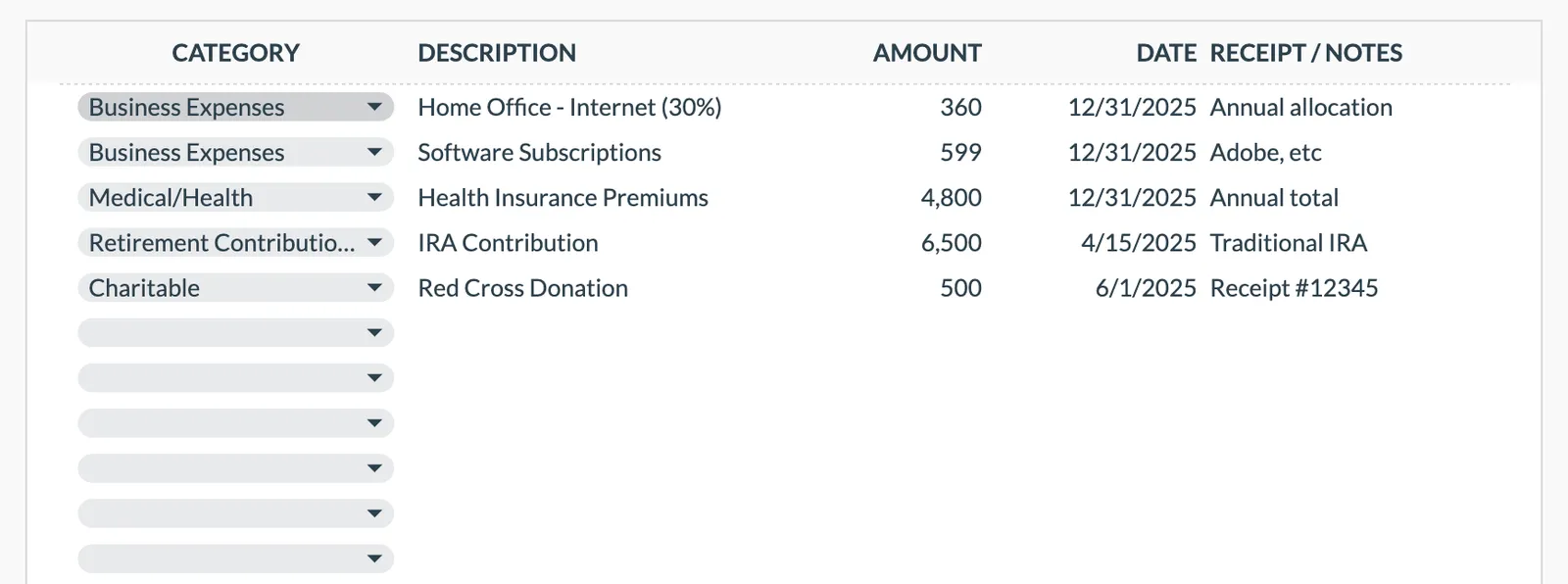
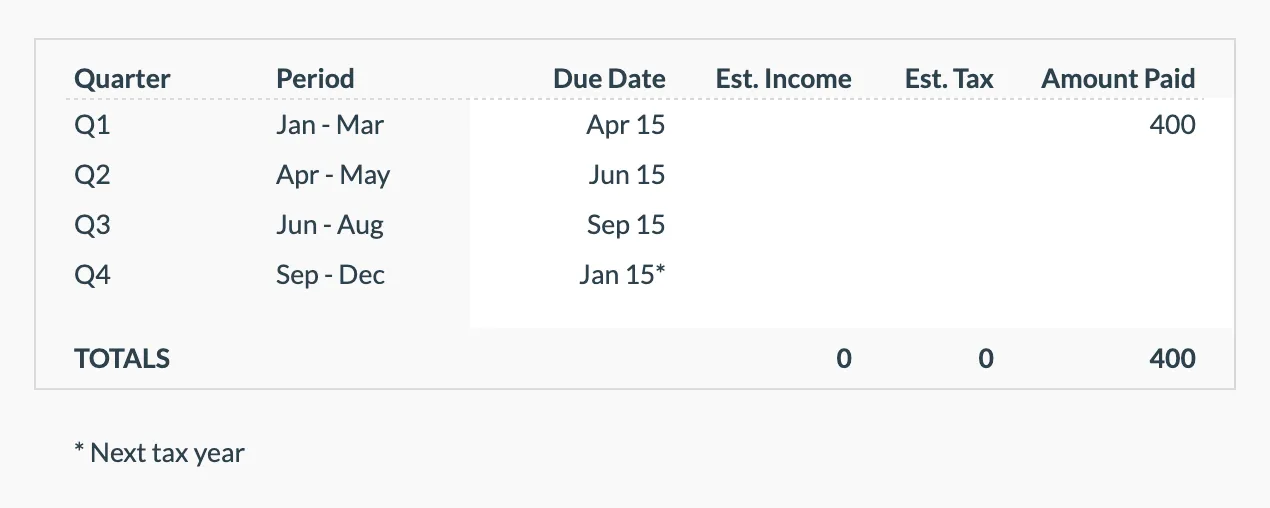
Browse through the template to see how it tracks income, deductions, credits, and estimated quarterly payments.
- Annual tax overview dashboard
- Income tracking by source
- Deductions and credits organizer
- Quarterly payment tracker
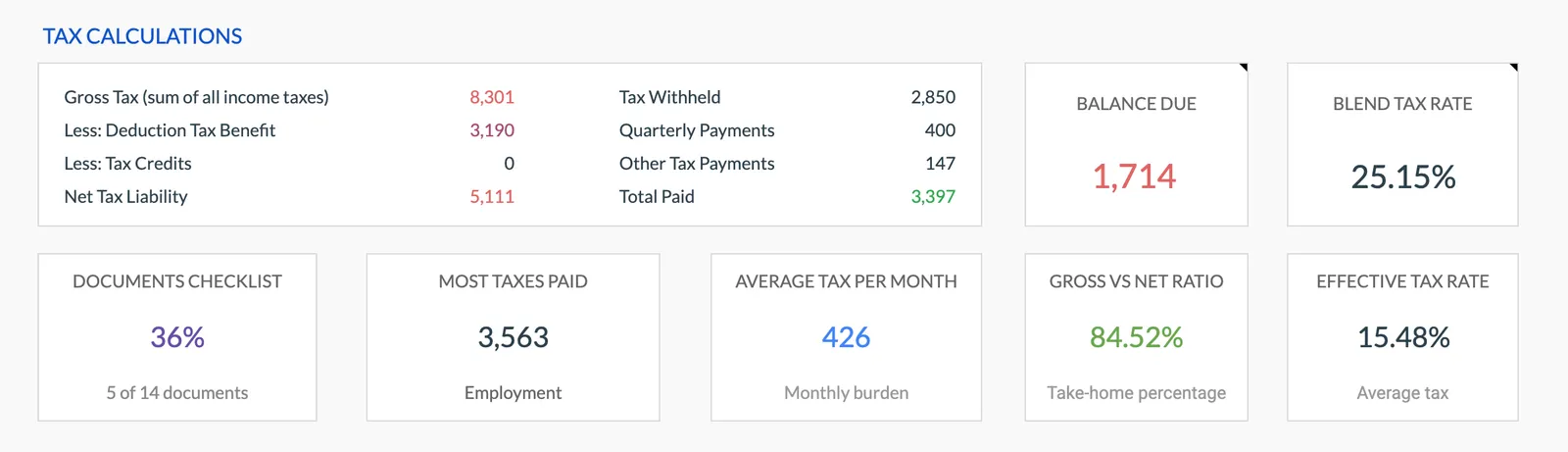
Annual tax overview with key figures
Detailed tax breakdown and projections
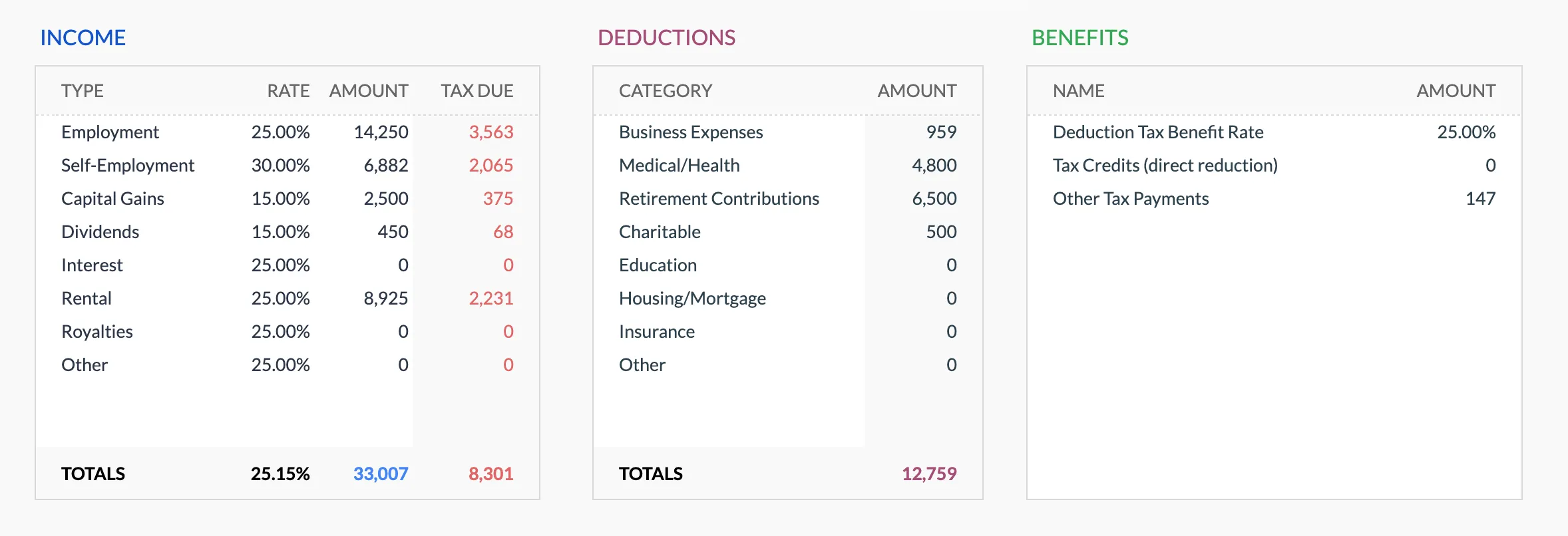
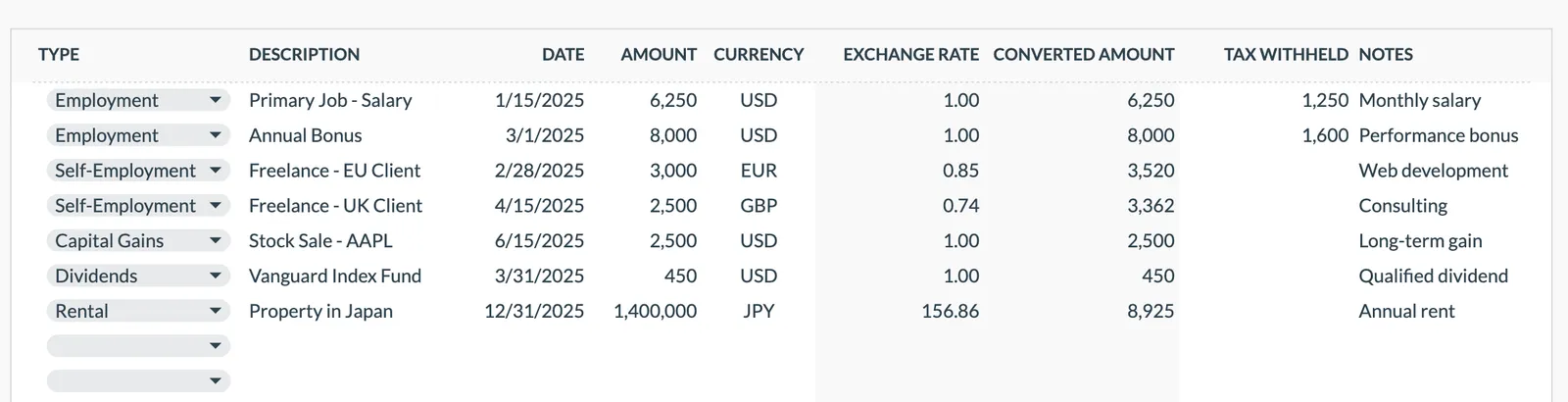
Track all income sources for tax purposes
Organize and track tax deductions
Plan and track quarterly estimated tax payments
Common Questions
Tax Planning in Alabama - FAQ
How does Alabama's federal income tax deduction work?
Alabama allows residents to deduct the full amount of federal income taxes paid from their state taxable income. This is unusual - only a handful of states offer this. The deduction means that as your federal tax bill goes up, your Alabama taxable income goes down. This circular relationship between federal and state tax can meaningfully lower the effective state rate, especially for higher-income earners.
What are Alabama's income tax rates?
Alabama uses a graduated income tax with rates of 2% [1], 4%, and 5%. The top rate of 5% applies at relatively low income thresholds compared to many other states. However, the effective rate is often lower than 5% because of the federal income tax deduction, which reduces state taxable income.
Does Alabama have local income or occupational taxes?
Some Alabama municipalities levy occupational taxes on earned income. The City of Birmingham, which charges a 1% occupational tax on wages earned within city limits, is the most notable example. These local taxes are separate from state income tax and are not calculated on the state return, but they affect your overall tax burden and are worth tracking alongside state and federal obligations.
How is retirement income taxed in Alabama?
Alabama is favorable for retirees. Social Security benefits are fully exempt from state tax. Most pension income from defined benefit plans - including military retirement pay - is also exempt. Income from 401(k) plans and IRAs is generally taxable at the graduated rates, but the federal tax deduction still applies to reduce the state taxable amount.
Why are Alabama's property taxes so low?
Alabama has some of the lowest property tax rates in the nation. The state constitution caps property tax rates, and homestead exemptions further reduce the burden for owner-occupied homes. While property taxes do not affect income tax calculations directly, the low rates mean Alabama residents may have more room under the federal SALT deduction cap for state income tax deductions.
Can't find the answer you're looking for? Contact our team
Official Tax Resources
For current rates, forms, and filing deadlines specific to Alabama:
Sources
Organize your tax planning for Alabama
One-time purchase. No subscription. Your financial data stays in your Google Drive.
Tax rules, rates, and contribution limits change, and official publications can themselves lag behind the law in force. We review these figures on a best-effort basis against sources we consider authoritative, but we cannot guarantee they are current, complete, or that better sources do not exist, and nothing here is tax, legal, or financial advice. For decisions, the relevant government authority is the reference. Last reviewed: August 2026.