Kentucky
Tax Planner Template for Kentucky
Plan your federal and Kentucky state taxes in Google Sheets. Kentucky uses a flat tax rate for straightforward state tax planning.
In Depth
Kentucky's Flat Tax and Local Tax Layer
Kentucky's flat income tax rate is one of the more moderate flat rates among states that use this structure. The calculation is straightforward - Kentucky taxable income times the flat rate, minus any applicable credits. But the state rate only tells part of the story, because many Kentucky cities and counties impose their own occupational or income taxes on top.
Louisville Metro and Lexington-Fayette both levy occupational taxes on wages earned within their jurisdictions. Other cities and counties across the state have their own rates. These local taxes apply to earned income (wages, salaries, self-employment income) rather than investment or retirement income, so the local layer primarily affects working residents. For someone living in Louisville and working in Lexington (or vice versa), the interaction between local jurisdictions adds complexity.
Kentucky's retirement income exclusion is generous - each taxpayer can exclude a set amount of pension, 401(k), and IRA income from state tax. Social Security is fully exempt. This combination, plus the fact that local occupational taxes generally do not apply to retirement income, makes the effective tax rate for retirees in Kentucky lower than the headline flat rate would suggest.
Kentucky
Tax Planning in Kentucky
Kentucky has a flat income tax rate that simplifies state tax calculations. The state also has some unique provisions around pension income and local taxes.
Flat Income Tax
Kentucky has a flat income tax rate that applies to all taxable income, making state tax projections straightforward. The rate is relatively low compared to many states [2].
Local Income Taxes
Many Kentucky cities and counties levy occupational or income taxes. Louisville and Lexington both have local taxes. These add to the effective tax rate for residents in those areas.
Retirement Income
Kentucky provides a generous exclusion per person for retirement income, covering pensions, 401(k) distributions, and IRA withdrawals. Social Security benefits are fully exempt.
Standard Deduction
Kentucky has its own standard deduction, separate from the federal standard deduction, that applies to Kentucky taxable income.
Get the Annual Tax Planner
Getting Started
Getting Started with Kentucky Tax Planning
Record your local occupational tax rate
Kentucky's 3.5% flat state rate for the 2026 tax year is only part of the picture. If you live or work in Louisville, Lexington, or another city with an occupational tax, note that rate in the template. Local rates apply to earned income only, so you will need to separate earned income from investment and retirement income for accurate local tax estimates.
Apply Kentucky's limited deduction rules
Kentucky's standard deduction is lower than the federal amount, and itemized deductions are more restricted. Enter your deductions in the template and note which ones Kentucky allows. Your Kentucky taxable income will typically be higher than your federal taxable income because of these differences.
Calculate the retirement income exclusion
If you receive pension, 401(k), or IRA income, track it against Kentucky's per-person exclusion limit. Social Security is fully exempt. For a married couple, both spouses can each claim the exclusion. Record the excluded amount in your notes to see the actual state taxable retirement income after the exclusion.
Track estimated payments for state and local
Self-employed Kentucky residents owe both the 3.5% [1] state tax and any applicable local occupational tax on their earnings. The quarterly tracker helps manage these alongside federal payments. Note that local occupational taxes may have different payment schedules than state estimated taxes in some jurisdictions.
Watch for future rate reductions
Kentucky's rate reduction mechanism ties future decreases to revenue triggers. When the state meets certain revenue and budget conditions and the legislature ratifies the step, the rate can drop further, as it did when the rate fell to 3.5% for the 2026 tax year. Check the current rate at the start of each tax year and update your template projections accordingly - the rate you used last year may not apply this year.
See It In Action
What the tax planner looks like
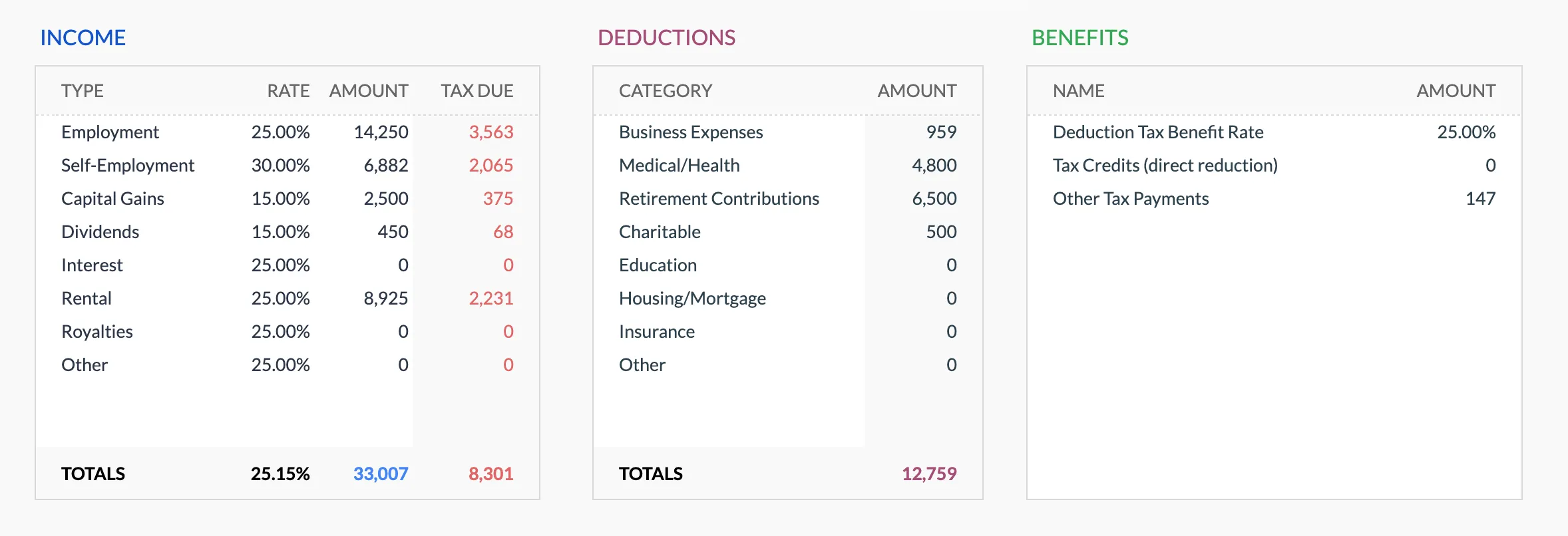
Browse through the template to see how it tracks income, deductions, credits, and estimated quarterly payments.
- Annual tax overview dashboard
- Income tracking by source
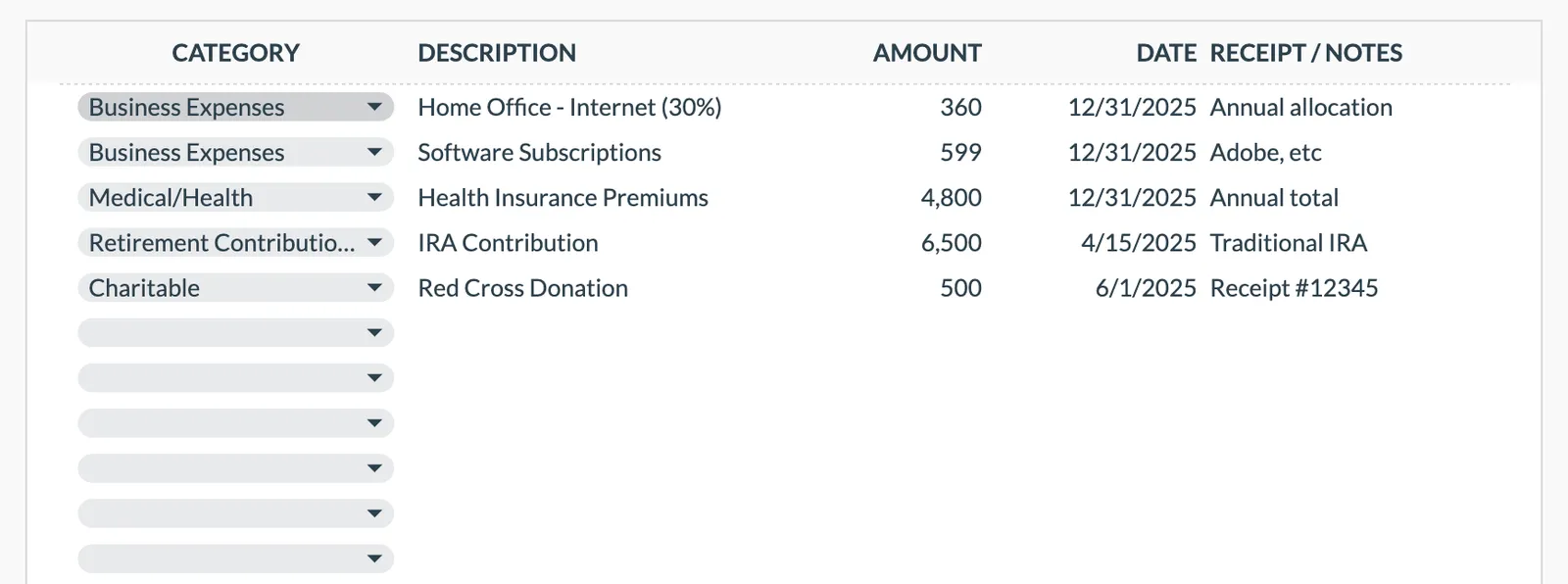
- Deductions and credits organizer
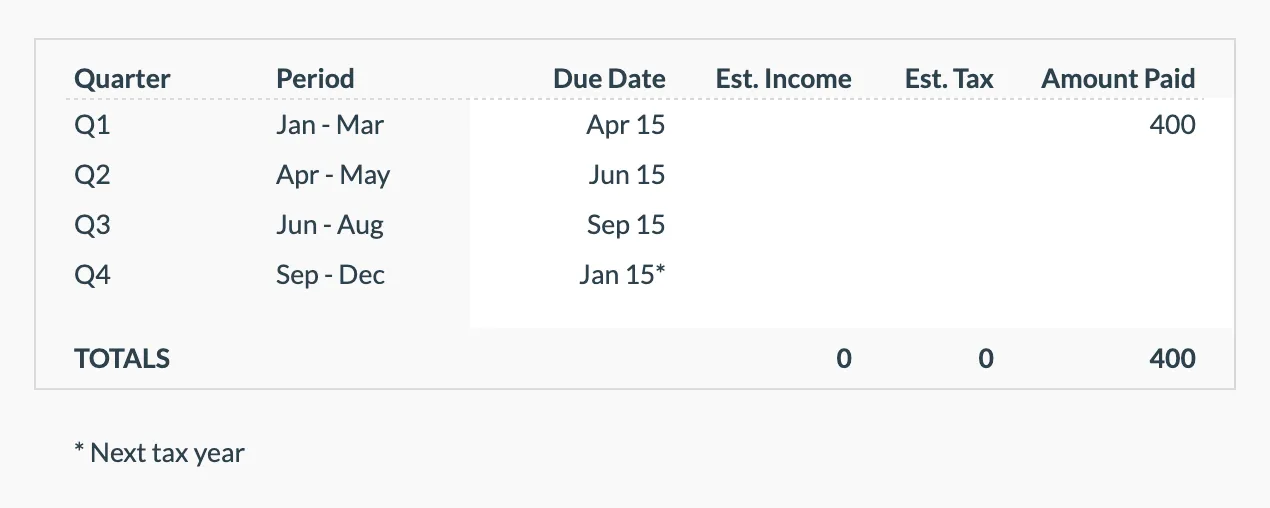
- Quarterly payment tracker
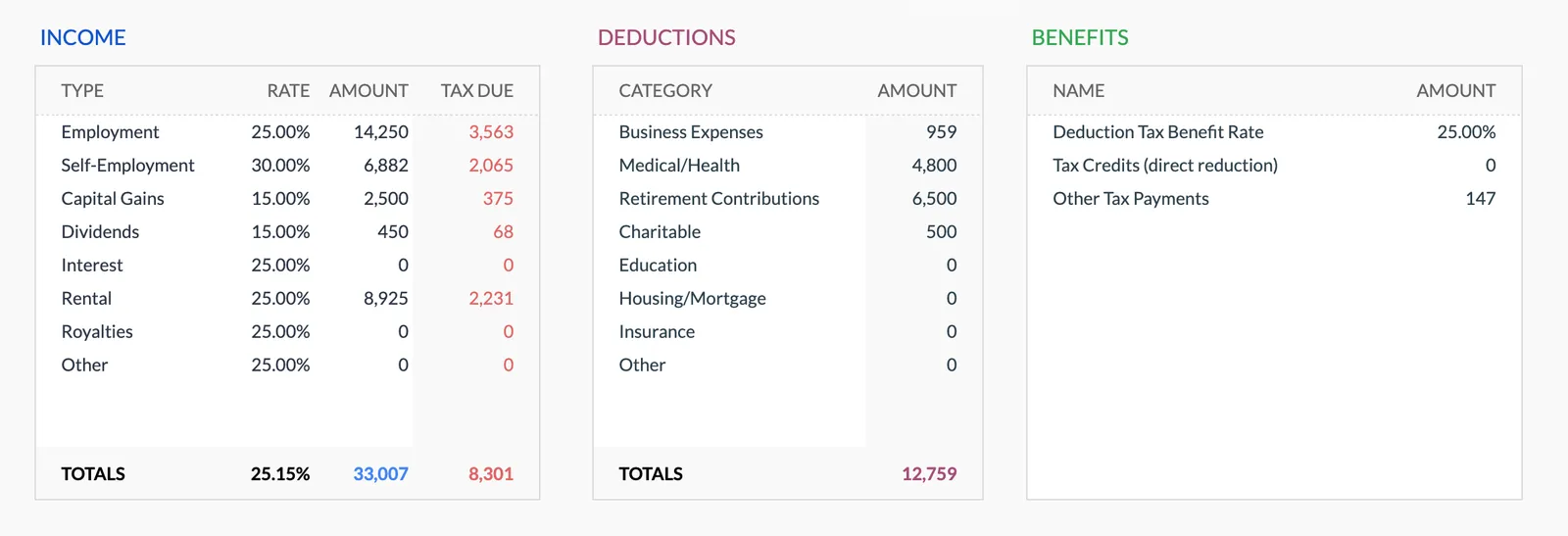
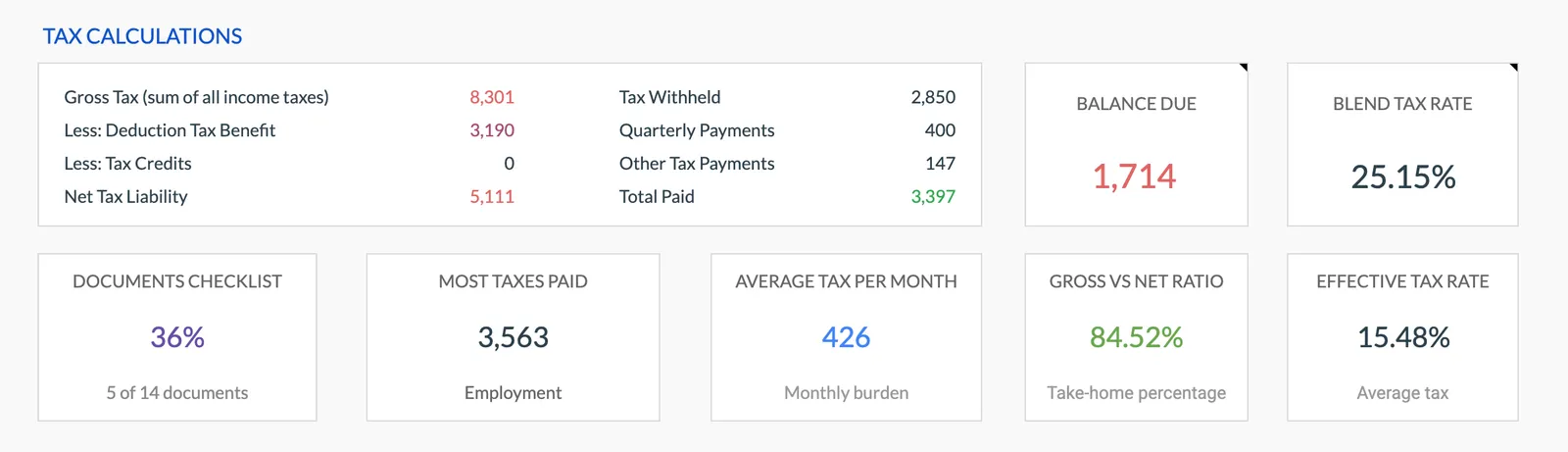
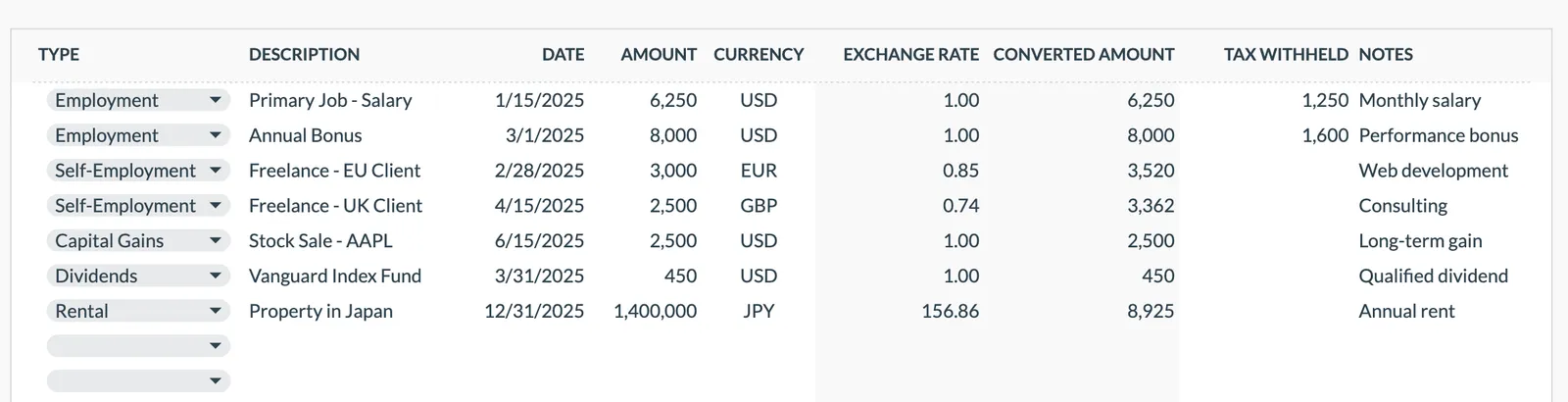
Annual tax overview with key figures
Detailed tax breakdown and projections
Track all income sources for tax purposes
Organize and track tax deductions
Plan and track quarterly estimated tax payments
Common Questions
Tax Planning in Kentucky - FAQ
How did Kentucky's rate reduction from 5% to 3.5% change the tax picture?
Kentucky reduced its flat rate in stages, from 5% to 4.5% in 2023, then 4% in 2024, and 3.5% beginning with the 2026 tax year. The legislature built in a mechanism for further reductions tied to revenue triggers, with each step requiring legislative ratification. This makes the rate subject to change in future years, so checking the current rate each tax year is useful. The reduction applies to all taxable income since Kentucky uses a flat rate structure.
Do local occupational taxes in Louisville and Lexington apply to all income?
Local occupational taxes in Kentucky cities like Louisville Metro and Lexington-Fayette apply primarily to earned income - wages, salaries, and self-employment income. Investment income, retirement income, and passive income are generally not subject to local occupational taxes. This means the local layer primarily affects working residents, and the effective combined rate for retirees in these cities is often just the 3.5% state rate.
What deductions does Kentucky allow?
Kentucky has its own standard deduction that is separate from the federal amount and generally lower. Itemized deductions are limited - Kentucky does not allow all the same itemized deductions as the federal return. Notably, the state has its own rules about which items can be deducted. This means your Kentucky taxable income often differs from your federal taxable income, even though both use a straightforward calculation.
How generous is Kentucky's retirement income exclusion?
Kentucky allows each taxpayer to exclude a set amount of retirement income - including pensions, 401(k) distributions, and IRA withdrawals - from state tax. Social Security benefits are fully exempt. The per-person exclusion means a married couple can each claim the full amount. Combined with the fact that local occupational taxes typically do not apply to retirement income, the effective tax rate for Kentucky retirees can be well below the 3.5% headline rate.
Can this template help with Kentucky's state-plus-local structure?
The template covers federal tax planning in detail. For Kentucky, use the notes section to track the 3.5% state rate and your local occupational tax rate side by side. Since local taxes apply only to earned income while the state rate applies more broadly, separating earned from non-earned income in your tracking helps produce accurate projections for both layers.
Can't find the answer you're looking for? Contact our team
Official Tax Resources
For current rates, forms, and filing deadlines specific to Kentucky:
Sources
Organize your tax planning for Kentucky
One-time purchase. No subscription. Your financial data stays in your Google Drive.
Tax rules, rates, and contribution limits change, and official publications can themselves lag behind the law in force. We review these figures on a best-effort basis against sources we consider authoritative, but we cannot guarantee they are current, complete, or that better sources do not exist, and nothing here is tax, legal, or financial advice. For decisions, the relevant government authority is the reference. Last reviewed: August 2026.