Life Event Guide
Financial Planning When Managing Rental Properties
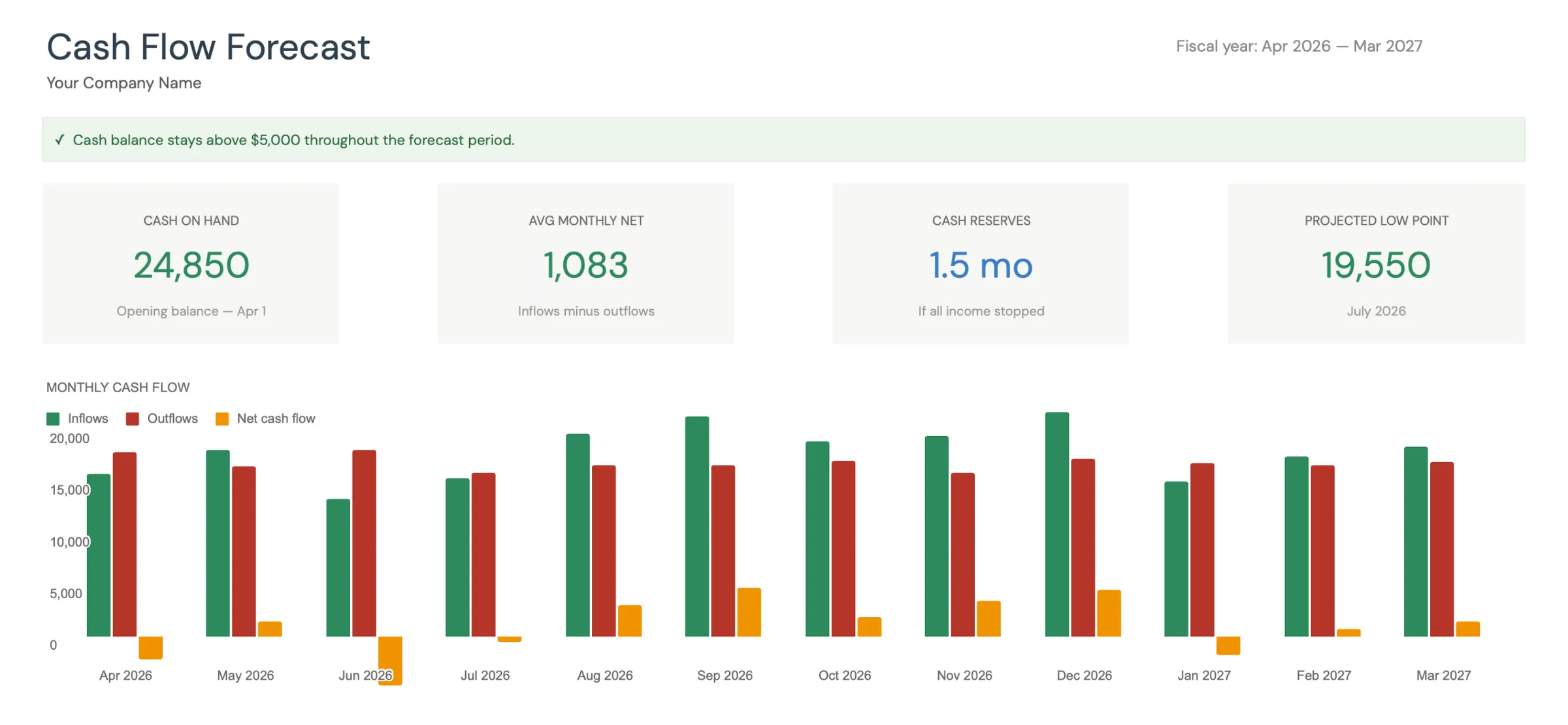
The 1% rule suggests monthly rent should be at least 1% of the purchase price for a rental to cash-flow positively, but actual profitability depends on vacancy rates (typically 5-10%), maintenance reserves (1-2% of property value/year), property management fees (8-12% of rent), and tax implications. Tracking all of these in a cash flow spreadsheet reveals true return on investment.
In Depth
Rental Properties as a Business - Not a Passive Income Stream
The term "passive income" gets applied to rental properties so frequently that many new landlords are surprised by how active the management actually is. Tenant screening, maintenance coordination, lease enforcement, bookkeeping, and tax preparation all require time and attention. Some landlords estimate they spend 5-10 hours per month per property on management tasks - time that has real economic value even if it does not appear as an expense on the income statement.
The gap between perceived and actual returns on rental properties is one of the most common miscalculations in real estate investing. Many landlords calculate returns using only rent minus mortgage, ignoring vacancy, maintenance reserves, capital expenditures, insurance, property management, and the opportunity cost of the down payment. A property that appears to generate 10% returns on a napkin calculation may actually return 4-6% when all costs are honestly accounted for. This is not necessarily a bad return, but it is worth knowing the real number.
Tax treatment is where rental properties genuinely differentiate themselves from other investments. Depreciation allows landlords to deduct the cost of the building over 27.5 years, creating a paper loss that can offset rental income even when cash flow is positive. This means a property generating $5,000/year in actual cash flow might show a tax loss of $3,000 or more - sheltering the income from taxes entirely. Understanding and tracking these deductions is where significant financial value is created or lost.
Scaling from one property to several introduces complexity that grows faster than most landlords expect. Each additional property adds its own set of financial variables - different mortgage terms, different maintenance profiles, different tenant situations, and different local regulations. Some landlords find that the jump from two to five properties is where a formal tracking system transitions from helpful to essential, simply because the number of financial variables exceeds what most people can manage mentally.
Financial Impact
The Financial Impact of Rental Property Management
Rental properties are businesses, even if you only own one unit. The financial complexity increases with each property, and the difference between perceived returns and actual returns often surprises landlords who are not tracking carefully.
Cash flow is rarely as simple as rent minus mortgage
A property renting for $2,000/month with a $1,400 mortgage appears to generate $600/month cash flow. But add property taxes ($250/month), insurance ($100/month), maintenance reserves ($200/month at 10% of rent), vacancy allowance ($167/month at one month per year), property management fees if applicable ($200/month at 10%), and capital expenditure reserves ($100/month). Realistic cash flow on that same property might be negative $417/month before any unexpected expenses.
Tax deductions can significantly improve the real return
Rental property offers substantial tax benefits: mortgage interest deduction, depreciation (the cost of the building spread over 27.5 years), property tax deduction, maintenance and repair costs, insurance, travel expenses for property management, and professional fees. Depreciation alone on a $300,000 property (excluding land value of approximately $75,000) provides roughly $8,182/year in deductions - reducing taxable rental income even when you have positive cash flow.
Vacancy and turnover costs are commonly underestimated
The average rental vacancy rate in the US is 5-8%, but turnover costs extend beyond lost rent. Between tenants: cleaning ($200-$500), repairs and paint ($500-$2,000), advertising ($100-$300), and time spent showing the unit and screening applicants. A single turnover can cost $2,000-$5,000 plus the lost rent. Properties with lower tenant turnover are often more profitable even at slightly below-market rents.
Capital expenditures create lumpy, large expenses
Roofs ($8,000-$15,000), HVAC systems ($5,000-$12,000), water heaters ($1,500-$3,000), appliance replacements ($2,000-$5,000), and flooring ($3,000-$8,000) all have finite lifespans. A property that generates positive cash flow for three years can appear to lose money when a major system needs replacement. Maintaining a capital expenditure reserve of 5-10% of rental income smooths these costs over time.
Getting Ready
How to Track Rental Property Finances
Track income and expenses per property separately
Even if you own multiple properties, keep the financials separate. Each property has its own income, expenses, mortgage, and performance. Combining them hides underperformers and makes tax preparation harder. Record rent received, late fees, pet fees, and any other income separately from each expense category. This per-property clarity is essential for knowing which properties are actually earning their keep.
Maintain monthly cash flow tracking
Record all income and expenses monthly for each property. Categories typically include: rent received, mortgage payment (split into principal and interest for tax purposes), property taxes, insurance, repairs and maintenance, utilities (if landlord-paid), property management fees, and HOA fees. The monthly cadence catches problems early - a property that is consistently cash-flow negative may need a rent adjustment or cost reduction.
Set up reserves for vacancies and capital expenditures
Transfer a percentage of each rent payment into separate reserve accounts. A common approach: 5% for vacancy reserves and 5-10% for capital expenditure reserves. On $2,000/month rent, that is $200-$300/month set aside. When a vacancy or major repair occurs, the funds are already available rather than creating a financial emergency. Track these reserves as part of your rental property accounting.
Track all tax-deductible expenses throughout the year
Waiting until tax season to reconstruct expenses means missing deductions. Track every deductible expense as it occurs: mileage to and from properties, materials and supplies, contractor payments, insurance premiums, property tax payments, mortgage interest, and professional fees (accountant, attorney, property manager). A running log with dates, amounts, and categories makes tax preparation straightforward.
Calculate actual return on investment annually
Once a year, calculate the true return: total cash flow (rent minus all expenses), plus equity buildup (principal paid on mortgage), plus tax benefits (deductions times your marginal tax rate), plus or minus property value change. Compare this total return to what the same capital would earn invested elsewhere. This honest assessment reveals whether each property is genuinely a good investment or just feels like one.
See The Templates
Tools for this stage of life
Browse the templates that help with financial planning during major life transitions.
- Financial planning dashboard
- Monthly budget tracking
- Net worth over time
- Goal setting and tracking
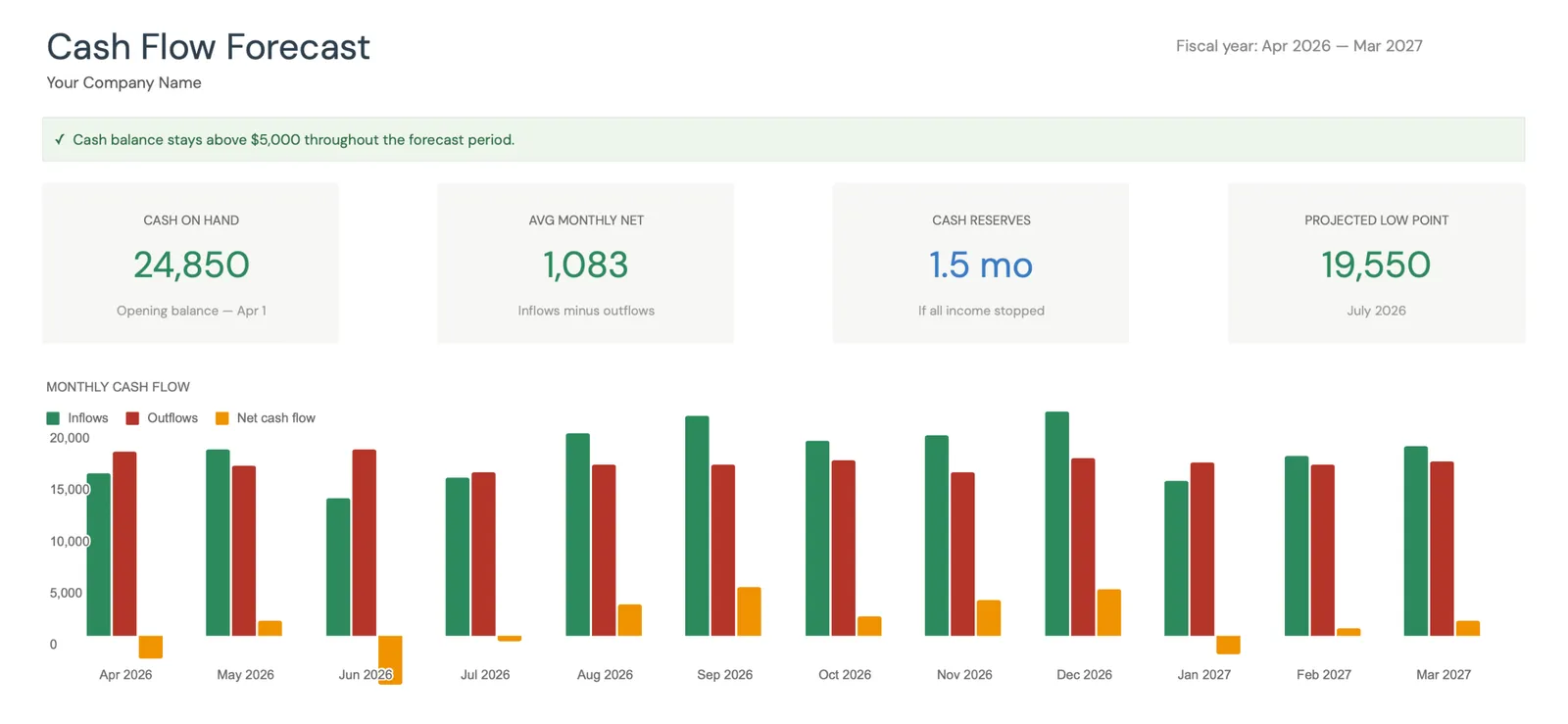
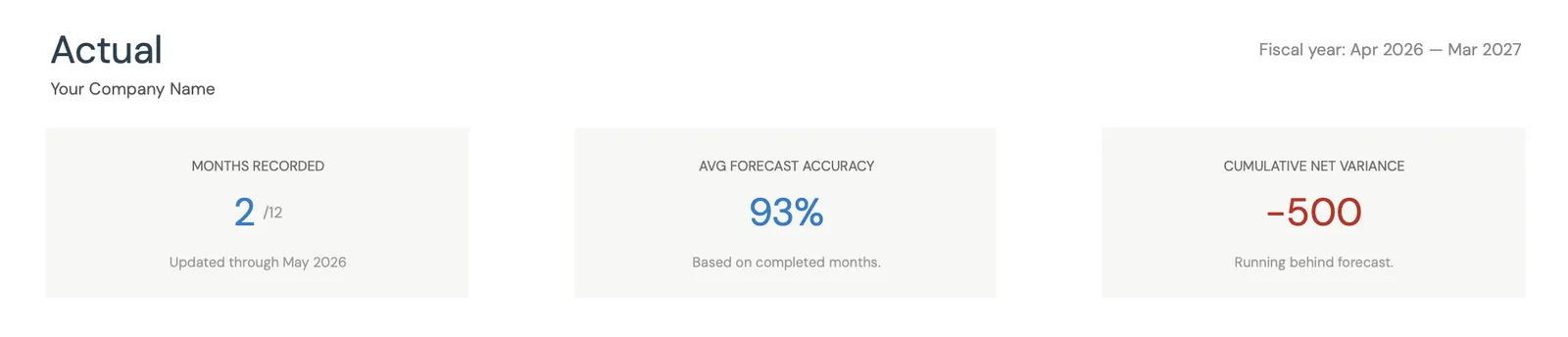
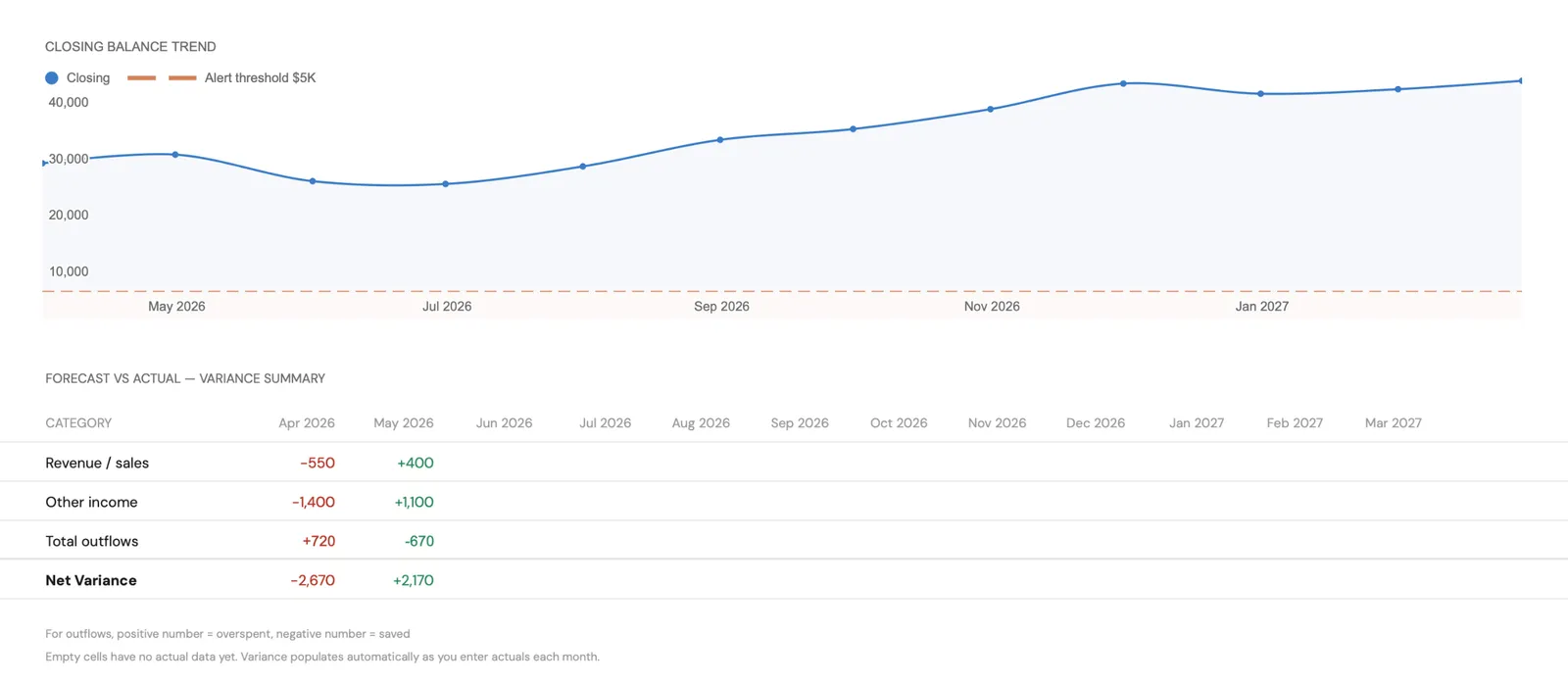
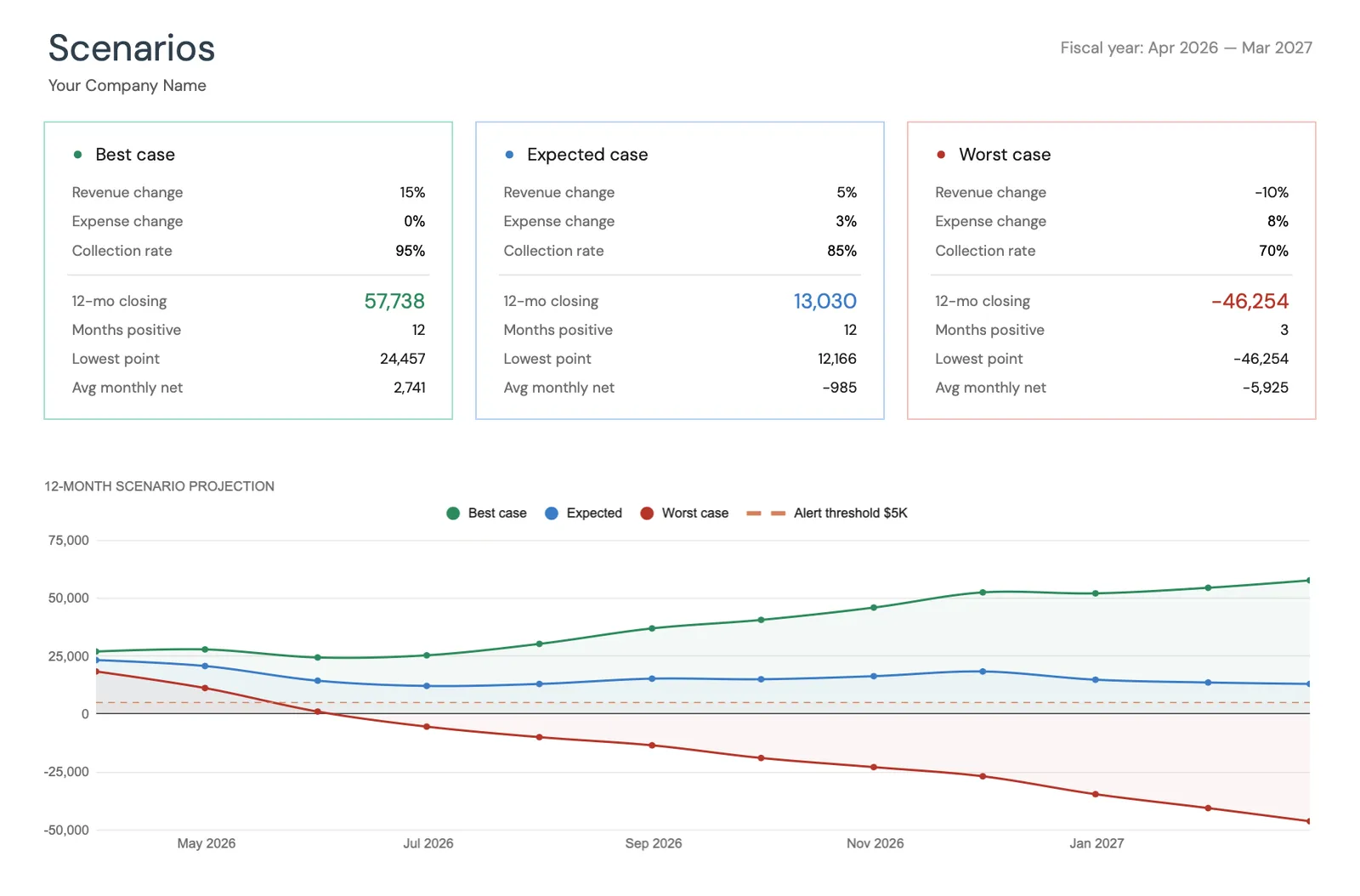
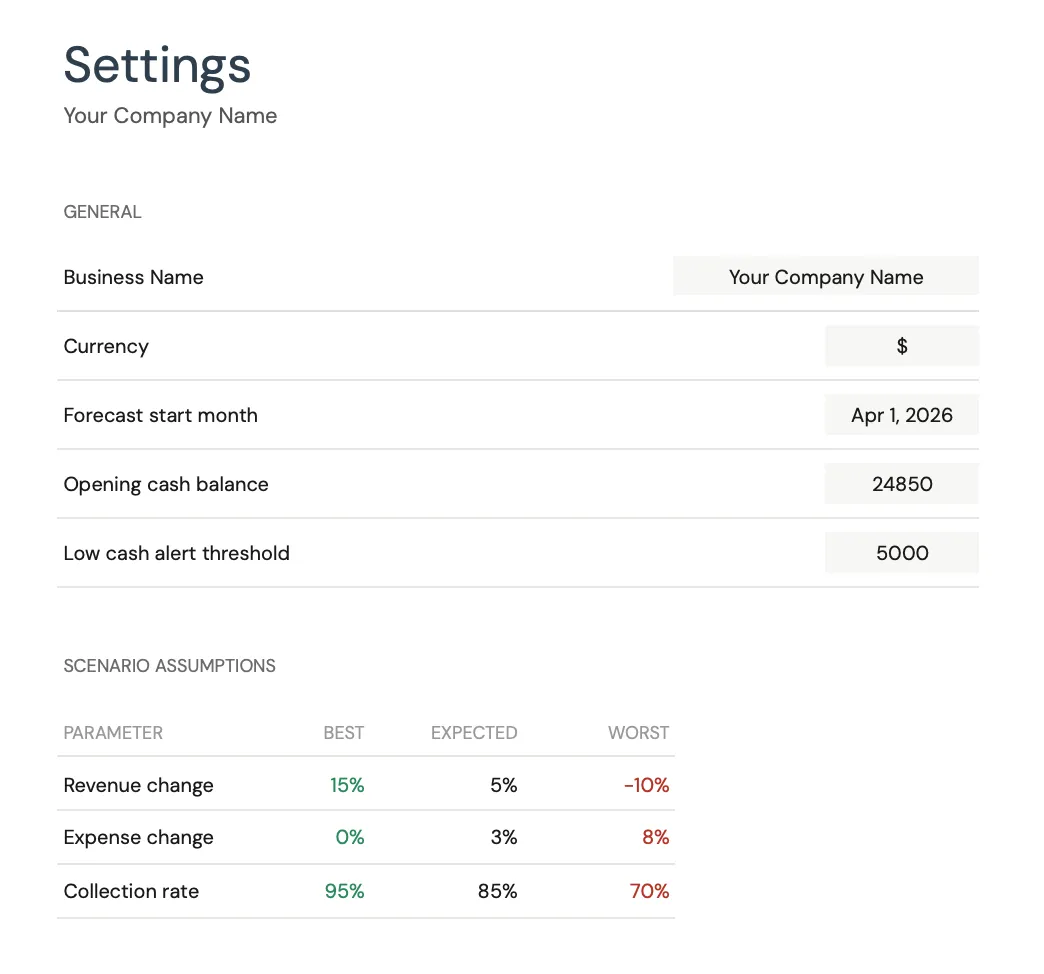
Visual dashboard with cash flow projections and trends
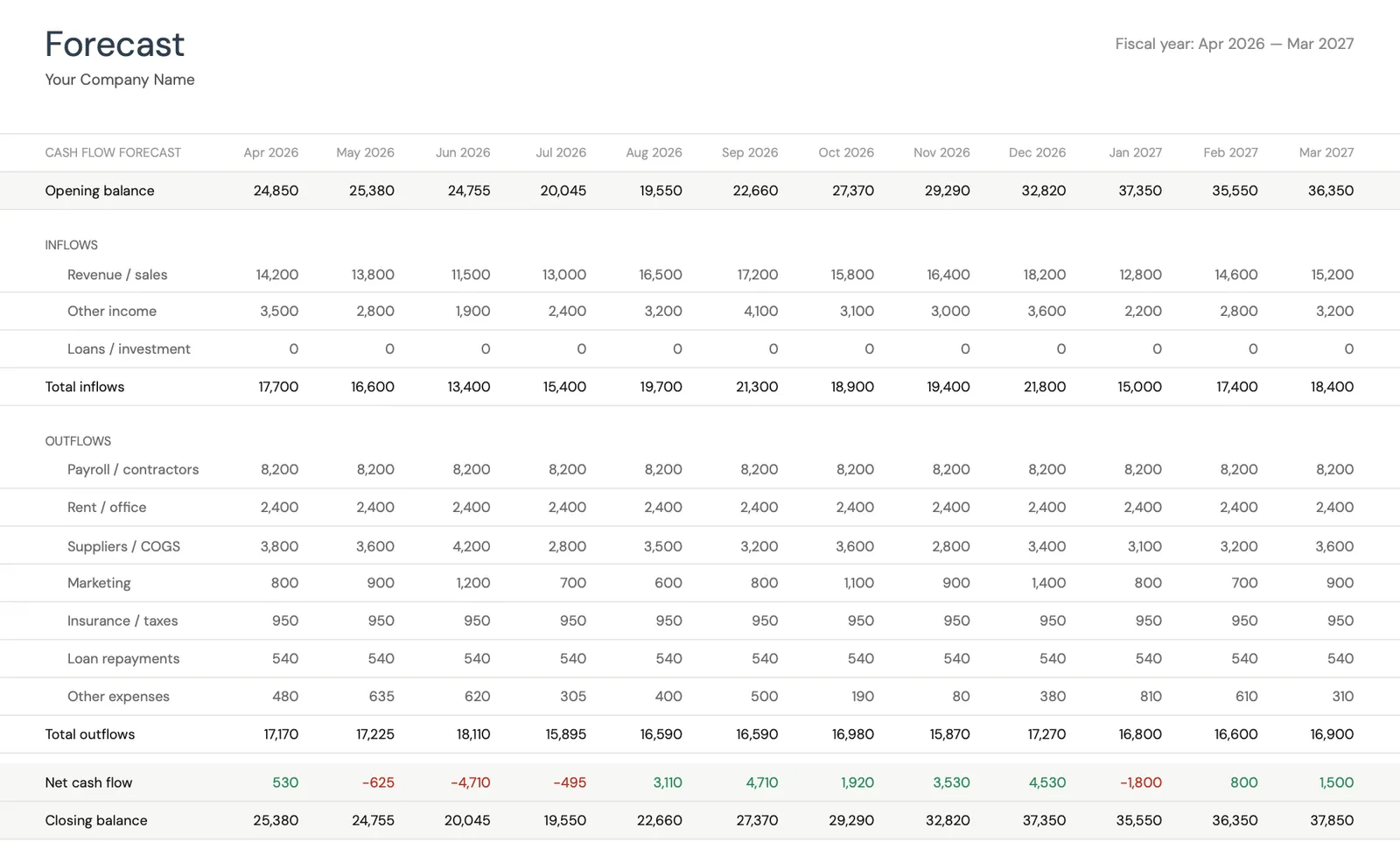
Monthly cash flow forecast with income and expenses
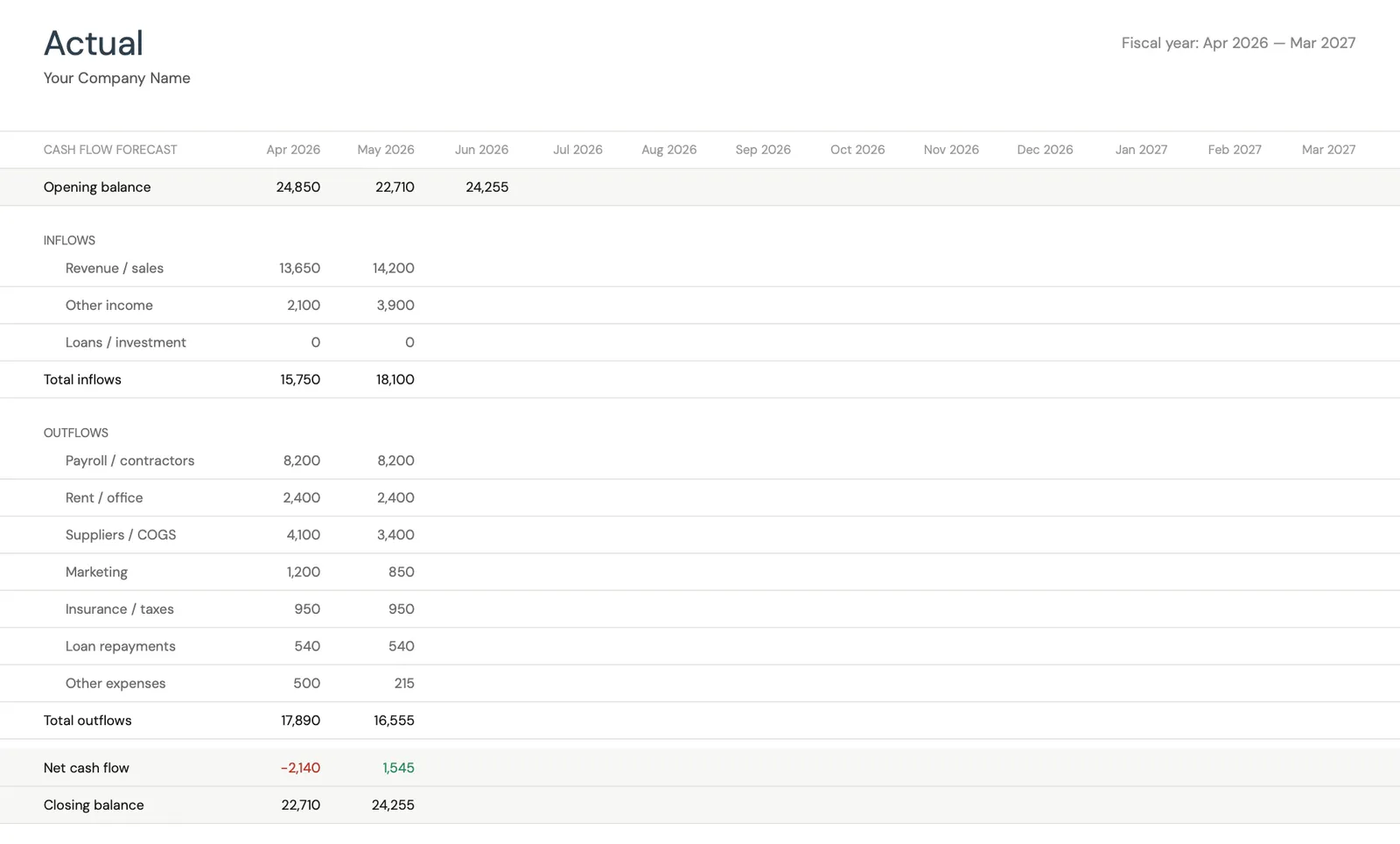
Track actual cash flow against your forecast
Key performance indicators for your cash flow
Monitor closing balances over time
Model different business scenarios and their impact
Configure income categories and settings
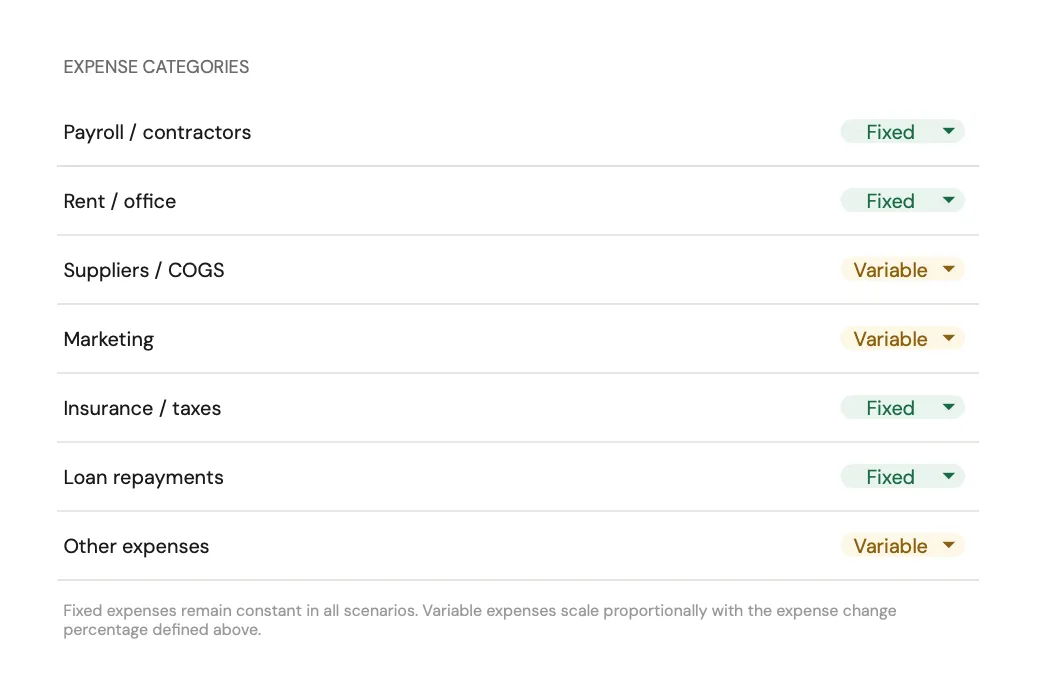
Set up expense categories for your business
Recommended Templates
Templates for Rental Property Finances
Rental property management requires ongoing cash flow tracking, asset monitoring, and tax preparation. These templates handle the key areas:
Track rental income and expenses per property on a monthly basis. See cash flow trends, identify seasonal patterns, and forecast future income. Treats each property like the small business it is.
View templateMonitor total portfolio value including property equity, mortgage balances, and reserve accounts. Seeing how rental properties fit into your overall financial picture helps with decisions about acquiring, holding, or selling properties.
View templateOrganize all rental property tax deductions throughout the year - depreciation, mortgage interest, repairs, insurance, property taxes, and professional fees. Reduces tax-season stress and helps ensure no deductions are missed.
View templateFree Tools
Calculators to Help You Plan
Common Questions
Managing Rental Properties - Financial FAQ
How do I track rental property income and expenses?
Keep a separate accounting for each property with monthly entries for all income (rent, fees) and expenses (mortgage, taxes, insurance, repairs, management fees). Use a cash flow spreadsheet that shows net income per property per month. This per-property, per-month tracking reveals patterns and problems that annual summaries miss.
What percentage of rent should I set aside for reserves?
A common guideline is 5% for vacancy and 5-10% for capital expenditures and maintenance. On $2,000/month rent, that means setting aside $200-$300/month. Older properties or those with aging systems (15+ year old roof, older HVAC) may warrant higher reserves. Properties with newer systems and long-term tenants can sometimes operate with lower reserves.
What rental property expenses are tax deductible?
Most expenses related to rental property ownership and management are deductible: mortgage interest, property taxes, insurance, repairs and maintenance, depreciation, property management fees, advertising for tenants, legal and accounting fees, travel to and from the property, and home office expenses if you manage properties from home. Keep receipts and records for all expenses.
How do I know if my rental property is actually profitable?
True profitability includes four components: cash flow (rent minus all expenses including reserves), equity buildup (mortgage principal reduction), tax benefits (deductions reducing your tax bill), and appreciation (property value changes). A property with negative monthly cash flow can still be profitable when equity buildup and tax benefits are included. Calculate all four components annually for an honest assessment.
How many properties can I manage with a spreadsheet?
Spreadsheets work well for 1-10 properties. Beyond that, dedicated property management software may be more efficient. The key is consistency - updating income and expenses monthly and maintaining reserve tracking. A well-organized spreadsheet with separate tabs per property and a summary dashboard provides excellent visibility for most individual landlords.
Can't find the answer you're looking for? Contact our team
Ready to get started?
Download instantly and start managing your finances, or contact us to design a custom template package for your needs.