Kansas
Belastingplanner-sjabloon voor Kansas
Organiseer uw federale en Kansas-staatsbelastingplanning in Google Sheets. Kansas heeft een inkomstenbelasting met twee schijven en stelt socialezekerheidsuitkeringen volledig vrij.
In Depth
Het Tweeschijvenstelsel van Kansas Begrijpen
Kansas vereenvoudigde zijn inkomstenbelasting in 2024 en ging van drie schijven naar twee: 5.2% op de eerste $23,000 aan belastbaar inkomen voor alleenstaande aangevers ($46,000 voor gezamenlijke aangevers) en 5.58% daarboven. De drempels zijn bescheiden, dus de meeste huishoudens met twee verdieners bereiken het hoogste tarief. Een wet uit 2025 wijst verder omlaag: wanneer de staatsinkomsten aan vastgestelde triggers voldoen, bewegen de tarieven stapsgewijs richting een enkel vast tarief van 4%. De eerste trigger werd niet gehaald, dus de tarieven zijn voor 2026 ongewijzigd.
Kansas heeft een gecompliceerde geschiedenis met inkomstenbelastingbeleid. Een drastisch belastingexperiment in 2012 verlaagde de tarieven aanzienlijk en stelde inkomen uit pass-through-bedrijven volledig vrij, wat tot inkomstentekorten leidde en in 2017 grotendeels werd teruggedraaid. Die geschiedenis verklaart de vorm van de huidige hervormingen: de wet van 2024 combineerde de tariefsverlagingen met een hogere standaardaftrek en persoonlijke vrijstellingen, en de wet van 2025 maakt verdere verlagingen afhankelijk van daadwerkelijke inkomsten in plaats van prognoses.
Voor pensioenplanning stelt Kansas socialezekerheidsuitkeringen sinds belastingjaar 2024 volledig vrij voor alle inwoners, waarmee een einde kwam aan de oude inkomensgrens van $75,000, en KPERS-inkomen (Kansas Public Employees Retirement System) is geheel vrijgesteld. Ander pensioeninkomen, waaronder particuliere pensioenen, 401(k)-distributies en IRA-opnames, wordt belast tegen de normale tarieven. De staatsomzetbelasting op boodschappen bereikte in januari 2025 nul, en daarmee kwam ook een einde aan het belastingkrediet voor omzetbelasting op voedsel op de inkomstenbelastingaangifte.
Kansas
Belastingplanning in Kansas
Kansas stapte in 2024 over op een inkomstenbelasting met twee schijven, met tarieven van 5.2% en 5.58%, en stelde tegelijkertijd socialezekerheidsuitkeringen volledig vrij. Toekomstige inkomstentriggers kunnen de tarieven stapsgewijs verlagen richting een enkel tarief van 4%.
Inkomstenbelasting met Twee Schijven
Sinds belastingjaar 2024 heeft Kansas twee belastingschijven: 5.2% op belastbaar Kansas-inkomen tot $23,000 voor alleenstaande aangevers ($46,000 voor gezamenlijke aangevers) en 5.58% daarboven [2]. Een wet uit 2025 voegt inkomstengestuurde verlagingen toe richting een uiteindelijk vast tarief van 4%; de trigger werd voor 2026 niet gehaald, dus de tarieven blijven staan.
Omzetbelasting op Voedsel Afgeschaft
De staatsomzetbelasting op boodschappen daalde op 1 januari 2025 stapsgewijs naar nul. Lokale omzetbelastingen gelden nog steeds voor voedsel, en het oude belastingkrediet voor omzetbelasting op voedsel eindigde met belastingjaar 2024.
Pensioeninkomsten
Kansas stelt socialezekerheidsuitkeringen sinds belastingjaar 2024 volledig vrij van staatsbelasting voor alle inwoners, waarbij de oude inkomensgrens van $75,000 is afgeschaft. Pensioeninkomen van Kansas-overheidsmedewerkers (KPERS) is eveneens vrijgesteld.
Gespecificeerde Aftrekposten
Kansas staat inwoners toe om op de staatsaangifte te specificeren, zelfs wanneer zij de federale standaardaftrek nemen. De gespecificeerde bedragen in Kansas kunnen afwijken van de federale, omdat sommige federale aftrekposten niet zijn toegestaan op de Kansas-aangifte.
Haal de Jaarlijkse Belastingplanner
Aan de Slag
Het Sjabloon Gebruiken voor Kansasbelastingen
Voer inkomsten in en bepaal uw Kansas-schijf
Voeg alle inkomensbronnen toe - lonen, zelfstandige werkzaamheden, investeringen en pensioendistributies. Kansas heeft twee belastingschijven: 5.2% op belastbaar inkomen tot $23,000 voor alleenstaande aangevers of $46,000 voor gezamenlijke aangevers, en 5.58% boven die drempels. De meeste voltijdse huishoudens bereiken de hoogste schijf, dus het tweede tarief bepaalt meestal de prognose.
Markeer sociale zekerheid als vrijgesteld
Kansas stelt socialezekerheidsuitkeringen sinds belastingjaar 2024 volledig vrij van staatsbelasting voor alle inwoners, ongeacht inkomen. De oude regel die uitkeringen belastte zodra het federale aangepaste bruto-inkomen $75,000 overschreed, is verdwenen. Voer sociale zekerheid apart van ander inkomen in, zodat het vrijgestelde bedrag zichtbaar blijft in uw staatsprognose.
Controleer Gespecificeerde Aftrekposten voor Kansas
Kansas laat u op de staatsaangifte specificeren, zelfs als u de federale standaardaftrek nam, en de standaardaftrek van Kansas ($3,605 alleenstaand, $8,240 gezamenlijk) is veel lager dan de federale. Voer alle aftrekposten in het sjabloon in om de standaard- en gespecificeerde aanpak op elk niveau te vergelijken.
Volg KPERS en andere Pensioeninkomsten
Inkomen uit het Kansas Public Employees Retirement System (KPERS) is volledig vrijgesteld van staatsbelasting. Ander pensioeninkomen, zoals particuliere pensioenen, 401(k)-distributies en IRA-opnames, wordt belast tegen de gewone tarieven. Categoriseer elke pensioenbron om te zien welke vrijgesteld zijn en welke niet.
Registreer driemaandelijkse geschatte betalingen
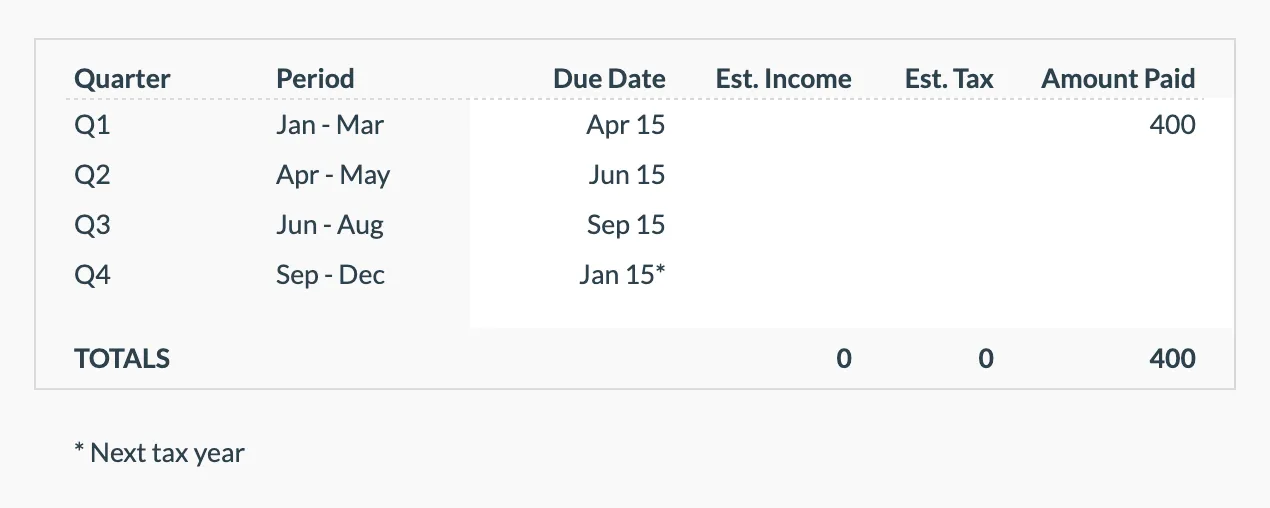
Kansas vereist geschatte betalingen op inkomen dat niet aan inhouding onderhevig is. Gebruik de driemaandelijkse tracker van het sjabloon om federale en Kansas-betalingen naast elkaar vast te leggen en de lopende totalen te vergelijken met uw geprojecteerde verplichting, wat vooral relevant is voor inkomen uit zelfstandig werk en investeringen.
Zie het in Actie
Hoe de belastingplanner eruit ziet
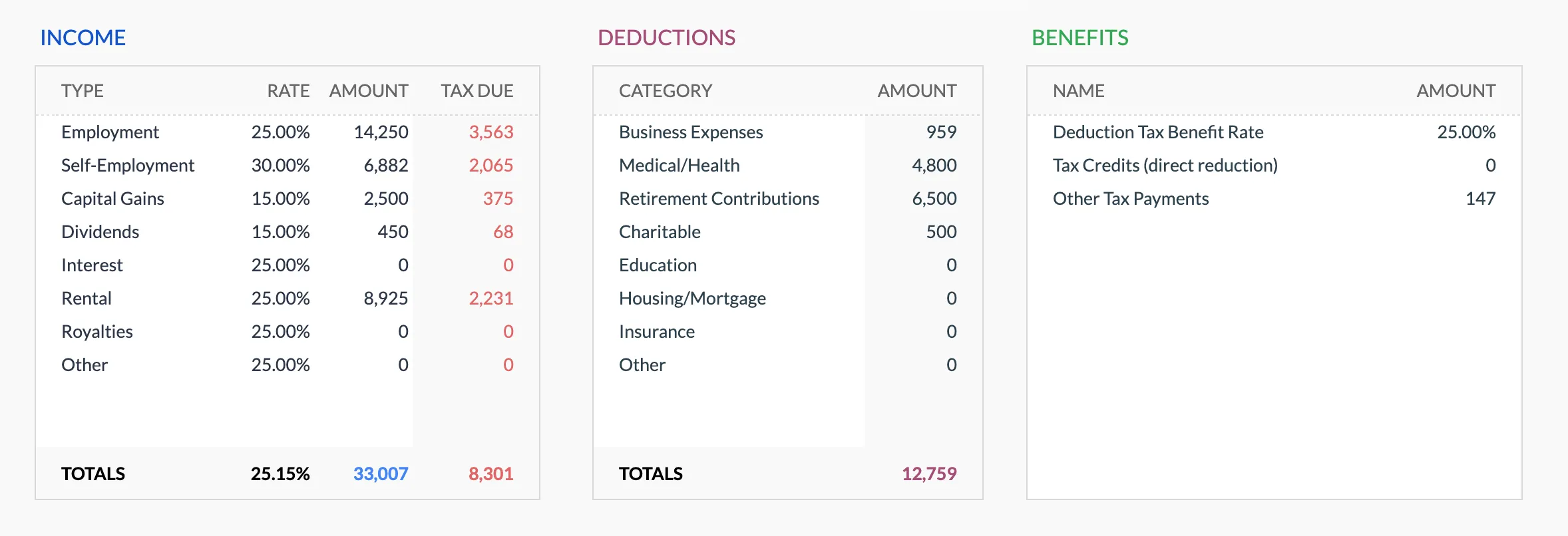
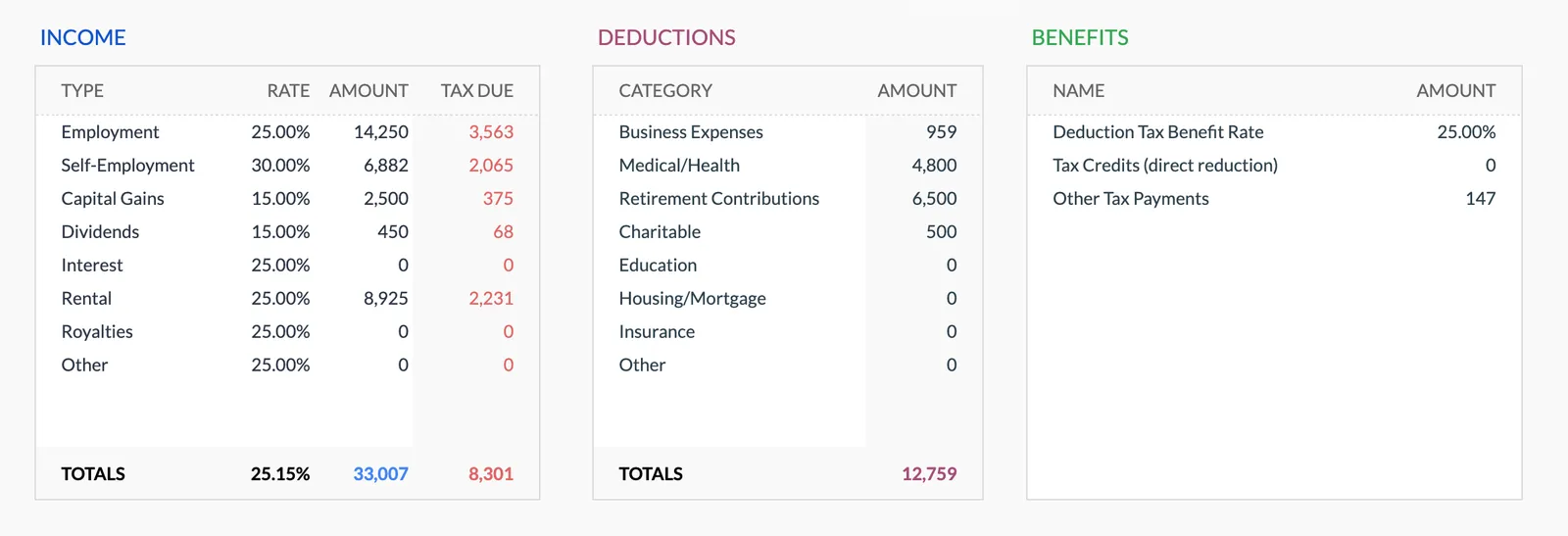
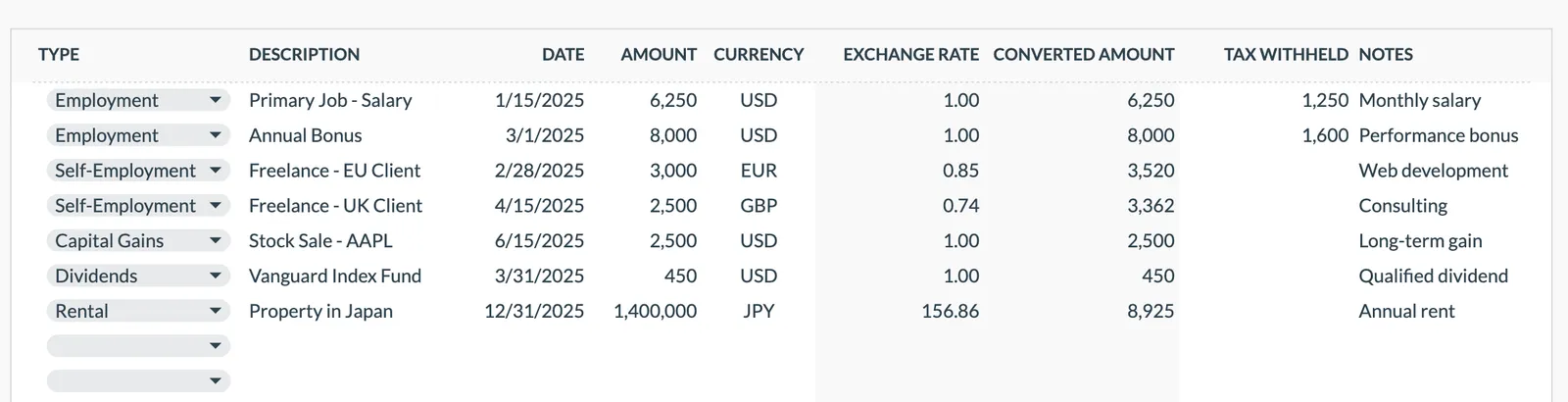
Bekijk het sjabloon om te zien hoe het inkomsten, aftrekposten, kortingen en geschatte kwartaalbetalingen bijhoudt.
- Dashboard met jaarlijks belastingoverzicht
- Inkomsten bijhouden per bron
- Organisatie van aftrekposten en kortingen
- Tracker voor kwartaalbetalingen
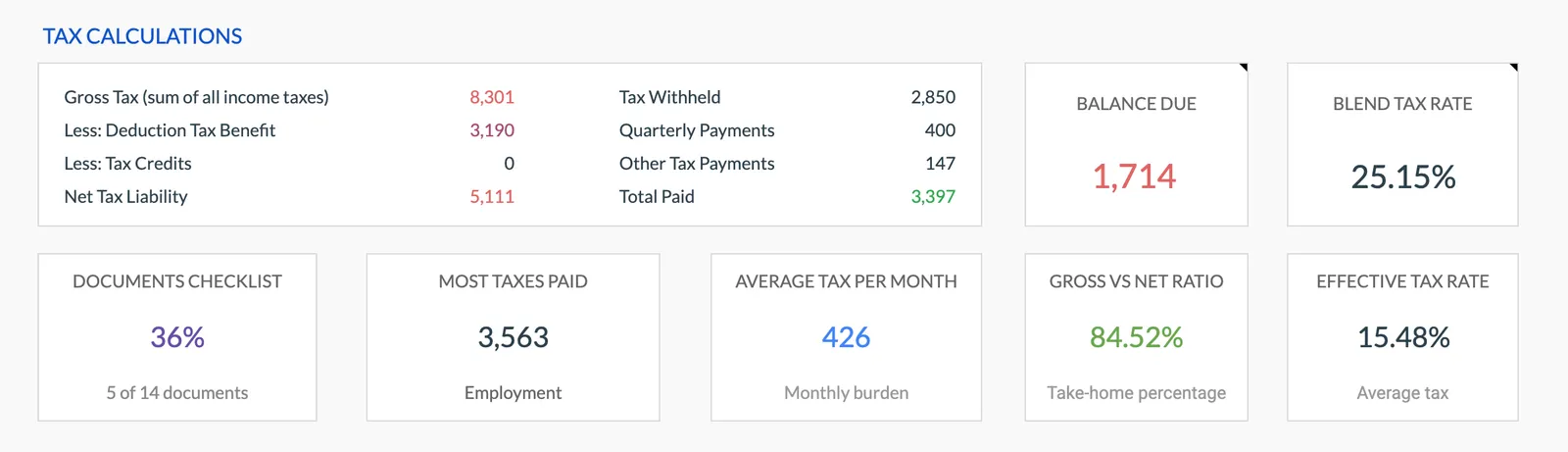
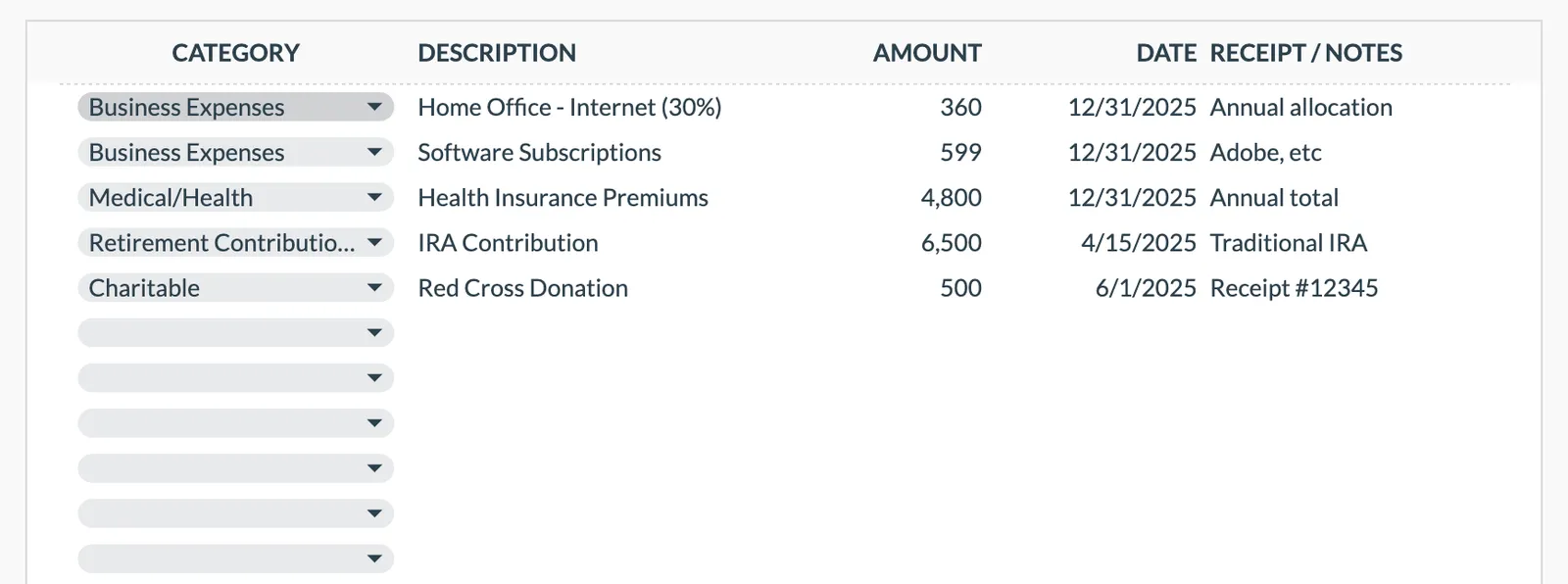
Annual tax overview with key figures
Detailed tax breakdown and projections
Track all income sources for tax purposes
Organize and track tax deductions
Plan and track quarterly estimated tax payments
Veelgestelde Vragen
Belastingplanning in Kansas - FAQ
Wat zijn de Inkomstenbelastingtarieven in Kansas?
Kansas heeft sinds belastingjaar 2024 twee gestaffelde schijven: 5.2% op belastbaar Kansas-inkomen tot $23,000 voor alleenstaande aangevers ($46,000 voor gehuwden die gezamenlijk aangifte doen) en 5.58% op inkomen daarboven [1]. De wet van 2024 verving de eerdere drie schijven van 3.1%, 5.25% en 5.7%, en verhoogde ook de standaardaftrek en de persoonlijke vrijstellingen. Een wet uit 2025 voegt inkomstengestuurde verlagingen toe richting een uiteindelijk vast tarief van 4%, maar de trigger werd voor 2026 niet gehaald, dus de tarieven van de twee schijven blijven staan.
Wordt Sociaal Zekerheid in Kansas belast?
Nee. Sinds belastingjaar 2024 stelt Kansas socialezekerheidsuitkeringen volledig vrij van staatsinkomstenbelasting voor alle inwoners. De eerdere regel, die uitkeringen bij het belastbare inkomen optelde zodra het federale aangepaste bruto-inkomen $75,000 overschreed, is afgeschaft. Er is geen inkomenstoets meer.
Is KPERS-inkomen vrijgesteld van Kansas staatsbelasting?
Ja. Pensioeninkomen uit het Kansas Public Employees Retirement System (KPERS) is volledig vrijgesteld van de staatsinkomstenbelasting van Kansas. Dit geldt voor leraren, staatsmedewerkers en andere overheidsmedewerkers die aan KPERS deelnamen. Particuliere pensioenen en 401(k)/IRA-distributies krijgen deze vrijstelling niet en worden belast tegen de gewone tarieven van de twee schijven.
Wat is er Gebeurd met het Kansas Belastingexperiment?
In 2012 verlaagde Kansas de inkomstenbelastingtarieven drastisch en stelde het inkomen uit pass-through-bedrijven volledig vrij, wat tot aanzienlijke inkomstentekorten leidde en in 2017 grotendeels werd teruggedraaid. Die geschiedenis vormde de huidige hervormingen: de wet van 2024 die de structuur met twee schijven creëerde, combineerde de verlagingen met een hogere standaardaftrek en persoonlijke vrijstellingen, en het vervolg uit 2025 maakt verdere tariefsverlagingen afhankelijk van daadwerkelijke belastinginkomsten in plaats van prognoses.
Wat gebeurde er met de omzetbelasting op voedsel in Kansas?
De staatsomzetbelasting op boodschappen daalde stapsgewijs van 6.5% in 2022 naar nul op 1 januari 2025. Lokale omzetbelastingen gelden nog steeds voor voedsel, en bereid voedsel, alcohol en tabak blijven belast tegen het volledige staatstarief. Het belastingkrediet voor omzetbelasting op voedsel dat vroeger op de inkomstenbelastingaangifte verscheen, eindigde met belastingjaar 2024, omdat de staatsbelasting die het compenseerde niet meer bestaat.
Kunt u het antwoord niet vinden dat u zoekt? Neem contact op met ons team
Officiële belastingbronnen
Voor actuele tarieven, formulieren en aangiftedeadlines specifiek voor Kansas:
Sources
Organiseer je belastingplanning voor Kansas
Eenmalige aankoop. Geen abonnement. Uw financiële gegevens blijven in uw Google Drive.
Tax rules, rates, and contribution limits change, and official publications can themselves lag behind the law in force. We review these figures on a best-effort basis against sources we consider authoritative, but we cannot guarantee they are current, complete, or that better sources do not exist, and nothing here is tax, legal, or financial advice. For decisions, the relevant government authority is the reference. Last reviewed: August 2026.