Washington
Steuerplaner-Vorlage für Washington
Planen Sie Ihre bundesweite Steuerplanung für Washington in Google Sheets. Keine traditionelle Einkommensteuer, aber eine Kapitalertragssteuer gilt für einige Einwohner.
In Depth
Washingtons Status ohne Einkommensteuer und die Kapitalertragsteuerwendung
Washington ist seit langem einer der prominentesten Bundesstaaten ohne Einkommensteuer und zieht Technologiearbeiter, Unternehmer und Rentner an, die Steuern auf Erwerbseinkommen auf Staatsebene vermeiden möchten. Löhne, Gehälter, Geschäftseinkommen, Rentenauszahlungen und die meisten anderen Einkommensarten unterliegen keinen Steuern auf Staatsebene. Allerdings änderte sich die Lage, als Washington eine Kapitalertragssteuer einführte, die auf Gewinne angewendet wird, die einen hohen jährlichen Schwellwert durch den Verkauf von Aktien, Anleihen und anderen Finanzanlagen überschreiten.
Die Kapitalertragssteuer schließt Immobilien, Rentenkontenauszahlungen und bestimmte Verkäufe von Kleinunternehmen aus. Der Schwellwert gilt pro Einzelperson, und karitativen Spendenetraktionen können auf Gewinne angewendet werden. Diese Steuer betrifft hauptsächlich vermögende Personen mit bedeutenden Anlageportfolios, die in einem einzelnen Jahr große Gewinne erzielen. Für die meisten Einwohner Washingtons gilt die Kapitalertragssteuer nicht, und der Staat bleibt faktisch einkommensteuerfrei.
Washington kompensiert das Fehlen einer Einkommensteuer mit einer Umsatzsteuer, die bei Kombination von Staats- und Kommunalkomponenten zu den höchsten Sätzen des Landes gehört. Seattle hat beispielsweise einen kombinierten Satz, der deutlich über dem Staatsbasisatz liegt. Der Staat erhebt auch eine Geschäfts- und Berufssteuer (B&O) auf Bruttoumsätze von Unternehmen, die Unternehmer und Geschäftsinhaber betrifft. Die Grundsteuer ist moderat und variiert je nach Bezirk.
Washington
Steuerplanung in Washington
Washington hat keine traditionelle Einkommensteuer auf Löhne und Gehälter. Der Staat hat jedoch eine Kapitalertragssteuer auf hohe Einkommen eingeführt. Die bundesweite Steuerplanung bleibt für die meisten Einwohner der Schwerpunkt.
Keine Lohneinkommensteuer
Washington besteuert keine Löhne, Gehälter oder die meisten Erwerbseinkommen. Dies gilt für alle Einwohner unabhängig vom Einkommensniveau. Die Bundeseinkommensteuer ist die Hauptsteuer auf Erwerbseinkommen.
Kapitalertragssteuer
Washington hat eine Steuer von 7% auf langfristige Kapitalgewinne oberhalb eines Standardabzugs von $278,000 für das Steuerjahr 2025 eingeführt, dazu zusätzliche 2.9% auf Gewinne über $1 million [1]. Sie gilt für Gewinne aus Aktien, Anleihen und anderen Vermögenswerten, schließt aber Immobilien und Rentenkonten aus.
Hohe Umsatzsteuer
Washington hat eine Staatsverkaufssteuer von 6,5%, wobei lokale Zuschläge die kombinierte Rate in einigen Bereichen höher bringen [2]. Obwohl dies die Einkommensteuerplanung nicht beeinflusst, ist es für die allgemeine Finanzplanung relevant.
Keine Renteneinkomensteuer
Da Washington Erwerbseinkommen nicht besteuert, werden Renteneinkommen einschließlich Sozialversicherung, Renten und 401(k)-Ausschüttungen auf Staatsebene nicht besteuert (Bundessteuer gilt weiterhin).
Jährlichen Steuerplaner erhalten
Erste Schritte
Einrichten der Steuerplaner für Washington
Geben Sie Einkommen unter Berücksichtigung des Kapitalertragsschwellwerts von Washington ein
Fügen Sie alle Einkommensquellen hinzu - Löhne, Selbstständigkeit, Investitionen und Renteneinkommen. Washington besteuert keine Löhne oder Gehälter, aber die Kapitalertragssteuer von 7% gilt für langfristige Gewinne oberhalb eines Standardabzugs von $278,000 für das Steuerjahr 2025. Die Verfolgung von Anlagegewinnen in der Vorlage hilft Ihnen zu sehen, ob Sie sich diesem Schwellwert nähern, und hält zugleich Ihr Bundesbild geordnet.
Nutzen Sie die Umsatzsteuerabzugsoption
Washington hat keine Staatseinkommensteuer zum Abzug, aber seine Umsatzsteuer gehört zu den höchsten des Landes. Einwohner der Seattle-Region zahlen einen kombinierten Satz deutlich über der Staatsbasis. Steuerzahler, die aufrechnen, können den Umsatzsteuerabzug in ihrer Bundesrückgabe abziehen - unter Verwendung von IRS-Standardtabellen oder Verfolgung tatsächlicher Beträge. Der Abzugsabschnitt der Vorlage hilft, dies mit dem Standardabzug zu vergleichen.
Verfolgen Sie geschätzte Zahlungen für Tech und Gig-Wirtschaft
Washingtons Wirtschaft - besonders um Seattle und den Puget Sound - umfasst eine große Bevölkerung von Tech-Vertragsnehmern, Freiberuflern und Gig-Workern. Wenn Bundesteuern nicht von Ihrem Einkommen einbehalten werden, hilft der vierteljährliche Schätzungszahlungstracker beim Verwalten von IRS-Fristen. Denken Sie daran, dass Washingtons B&O-Steuer für Unternehmen getrennt ist und hier nicht nachverfolgt wird.
Überwachen Sie Kapitalgewinne getrennt von anderen Einkommen
Die Vorlage verfolgt Investitionsgewinne zusammen mit anderen Einnahmen für Bundessteuerzwecke. Da Washingtons Kapitalertragssteuer bestimmte Ausschlüsse hat - Immobilien und Rentenkontens sind befreit - ist es hilfreich zu sehen, welche Gewinne auf den Staatsschwellwert angerechnet werden und welche ausgeschlossen sind. Der Anlage-Tracking-Abschnitt bietet diese Sichtbarkeit.
Überprüfen Sie Ihre kombinierte bundes- und Steuersicherungsprognose
Für die meisten Einwohner von Washington ist die Bundesprognose das vollständige Steuerbild. Für Personen mit Kapitalgewinnen über dem Schwellwert kommt auf Staatsebene eine Schicht von 7% auf den übersteigenden Betrag hinzu, die bei Gewinnen über $1 million auf 9.9% steigt. Das Dashboard hilft Ihnen zu sehen, ob Einbehaltungen und geschätzte Zahlungen Ihre Bundessteuerschuld decken, und die Anlagenverfolgung hilft, eine mögliche staatliche Kapitalertragssteuer einzuschätzen.
In Aktion sehen
So sieht der Steuerplaner aus
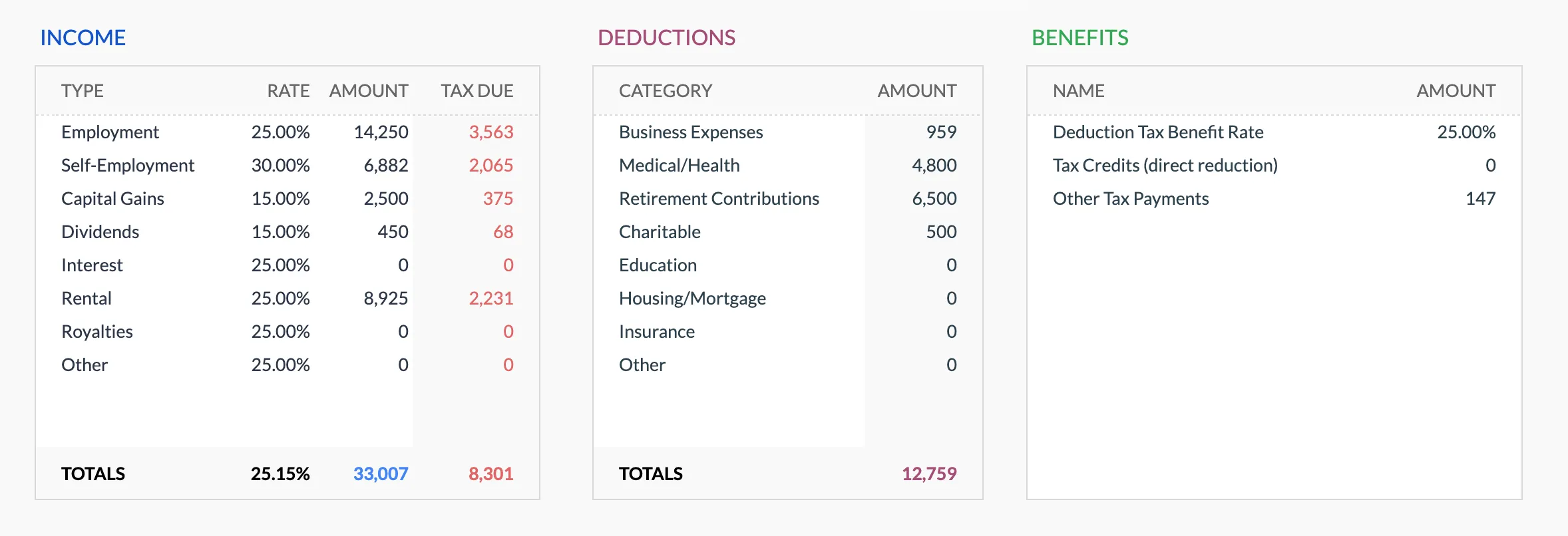
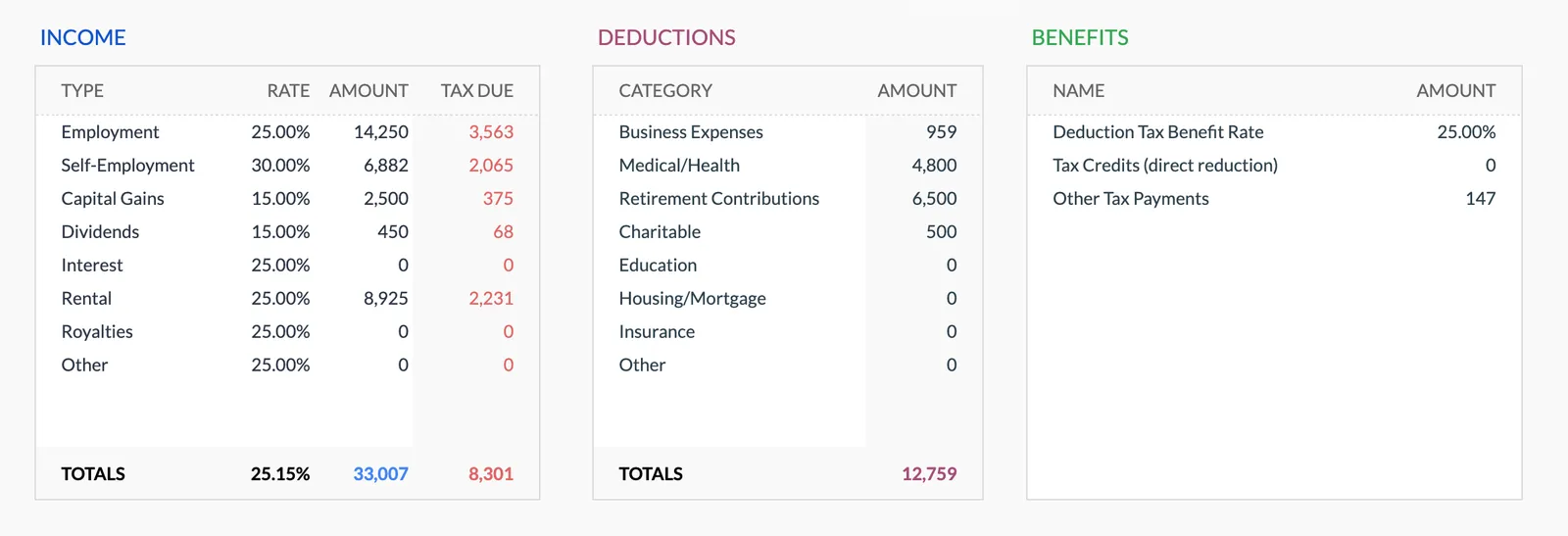
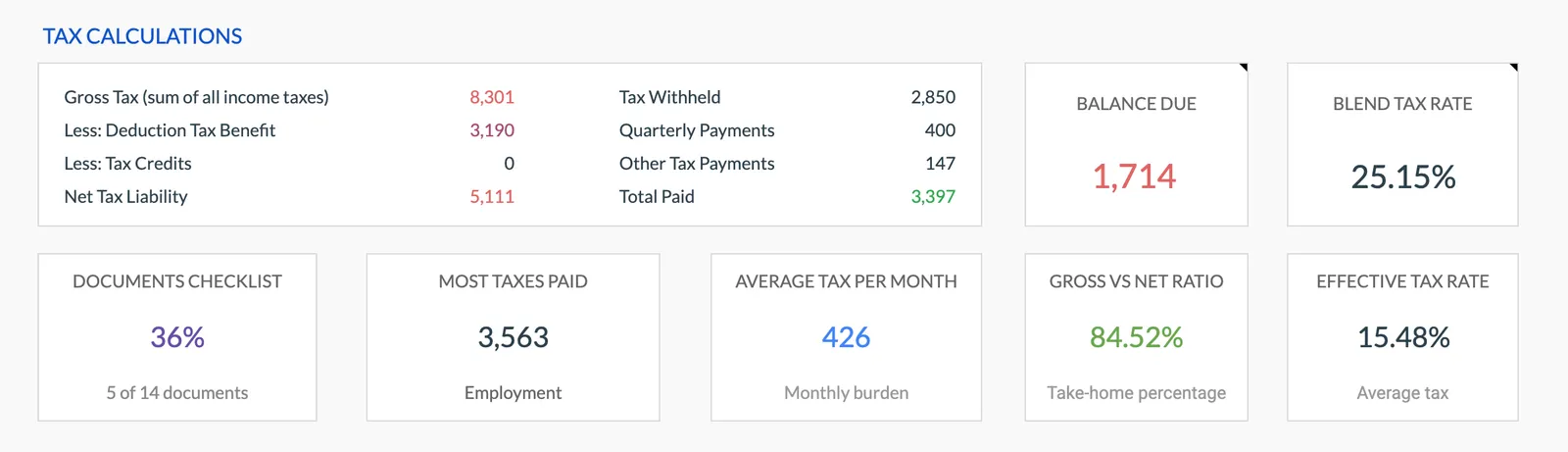
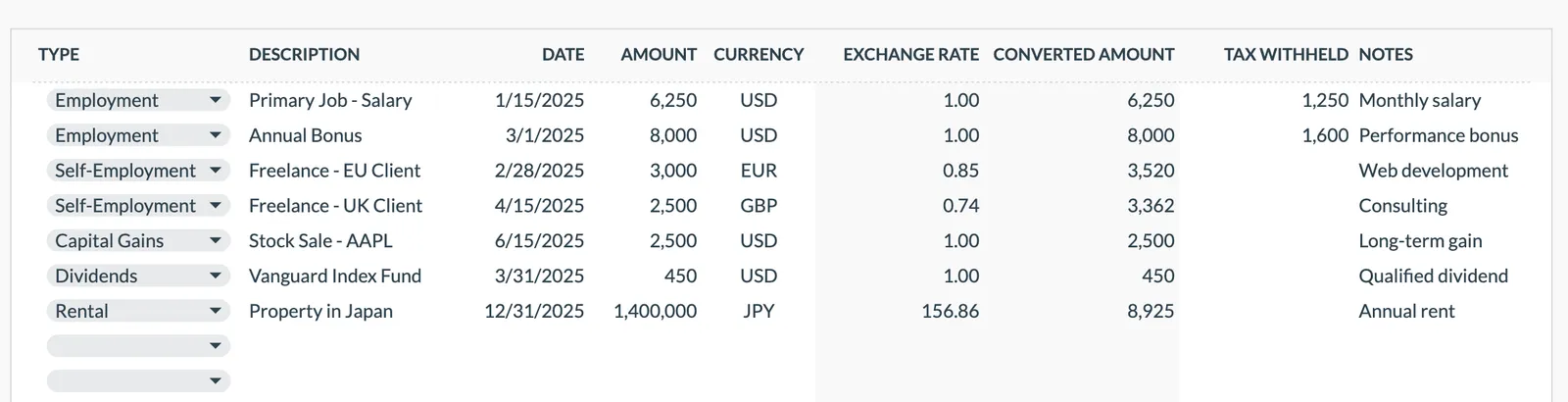
Sehen Sie sich die Vorlage an und erfahren Sie, wie sie Einkommen, Abzüge, Gutschriften und geschätzte vierteljährliche Zahlungen verfolgt.
- Jahressteuer-Übersichtsdashboard
- Einkommensverfolgung nach Quelle
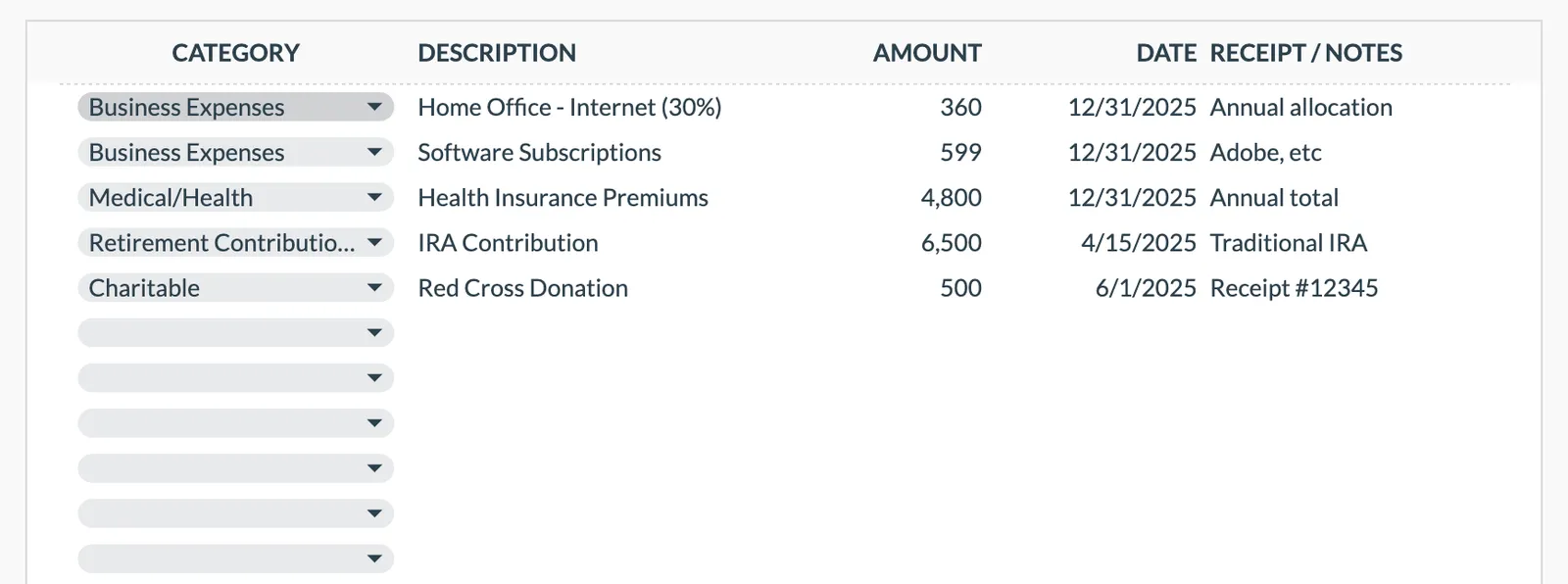
- Organizer für Abzüge und Gutschriften
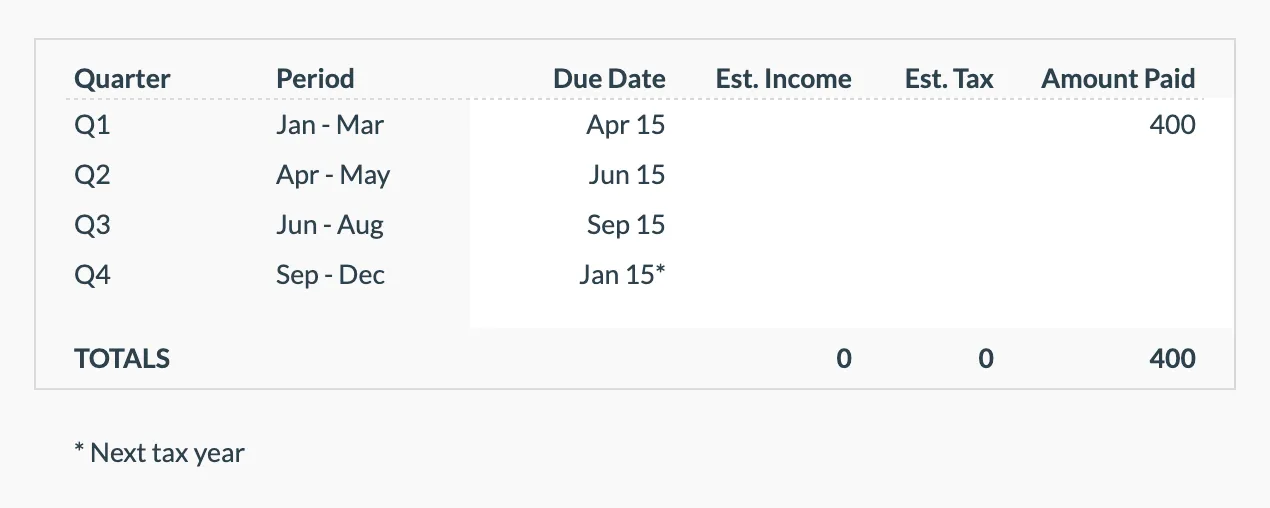
- Tracker für vierteljährliche Zahlungen
Annual tax overview with key figures
Detailed tax breakdown and projections
Track all income sources for tax purposes
Organize and track tax deductions
Plan and track quarterly estimated tax payments
Häufige Fragen
Steuerplanung in Washington - FAQ
Wie funktioniert die Kapitalertragssteuer in Washington?
Washington hat eine Steuer von 7% auf langfristige Kapitalgewinne oberhalb eines Standardabzugs von $278,000 für das Steuerjahr 2025 eingeführt [1] (der Betrag wird jährlich an die Inflation angepasst), mit zusätzlichen 2.9% auf Gewinne über $1 million. Sie gilt für Gewinne aus Aktien, Anleihen und anderen Finanzanlagen. Immobilien, Auszahlungen aus Rentenkonten und bestimmte Verkäufe von Kleinunternehmen sind ausgenommen. Spenden können gegen Gewinne angesetzt werden, um den steuerpflichtigen Betrag zu verringern. Die meisten Einwohner Washingtons liegen unter dem Schwellwert und schulden nichts.
Beeinflusst die B&O-Steuer die persönliche Steuerplanung in Washington?
Washingtons Geschäfts- und Berufssteuer (B&O) ist eine Bruttoumsatzsteuer auf Unternehmen - keine persönliche Einkommensteuer. Allerdings müssen selbstständig Erwerbstätige, Freiberufler und Gig-Worker im Seattle-Tech-Ökosystem oder anderswo in Washington möglicherweise B&O-Steuern auf ihre Geschäftseinnahmen zahlen. Sie ist getrennt von der bundesweiten Selbstständigkeitssteuer und erscheint nicht auf einer persönlichen Bundesrückgabe, ist aber Teil des Gesamtsteuergefüges für Washington-Geschäftsinhaber.
Wie beeinflusst Washingtons hohe Umsatzsteuer die Bundesrückgabe?
Washingtons Umsatzsteuer gehört zu den höchsten des Landes, wenn Staats- und Kommunalkomponenten kombiniert werden - Seattles kombinierter Satz liegt deutlich über der Staatsbasis. Da es keine Staatseinkommensteuer zum Abzug gibt, können Washington-Einwohner, die aufrechnen, den Umsatzsteuerabzug in ihrer Bundesrückgabe wählen. Der IRS stellt Standardtabellen bereit, oder die tatsächliche Umsatzsteuer kann nachverfolgt werden. In einem Bundesstaat mit hoher Umsatzsteuer wie Washington kann dieser Abzug bedeutsam sein.
Ist Washington mit der Kapitalertragssteuer immer noch ein steuerfrei Bundesstaat?
Für die meisten Einwohner ja. Washington besteuert keine Löhne, Gehälter, Geschäftseinkommen oder Rentenauszahlungen. Die Kapitalertragssteuer gilt nur für Gewinne über einem hohen Schwellwert und nur auf bestimmte Vermögenstypen. Der Staat klassifiziert sie als Verbrauchssteuer und nicht als Einkommensteuer. Für die große Mehrheit der Einwohner Washingtons bleibt der Staat faktisch einkommensteuerfrei.
Kann diese Vorlage bei der Verfolgung von Kapitalgewinnen für die Washington-Staatssteuer helfen?
Die Vorlage verfolgt Anlageeinkommen und Kapitalgewinne als Teil Ihres gesamten Bundessteuergefüges. Da Washingtons Kapitalertragssteuer einen bestimmten jährlichen Schwellwert verwendet und Immobilien und Rentenkontens ausschließt, bietet die Kapitalgewinnverfolgung in der Vorlage einen Ausgangspunkt zur Bewertung, ob Ihre Gewinne dem Staatsschwellwert nahekommen. Die Vorlage konzentriert sich auf bundesweite Planung, aber die Daten sind auch für Washington-spezifische Zwecke nützlich.
Können Sie die Antwort nicht finden? Kontaktieren Sie unser Team
Offizielle Steuerressourcen
Für aktuelle Steuersätze, Formulare und Abgabefristen speziell für Washington:
Sources
Organisieren Sie Ihre Steuerplanung für Washington
Einmaliger Kauf. Kein Abonnement. Ihre Finanzdaten verbleiben in Ihrem Google Drive.
Tax rules, rates, and contribution limits change, and official publications can themselves lag behind the law in force. We review these figures on a best-effort basis against sources we consider authoritative, but we cannot guarantee they are current, complete, or that better sources do not exist, and nothing here is tax, legal, or financial advice. For decisions, the relevant government authority is the reference. Last reviewed: August 2026.