Georgia
Plantilla de planificación fiscal para Georgia
Organiza tu planificación fiscal federal y estatal de Georgia en Google Sheets. Monitorea ingresos, deducciones y créditos con cálculos automáticos.
In Depth
El Impuesto Plano de Georgia, Ya Vigente
Georgia terminó de transformar su estructura fiscal en el año fiscal 2024, cuando una tasa plana única reemplazó los antiguos tramos graduados. Ese tramo superior entraba en vigor en un umbral de ingresos relativamente bajo, lo que significaba que la mayoría de los adultos que trabajan en Georgia ya pagaban cerca de la tasa máxima de todos modos. La tasa ha bajado cada año desde entonces, hasta llegar al 4.99% para el año fiscal 2026, con más reducciones vinculadas a metas de ingresos estatales.
Para los residentes de 62 años o más, Georgia ofrece una exclusión de ingresos por jubilación de hasta $35,000 por persona, que sube a $65,000 por persona a partir de los 65 años. Se aplica a pensiones, anualidades, intereses y dividendos en conjunto, en lugar de a cada fuente por separado, mientras que el Seguro Social está exento por sí solo. Entender cómo se agregan estos tipos de ingresos frente al límite de la exclusión es útil para proyectar la obligación fiscal estatal en la jubilación.
Los impuestos a la propiedad en Georgia varían ampliamente por condado. Los condados del Metro Atlanta como Fulton, DeKalb y Gwinnett tienen diferentes razones de tasación y tasas de molino. La exención homestead reduce el valor tasado de una residencia principal, lo que reduce directamente el impuesto a la propiedad. Para propósitos federales, estos impuestos a la propiedad más cualquier impuesto sobre la renta estatal cuentan hacia el límite de deducción SALT.
Georgia
Planificación Fiscal en Georgia
Georgia tiene un impuesto sobre la renta plano que se aplica a todos los ingresos gravables, y la tasa ha ido bajando cada año desde el año fiscal 2024. Los residentes del área de Atlanta también pueden necesitar considerar las implicaciones fiscales locales.
Impuesto sobre la Renta Plano
Georgia reemplazó sus tramos graduados con una tasa plana única a partir del año fiscal 2024. La tasa es del 4.99% para el año fiscal 2026, por debajo del 5.19% en 2025, con más reducciones vinculadas a metas de ingresos estatales.
Deducción Estándar
Georgia ofrece una deducción estándar para declarantes solteros y conjuntos. Estos montos son independientes de la deducción estándar federal.
Ingresos por Jubilación
Georgia proporciona una exclusión de ingresos por jubilación por persona para contribuyentes de 62 años o más, de hasta $35,000 entre los 62 y 64 años y $65,000 a partir de los 65. Los beneficios del Seguro Social están exentos por separado y no consumen la exclusión.
Impuesto a la Propiedad
Los impuestos a la propiedad de Georgia varían por condado. La exención homestead puede reducir el impuesto a la propiedad para residencias principales.
Obtener el Planificador Fiscal Anual
Primeros Pasos
Comenzar con la Planificación Fiscal de Georgia
Ingresa ingresos y compara deducciones federales versus Georgia
Agrega todas las fuentes de ingresos a la plantilla. Luego ten en cuenta que la deducción estándar de Georgia, de $24,000 conjunta y $12,000 individual, es más baja que el monto federal, por lo que tu ingreso gravable estatal probablemente será más alto. Georgia generalmente exige la misma elección de deducción estándar o detallada que se hizo en la declaración federal, así que las dos declaraciones se mueven juntas en ese punto.
Calcula la exclusión de ingresos por jubilación si calificas
Para residentes de 62 años o más, monitorea tus ingresos combinados de pensión, anualidad, intereses y dividendos frente al límite de la exclusión por jubilación de Georgia de $35,000, que sube a $65,000 a partir de los 65 años. La exclusión es por persona, así que cada miembro de una pareja puede reclamarla, y el Seguro Social está exento por separado. Usa la sección de notas para registrar cuánto de los ingresos por jubilación cae dentro de la exclusión y cuánto está sujeto a la tasa del 4.99%.
Monitorea el impuesto a la propiedad específico del condado para propósitos SALT
El impuesto a la propiedad de Georgia varía ampliamente por condado - el Condado de Fulton opera diferente al Condado de Cherokee o Henry. Ingresa tu impuesto a la propiedad real en la sección de deducciones para ver cómo se combina con el impuesto sobre la renta estatal contra el límite federal de SALT. La exención homestead reduce tu valor tasado, así que usa la cifra de impuesto a la propiedad post-exención.
Registra pagos estimados en ambos niveles
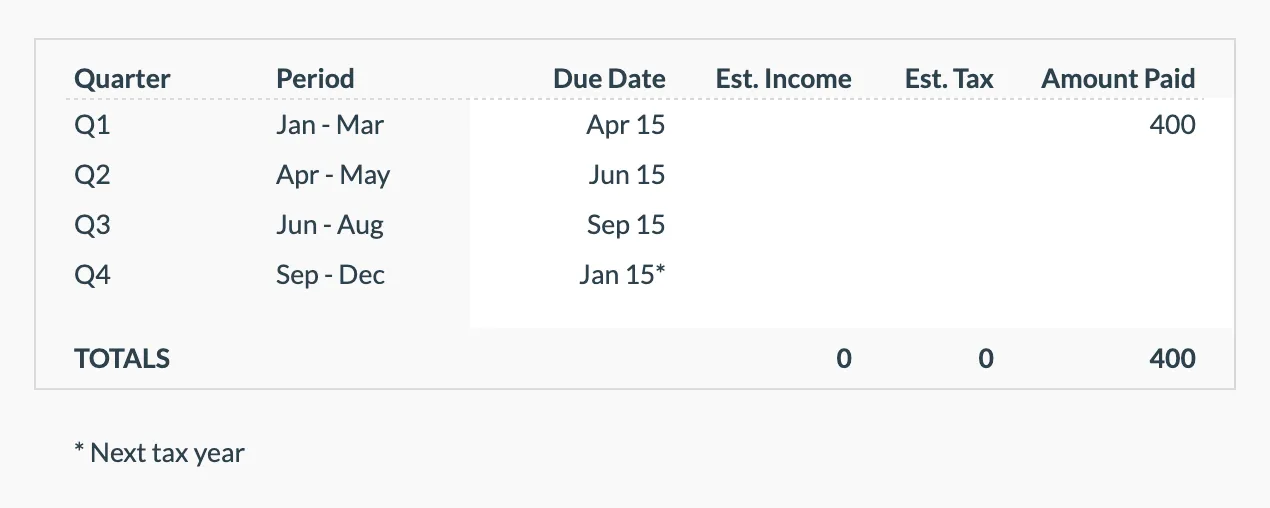
Si tienes ingresos no sujetos a retención, Georgia requiere pagos estimados junto con los federales. La tasa plana hace que las estimaciones de Georgia sean sencillas: aplica la tasa del 4.99% para el año fiscal 2026 [1] a tu ingreso gravable estatal proyectado, divide entre cuatro y registra cada pago en el rastreador trimestral.
Véalo en Acción
Cómo se ve el planificador fiscal
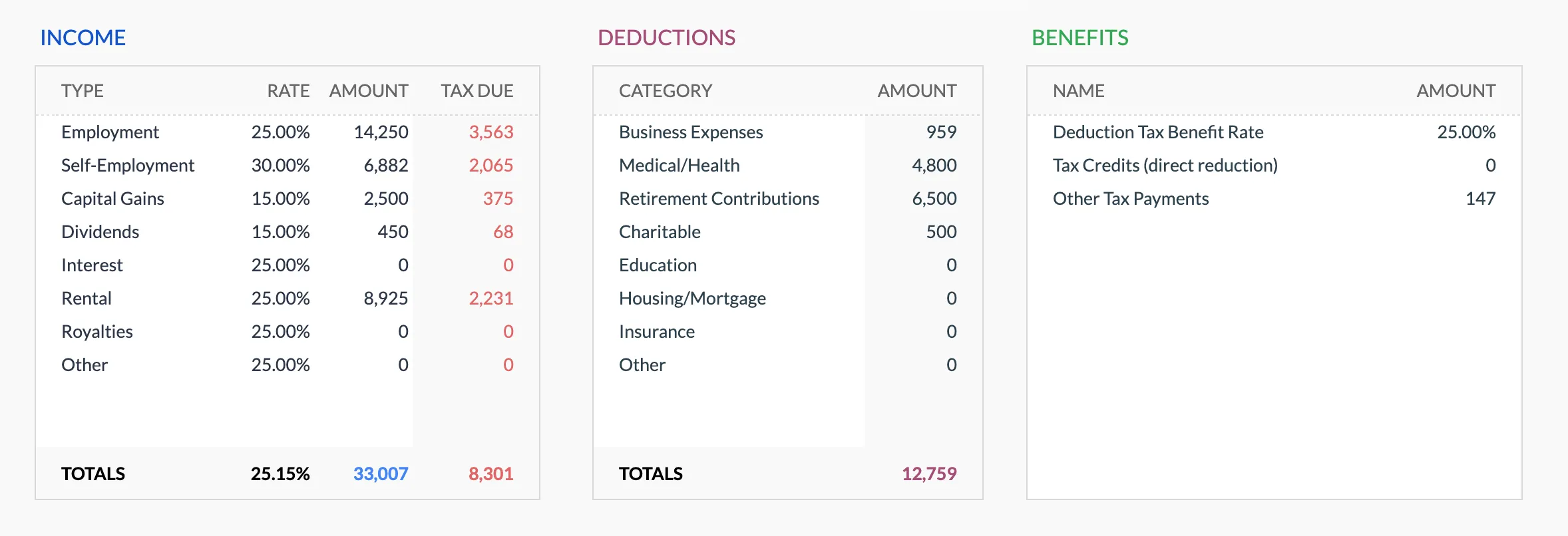
Explora la plantilla para ver cómo registra ingresos, deducciones, créditos y pagos trimestrales estimados.
- Panel de resumen fiscal anual
- Seguimiento de ingresos por fuente
- Organizador de deducciones y créditos
- Rastreador de pagos trimestrales
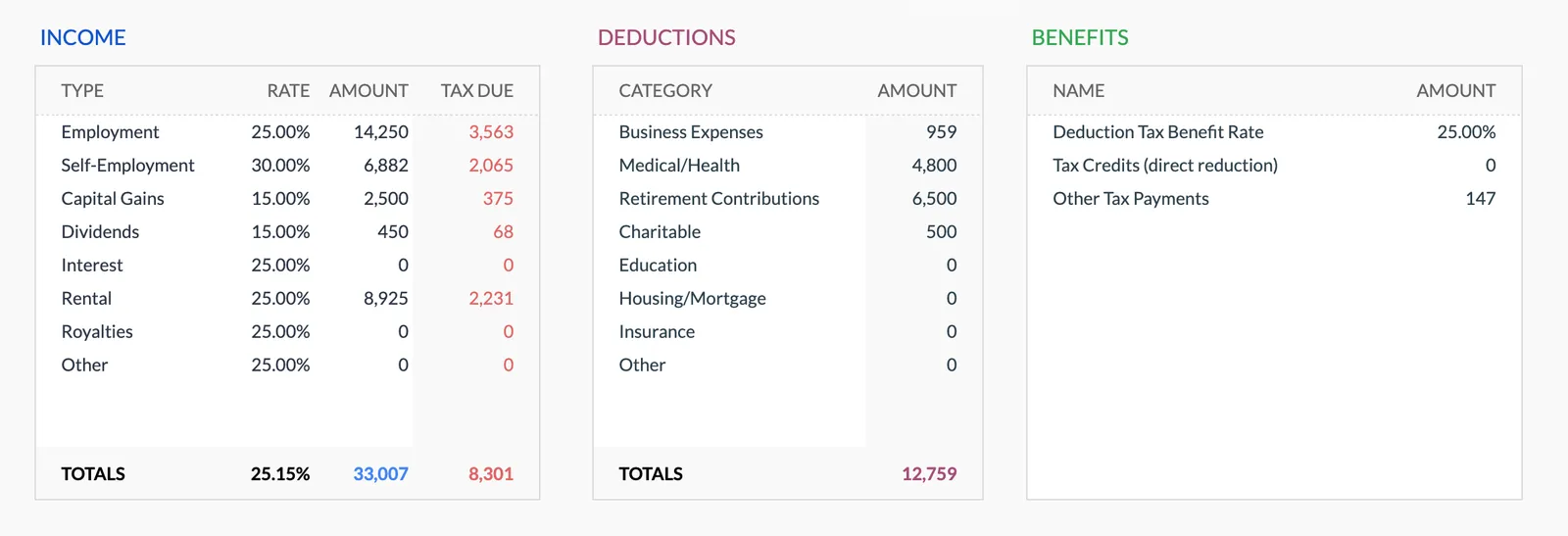
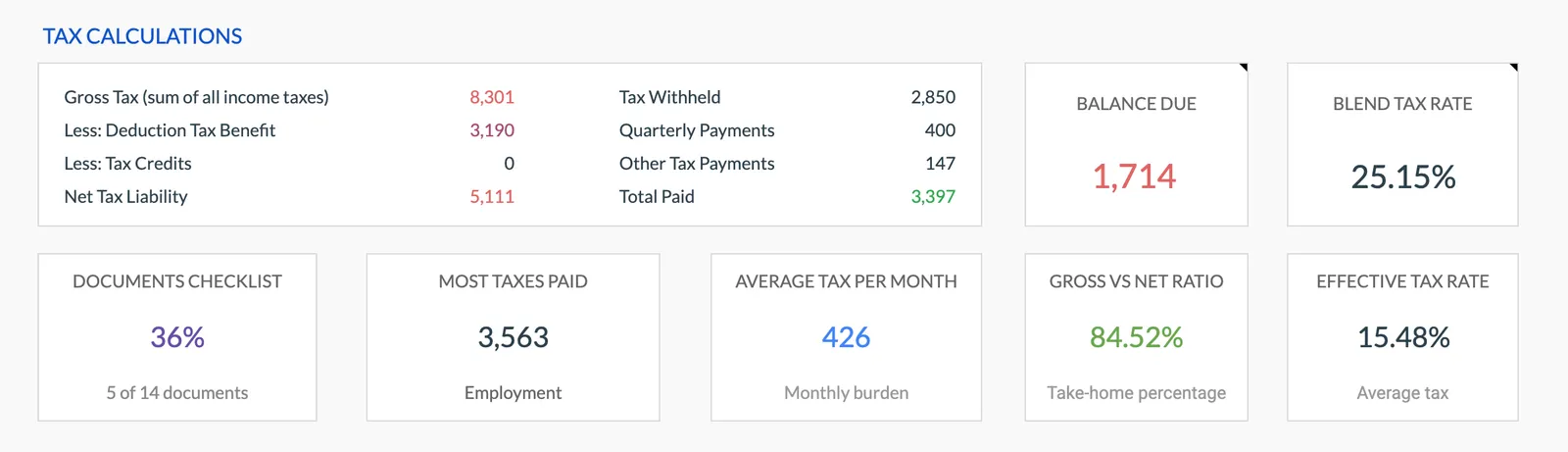
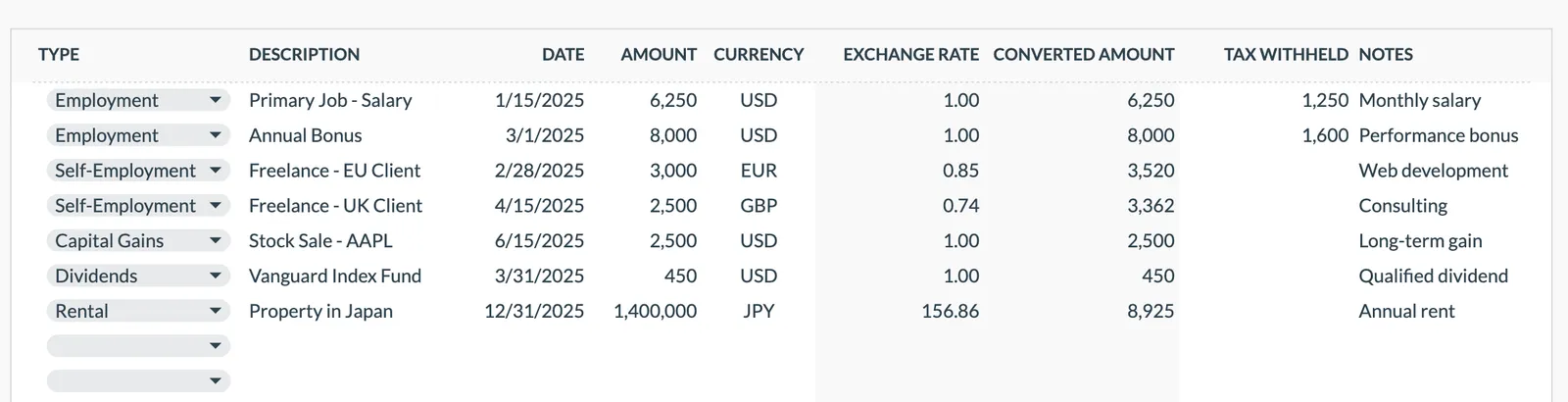

Annual tax overview with key figures
Detailed tax breakdown and projections
Track all income sources for tax purposes
Organize and track tax deductions
Plan and track quarterly estimated tax payments
Preguntas Frecuentes
Planificación fiscal en Georgia - Preguntas Frecuentes
¿Cuándo cambió Georgia a un impuesto sobre la renta plano?
Georgia pasó de tramos graduados a una tasa plana a partir del año fiscal 2024, comenzando en 5.39% y bajando a 5.19% para 2025 y 4.99% para el año fiscal 2026 [2]. Anteriormente, el estado tenía múltiples tramos, pero la tasa máxima entraba en vigor en un umbral tan bajo que la mayoría de los adultos que trabajan ya pagaban cerca de la tasa máxima. El cambio a una tasa plana formalizó lo que ya era la experiencia práctica para la mayoría de los contribuyentes y simplificó los cálculos de impuestos estatales.
¿Cuál es la deducción estándar de Georgia y cómo difiere de la federal?
Georgia tiene su propia deducción estándar de $24,000 para declarantes conjuntos y $12,000 para declarantes solteros, separada de la deducción estándar federal. Georgia generalmente exige el mismo tipo de deducción reclamada en la declaración federal, así que detallar a nivel federal significa detallar también para Georgia. Los montos de deducción de Georgia son notablemente más bajos que las cifras federales, por lo que el ingreso gravable estatal suele ser más alto que el ingreso gravable federal.
¿Cómo trata Georgia los ingresos por jubilación?
Georgia proporciona una exclusión de ingresos por jubilación de hasta $35,000 por persona entre los 62 y 64 años, aplicada al total combinado de pensiones, anualidades, intereses, dividendos y otros ingresos calificados. Los residentes de 65 años o más pueden excluir hasta $65,000 cada uno. Los beneficios del Seguro Social están exentos del impuesto de Georgia por sí solos y no cuentan contra el límite, así que entender cómo se agregan las demás fuentes de ingresos es útil para proyectar la obligación estatal en la jubilación.
¿Varían suficientemente los impuestos a la propiedad de Georgia para afectar la planificación federal de SALT?
Los impuestos a la propiedad de Georgia varían significativamente por condado. Los condados del Metro Atlanta como Fulton, DeKalb, Cobb y Gwinnett tienen diferentes razones de tasación y tasas de molino. La exención homestead reduce el valor tasado para residencias principales. Combinado con el impuesto sobre la renta plano estatal, monitorear el total de impuesto sobre la renta estatal más impuesto a la propiedad contra el límite federal de SALT muestra cuánto beneficio federal de deducción realmente recibes.
¿Puedo usar esta plantilla ahora que Georgia tiene una tasa plana?
La plantilla cubre la planificación fiscal federal en detalle, que es el lado más complejo. La tasa plana del 4.99% de Georgia para el año fiscal 2026 hace que los cálculos estatales sean simples: multiplica tu ingreso gravable de Georgia por la tasa. Usa las notas y los campos personalizados para monitorear elementos específicos de Georgia como la deducción estándar estatal y la exclusión de ingresos por jubilación junto a tus proyecciones federales.
¿No encuentras la respuesta que buscas? Contacta a nuestro equipo
Recursos fiscales oficiales
Para tasas actuales, formularios y fechas límite de presentación específicos de Georgia:
Sources
Organiza tu planificación fiscal para Georgia
Compra única. Sin suscripción. Tus datos financieros se guardan en tu Google Drive.
Tax rules, rates, and contribution limits change, and official publications can themselves lag behind the law in force. We review these figures on a best-effort basis against sources we consider authoritative, but we cannot guarantee they are current, complete, or that better sources do not exist, and nothing here is tax, legal, or financial advice. For decisions, the relevant government authority is the reference. Last reviewed: August 2026.