Texas
Modèle de planificateur fiscal pour Texas
Suivez votre planification fiscale fédérale pour le Texas dans Google Sheets. Pas d'impôt sur le revenu d'État signifie que la planification fédérale est l'objectif principal - mais les taxes foncières sont un facteur important.
In Depth
Texas - Pas d'impôt sur le revenu, mais la taxe foncière raconte une histoire différente
Le Texas est le plus grand État par population sans impôt sur le revenu, et l'absence de tout impôt sur les salaires, les placements ou les revenus de retraite est un attrait majeur. Cependant, l'État finance les administrations locales et les écoles principalement par des taxes foncières, et les taux effectifs figurent parmi les plus élevés du pays. Pour les propriétaires, la facture fiscale foncière annuelle peut être substantielle - dans certains comtés des zones métropolitaines, elle rivalise ou dépasse ce que les résidents des États avec impôt sur le revenu paient en impôts sur le revenu d'État combinés et taxes foncières.
L'exemption d'habitation au Texas a été considérablement étendue ces dernières années, augmentant le montant de la valeur imposée d'une résidence principale qui est exonérée des taxes foncières du district scolaire. Cela a fourni un allègement considérable aux propriétaires, bien que l'augmentation des évaluations des propriétés puisse compenser certains avantages. Les résidents âgés de 65 ans ou plus peuvent également geler leur montant de taxe du district scolaire avec un gel qui empêche les augmentations même si les évaluations augmentent.
Aux fins de l'impôt fédéral, les résidents du Texas ne peuvent réclamer les taxes foncières que pour la déduction SALT - il n'y a pas d'impôt sur le revenu d'État à prendre en compte. Étant donné que les taxes foncières du Texas peuvent être très élevées, de nombreux propriétaires atteignent ou approchent la limite SALT rien que par les taxes foncières - en particulier dans les zones métropolitaines d'Austin, Dallas, Houston et San Antonio. Le suivi du tableau de déduction fédérale est l'endroit où la planification compte le plus pour les résidents du Texas, car le côté État ne nécessite absolument aucun dépôt.
Texas
Planification fiscale au Texas
Le Texas fait partie d'un petit groupe d'États sans impôt sur le revenu d'État, ce qui en fait un choix populaire pour ceux qui cherchent à réduire leur charge fiscale d'État. Cependant, le Texas a des taxes foncières relativement élevées qui compensent l'absence d'impôt sur le revenu.
Pas d'impôt sur le revenu d'État
Le Texas n'impose pas d'impôt sur le revenu d'État sur le revenu gagné. Cela signifie que les résidents n'ont qu'à planifier pour l'impôt fédéral sur le revenu sur les salaires et traitements. Cependant, d'autres taxes s'appliquent toujours.
L'impôt fédéral s'applique toujours
Même sans impôt sur le revenu d'État, les résidents du Texas doivent payer l'impôt fédéral sur le revenu. Le planificateur fiscal annuel aide à suivre les tranches fédérales, les déductions et les crédits pour garder votre situation fiscale claire.
Taxes foncières élevées
Le Texas compense l'absence d'impôt sur le revenu par des taxes foncières parmi les plus élevées du pays [1]. Les taxes foncières peuvent être déductibles sur votre déclaration fédérale jusqu'à la limite SALT.
Considérations relatives au revenu de retraite
L'absence d'impôt sur le revenu d'État au Texas peut être favorable pour le revenu de retraite, y compris la Sécurité Sociale, les pensions et les distributions de 401(k). L'impôt fédéral sur le revenu de retraite s'applique toujours et vaut la peine d'être suivi.
Obtenir le planificateur fiscal annuel
Premiers pas
Utilisation du planificateur fiscal en tant que résident du Texas
Entrez les revenus en sachant que l'impôt fédéral est votre seul impôt sur le revenu
Puisque le Texas n'a pas d'impôt sur le revenu d'État, le modèle se concentre entièrement sur votre tranche fédérale. Ajoutez les salaires, les revenus d'activités indépendantes, les placements et les revenus de retraite. Pour la grande population texane de travailleurs du pétrole et du gaz, d'entrepreneurs indépendants et de professionnels de la technologie, voir exactement combien va à l'IRS est l'image fiscale complète.
Suivez les taxes foncières par rapport à la limite SALT
Les taxes foncières du Texas, à un taux effectif d'environ 1.4% de la valeur de la maison pour l'année fiscale 2026, font que la déduction SALT compte beaucoup. Entrez votre montant de taxe foncière, qui varie entre le comté de Harris (Houston), le comté de Travis (Austin) et le comté de Dallas. De nombreux propriétaires texans atteignent le plafond SALT par les seules taxes foncières, donc savoir où vous vous situez aide pour la décision entre déductions détaillées et déduction standard.
Configurez les paiements estimés pour le travail indépendant et les revenus commerciaux
Le Texas compte une grande population de travailleurs indépendants couvrant le pétrole et le gaz, la technologie, l'immobilier et les services professionnels. Si votre revenu ne fait pas l'objet de retenues d'impôt fédéral, le suivi trimestriel des paiements estimés vous maintient à jour avec les délais de l'IRS. Notez que la taxe de franchise du Texas pour les entreprises est distincte et ne fait pas l'objet d'un suivi ici - cela porte sur les obligations fédérales personnelles.
Tenez compte de l'effet de l'exemption d'habitation
Si vous possédez une maison au Texas, l'exemption d'habitation réduit votre évaluation de la taxe foncière du district scolaire. Si vous avez 65 ans ou plus, le gel de la taxe du district scolaire empêche les augmentations. Mettez à jour votre entrée de taxe foncière lorsque votre déclaration fiscale annuelle arrive - le montant réel affecte votre calcul de déduction SALT fédérale dans le modèle.
Examinez le tableau de bord pour votre tableau fiscal complet
Pour les résidents du Texas, la projection fédérale du tableau de bord est toute l'obligation d'impôt sur le revenu. Pas de déclaration d'État, pas de paiements estimés d'État. Examinez-le trimestriellement - surtout si le revenu varie en fonction des prix du pétrole, des cycles de contrats ou des modèles d'activités saisonnières courants dans l'économie du Texas.
Voir en action
À quoi ressemble le planificateur fiscal
Parcourez le modèle pour voir comment il suit les revenus, les déductions, les crédits et les paiements trimestriels estimés.
- Tableau de bord fiscal annuel
- Suivi des revenus par source
- Organisateur de déductions et crédits
- Suivi des paiements trimestriels
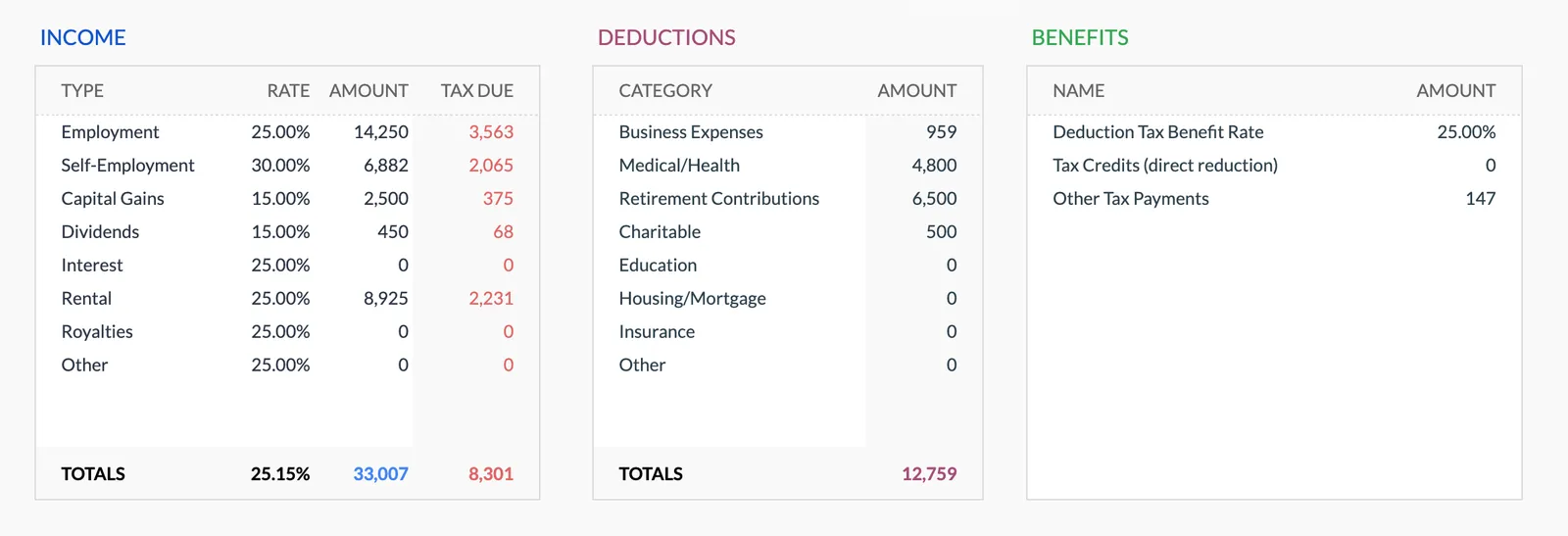
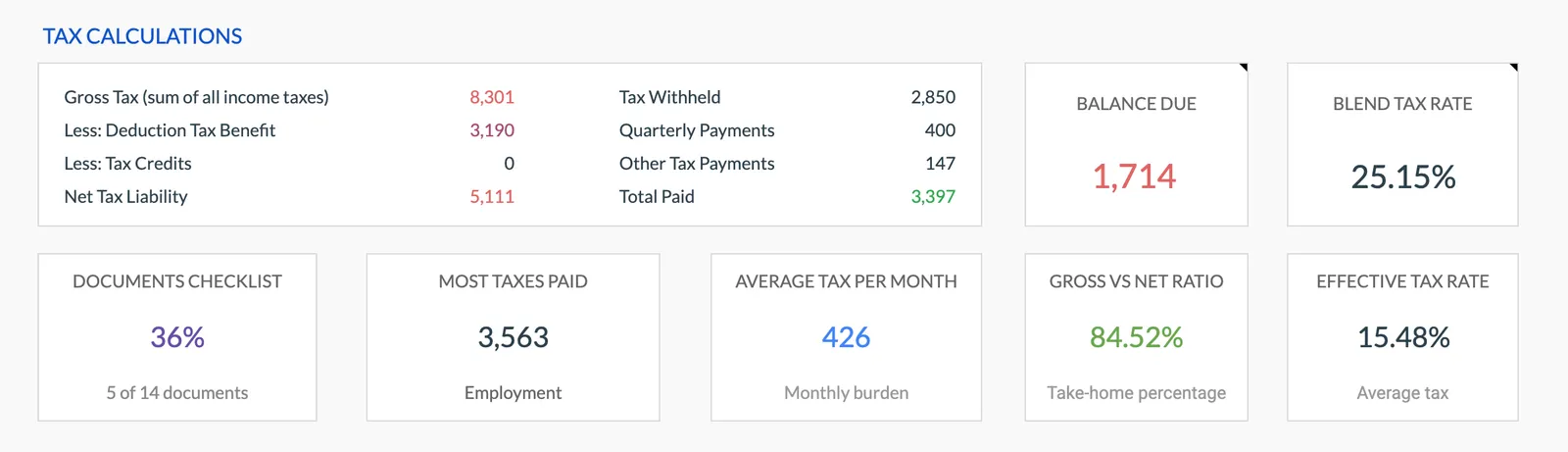
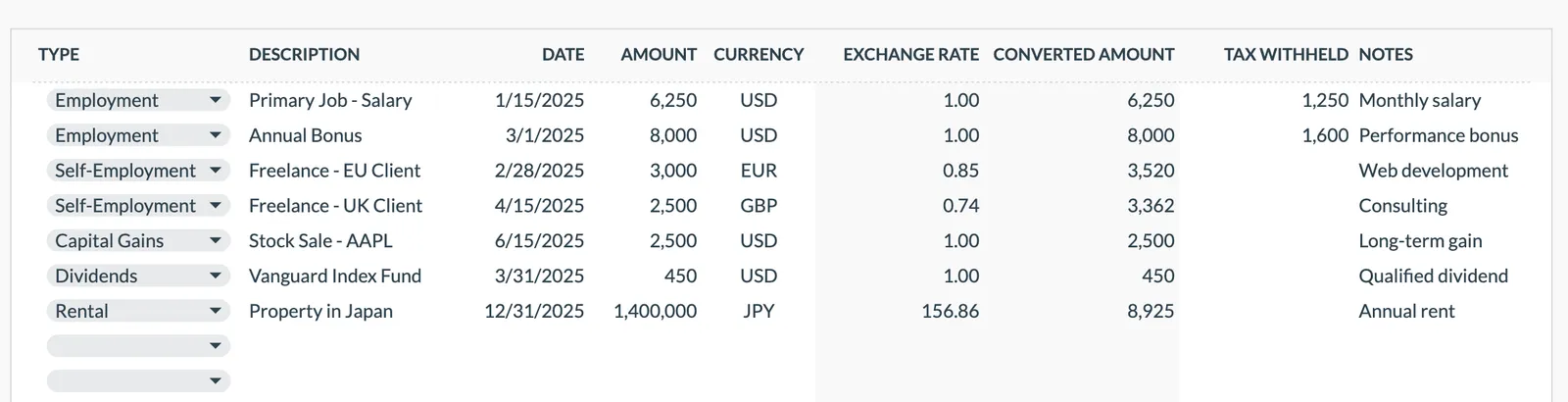
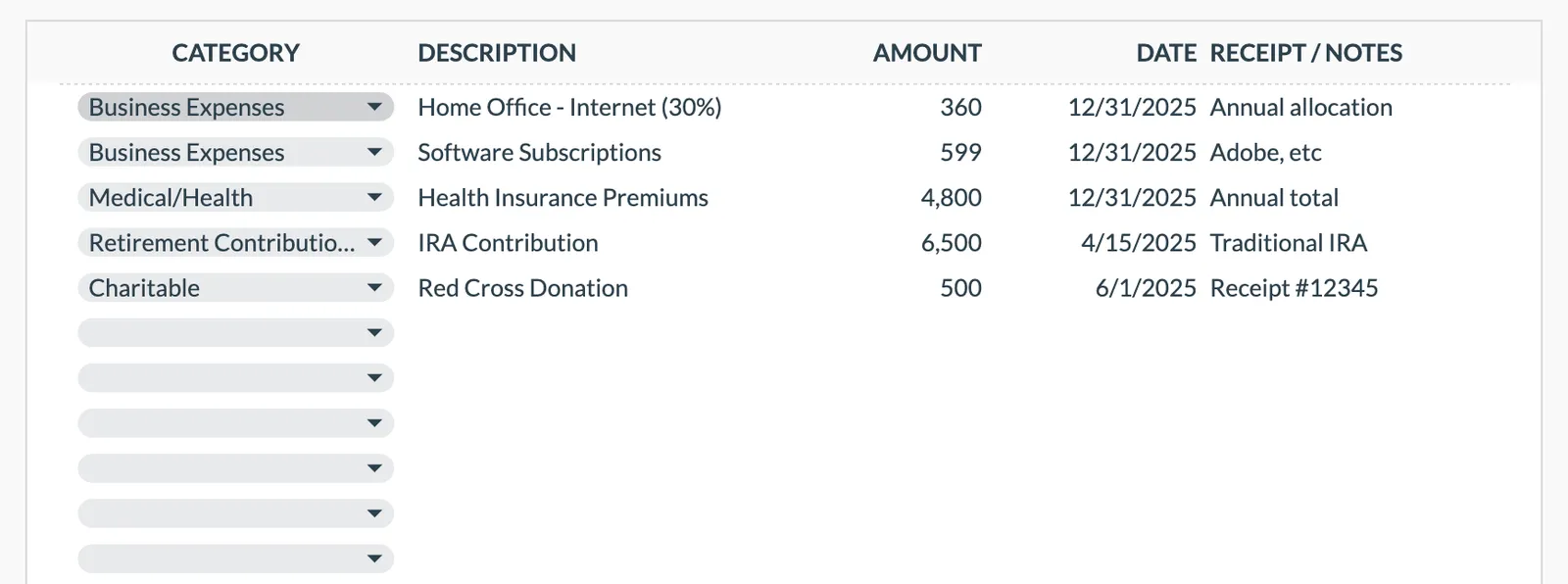
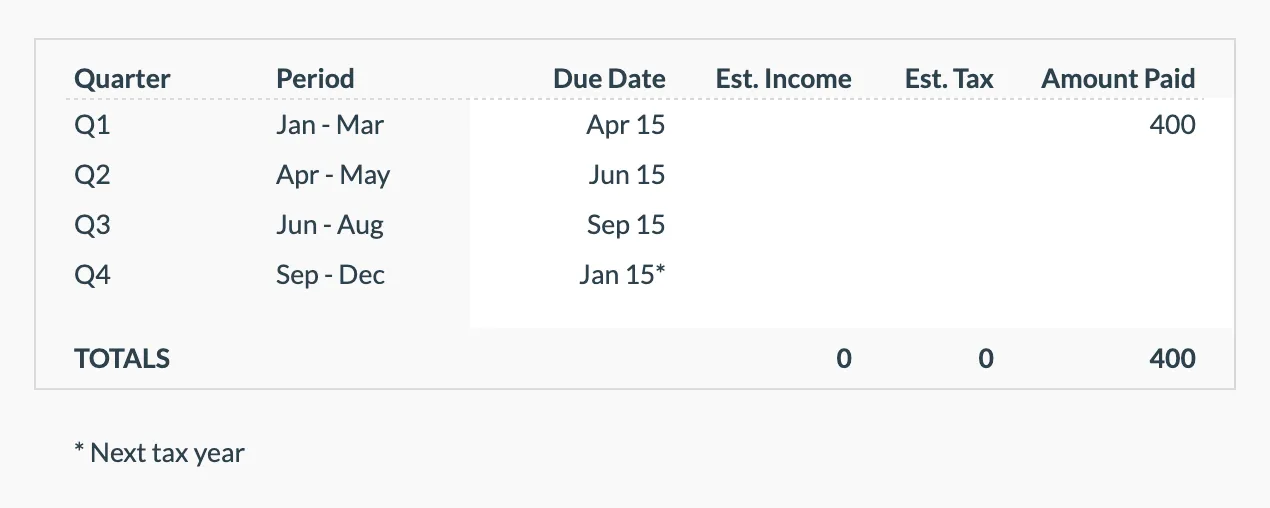
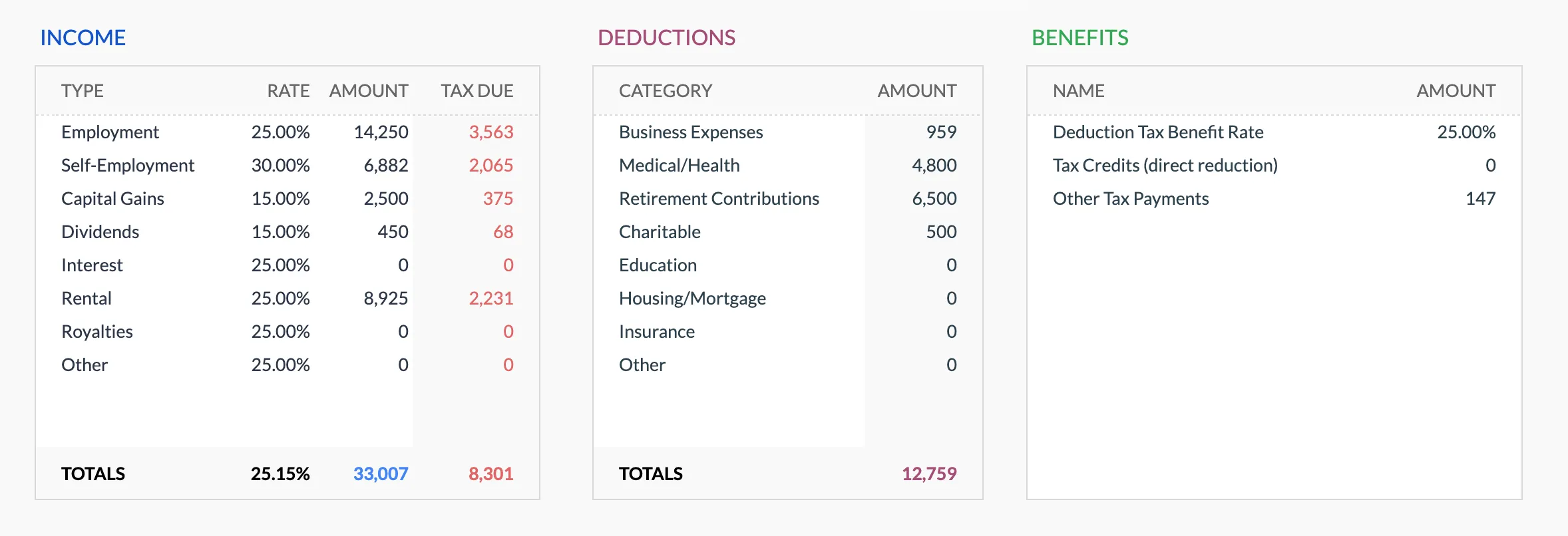
Annual tax overview with key figures
Detailed tax breakdown and projections
Track all income sources for tax purposes
Organize and track tax deductions
Plan and track quarterly estimated tax payments
Questions fréquentes
Planification fiscale en Texas - FAQ
Comment les taxes foncières du Texas se comparent-elles aux États avec impôt sur le revenu?
Les taux de taxe foncière du Texas figurent parmi les plus élevés du pays, avec un taux effectif d'environ 1.4% de la valeur de la maison pour l'année fiscale 2026 [2], bien que les taux varient selon le comté et le district scolaire. Dans de nombreuses zones métropolitaines comme Austin, Dallas, Houston et San Antonio, la facture annuelle de taxe foncière sur une maison au prix médian peut rivaliser avec ou dépasser ce que les résidents des États avec impôt sur le revenu paient en impôts sur le revenu d'État et taxes foncières combinés. Ce compromis vaut la peine d'être compris lorsque vous évaluez le tableau fiscal global du Texas.
La taxe de franchise du Texas affecte-t-elle la planification fiscale personnelle?
La taxe de franchise du Texas (également appelée taxe sur les marges) s'applique aux entreprises dont le chiffre d'affaires dépasse un certain seuil [1]. Ce n'est pas un impôt sur le revenu personnel, mais les travailleurs indépendants, les propriétaires de LLC et les petits exploitants commerciaux du Texas peuvent le devoir au niveau de l'entreprise. C'est bon à savoir - la taxe de franchise est distincte de l'impôt fédéral sur le travail indépendant et n'apparaît pas sur une déclaration fédérale personnelle, mais elle fait partie du tableau fiscal global des propriétaires d'entreprises du Texas.
Puis-je déduire les taxes foncières du Texas de ma déclaration fédérale?
Oui, mais la déduction SALT est plafonnée. Puisque le Texas n'a pas d'impôt sur le revenu d'État, la taxe foncière est l'élément SALT principal. Étant donné que les taxes foncières du Texas sont très élevées, de nombreux propriétaires atteignent ou dépassent la limite SALT rien que par les taxes foncières - en particulier dans les principales zones métropolitaines. La section déduction du modèle vous aide à suivre où vous vous situez par rapport à la limite.
Comment fonctionne l'exemption d'habitation du Texas?
Le Texas offre une exemption d'habitation qui réduit la valeur imposable d'une résidence principale pour les taxes foncières du district scolaire. L'exemption a été considérablement étendue ces dernières années. Les résidents âgés de 65 ans ou plus peuvent également geler le montant de leur impôt du district scolaire, empêchant les augmentations même si la valeur des propriétés augmente. Ces dispositions affectent votre facture fiscale foncière réelle, qui à son tour affecte le montant de la déduction SALT fédérale disponible pour vous.
Pourquoi utiliser un planificateur fiscal au Texas s'il n'y a pas d'impôt sur le revenu d'État?
L'impôt fédéral sur le revenu est le seul impôt sur le revenu pour les résidents du Texas, mais il implique des tranches, des déductions, des crédits et des délais de paiements estimés. La grande population de travailleurs indépendants et de petits entrepreneurs du Texas - des entrepreneurs du pétrole et du gaz aux pigistes technologiques - doit souvent suivre les paiements estimés fédéraux trimestriels. Le modèle organise toutes les obligations fédérales en un seul endroit, qui est l'intégralité du tableau de l'impôt sur le revenu au Texas.
Vous ne trouvez pas la réponse que vous cherchez ? Contactez notre équipe
Ressources fiscales officielles
Pour les taux actuels, formulaires et délais de déclaration spécifiques à Texas:
Organisez votre planification fiscale pour Texas
Achat unique. Sans abonnement. Vos données financières restent dans votre Google Drive.
Tax rules, rates, and contribution limits change, and official publications can themselves lag behind the law in force. We review these figures on a best-effort basis against sources we consider authoritative, but we cannot guarantee they are current, complete, or that better sources do not exist, and nothing here is tax, legal, or financial advice. For decisions, the relevant government authority is the reference. Last reviewed: August 2026.