Minnesota
Tax Planner Template for Minnesota
Track your federal and Minnesota state tax planning in Google Sheets. Minnesota has one of the higher state income tax rates, making organized planning especially valuable.
In Depth
The Minnesota Tax Landscape - High Rates, Strong Credits
Minnesota consistently ranks among the highest-tax states in the nation. The graduated income tax structure starts at a rate that already exceeds many states' flat rates, and the top bracket pushes well above the national average. This is not just a concern for high earners - even the middle brackets carry rates that are above what residents in most other states face.
One area where Minnesota stands apart from many states is Social Security taxation. Most states either fully exempt Social Security or do not have an income tax at all. Minnesota taxes Social Security benefits for residents whose income exceeds certain thresholds, though a subtraction helps offset this for those closer to the threshold. The subtraction phases out as income rises, so residents with substantial pension, investment, or other income alongside Social Security may find more of their benefits subject to state tax.
Minnesota partially offsets its high rates with a robust set of credits. The property tax refund program helps homeowners and renters whose property taxes are high relative to income. The Working Family Credit functions like the federal EITC but is calculated independently. An education credit for K-12 expenses is also available. These credits reduce tax owed dollar-for-dollar and, in some cases, are refundable.
Minnesota
Tax Planning in Minnesota
Minnesota has a graduated income tax with a top rate among the highest [2] in the country. The state also taxes Social Security benefits for higher-income residents, adding another layer to tax planning.
High Marginal Rates
Minnesota has a graduated income tax with rates among the highest in the nation. Even the lowest bracket rate is higher than many states' flat rates, and the top rate is well above the national average.
Social Security Taxation
Minnesota taxes Social Security benefits for residents above certain income thresholds, though it provides a subtraction that phases out at higher incomes. This is a factor for retirees with additional income sources.
Property Tax Relief
Homeowners may claim the Homestead Credit Refund on Form M1PR, while since tax year 2024 renters claim a refundable Renter's Credit on the income tax return itself. Both are based on household income and on the property taxes or rent paid.
Tax Credits
Minnesota offers several credits including a Working Family Credit (similar to the federal EITC), a Child and Dependent Care Credit, and an education credit for K-12 expenses.
Get the Annual Tax Planner
Getting Started
Getting Started with Minnesota Tax Planning
Enter all income including Social Security details
Add wages, self-employment, investment income, pensions, and Social Security benefits. Minnesota is one of the states that taxes Social Security above certain income thresholds, so entering Social Security separately from other income helps clarify how much of it may be subject to state tax. The state provides a subtraction that phases out at higher income levels.
Track deductions with Minnesota's federal conformity in mind
Minnesota largely conforms to federal tax definitions, so most federal deductions flow through to the state return. Enter all deductions - mortgage interest, charitable giving, medical expenses, and retirement contributions. With Minnesota's top rate at 9.85%, each deduction saves close to ten cents per dollar at the state level for higher earners, on top of the federal benefit.
Check eligibility for Minnesota credits
Minnesota offers several credits worth tracking: the Working Family Credit (state-level EITC), the K-12 Education Credit for school-related expenses, and the Child and Dependent Care Credit. These are calculated independently from federal credits. Use the notes section to flag which credits apply to your situation and estimate their value against your state liability.
Review property tax relief alongside your return
Minnesota's property tax relief (sometimes called the "circuit breaker") helps homeowners and renters whose housing costs are high relative to income. Homeowners file the Homestead Credit Refund on Form M1PR, due August 15, while since tax year 2024 renters claim the Renter's Credit on the income tax return using Schedule M1RENT. Having accurate income totals in the template makes it easier to estimate either amount.
Plan estimated payments for both federal and state
Minnesota's high rates mean underpayment penalties can be significant. Use the quarterly tracker to plan both federal and Minnesota estimated payments. If you have income that varies - self-employment, commissions, or investment gains - Minnesota allows an annualized income installment method that may reduce required estimates in lower-income quarters.
See It In Action
What the tax planner looks like
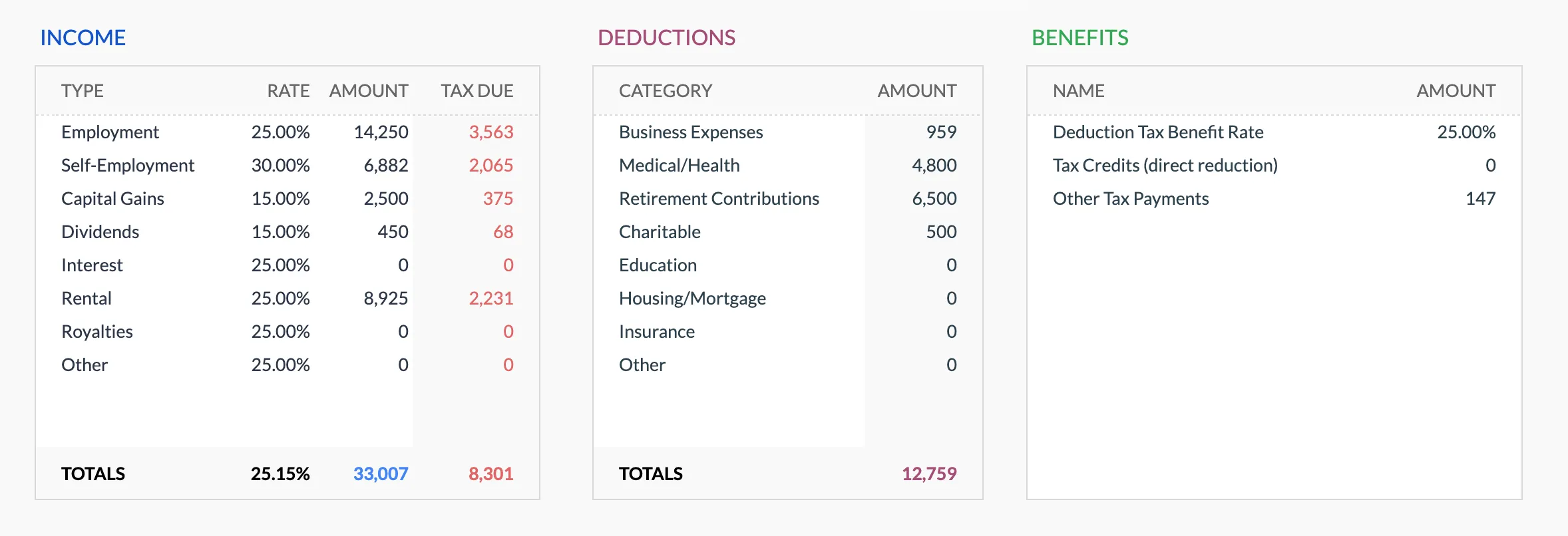
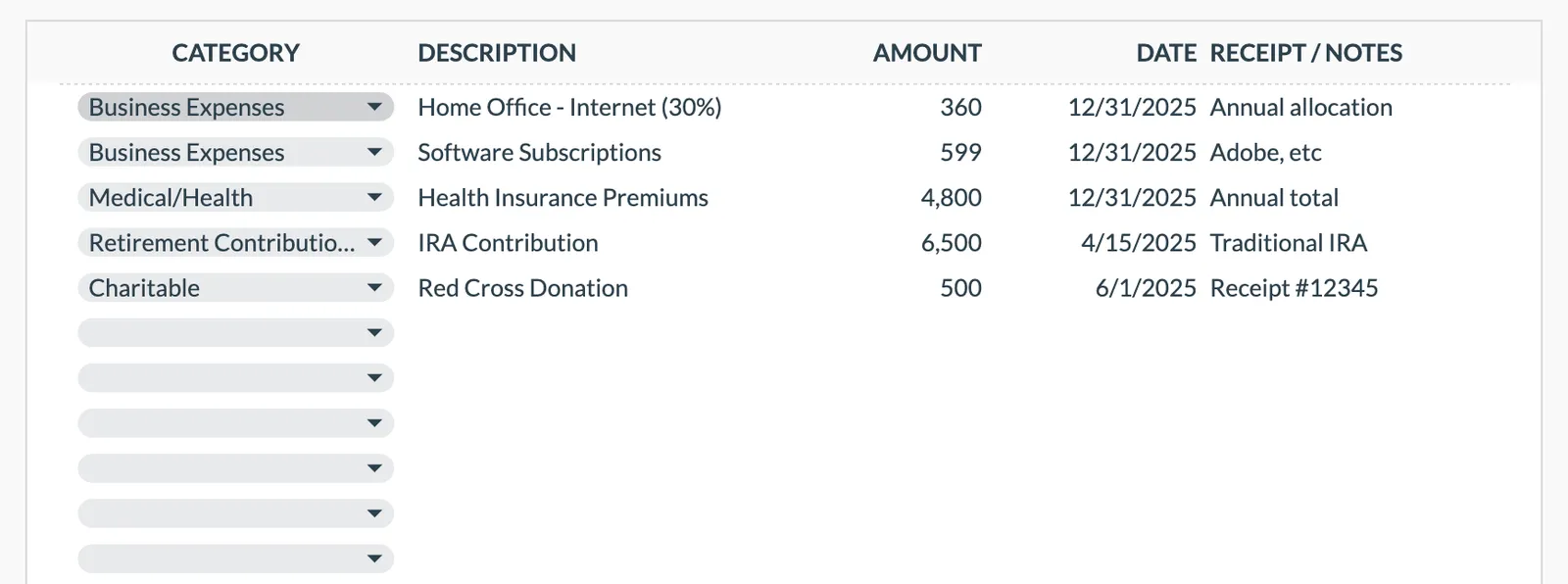
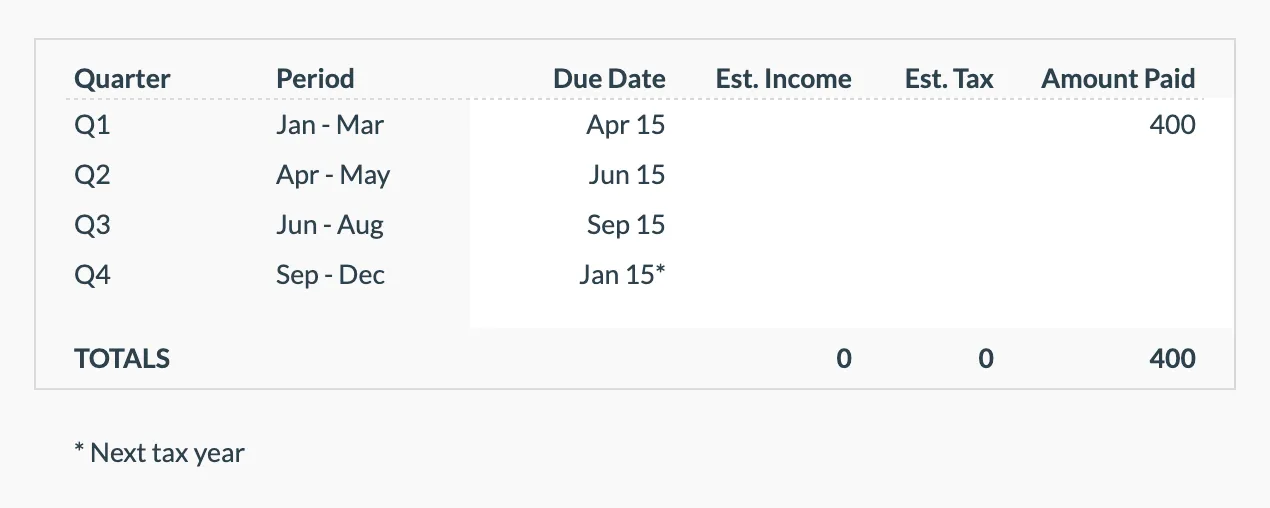
Browse through the template to see how it tracks income, deductions, credits, and estimated quarterly payments.
- Annual tax overview dashboard
- Income tracking by source
- Deductions and credits organizer
- Quarterly payment tracker
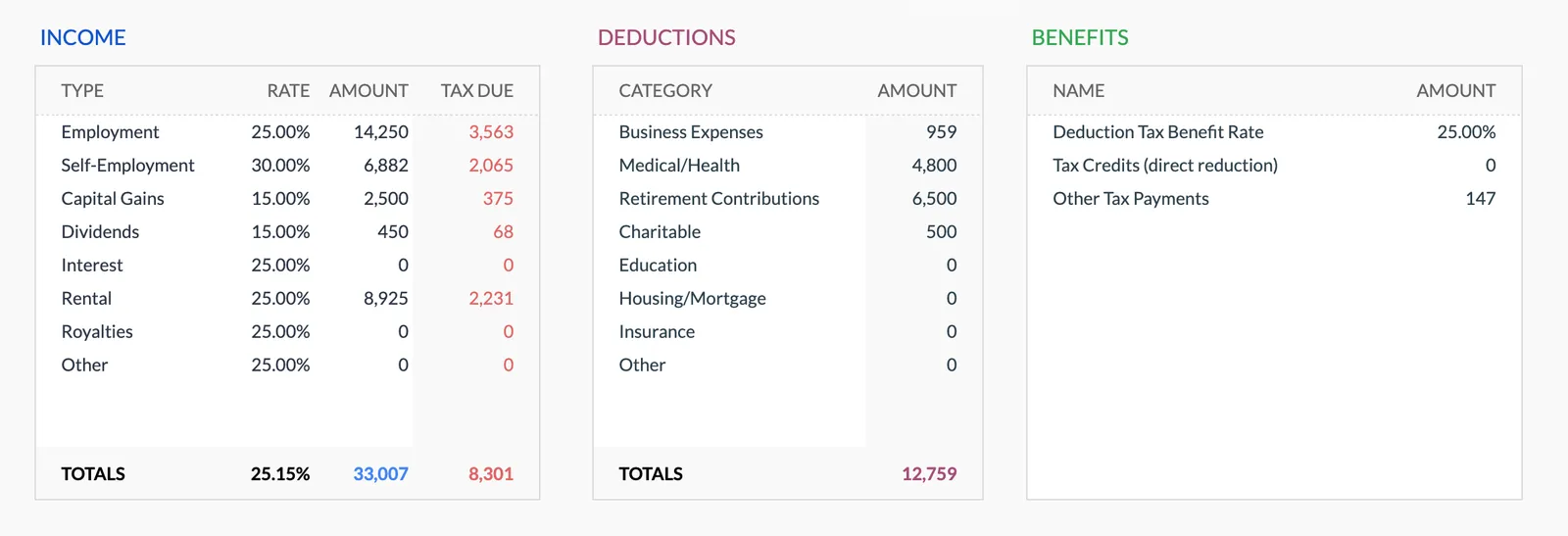
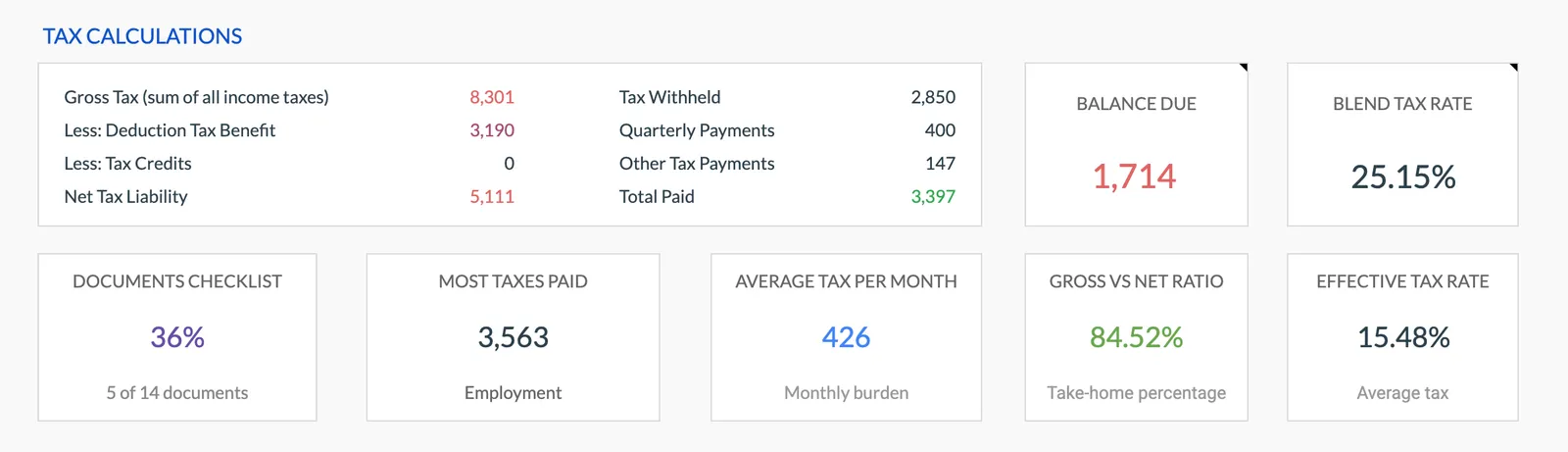
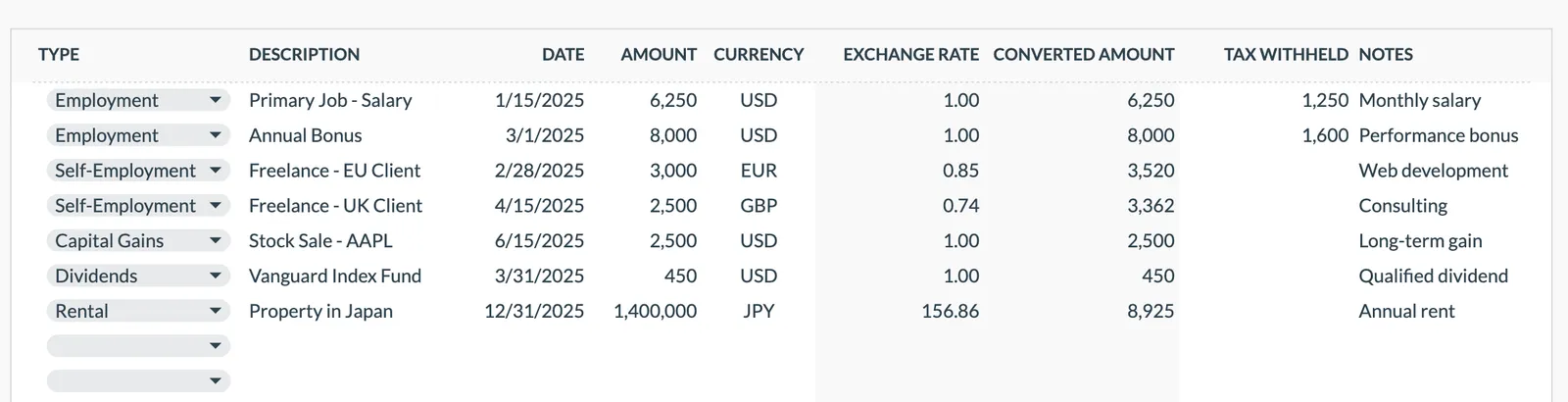
Annual tax overview with key figures
Detailed tax breakdown and projections
Track all income sources for tax purposes
Organize and track tax deductions
Plan and track quarterly estimated tax payments
Common Questions
Tax Planning in Minnesota - FAQ
Does Minnesota tax Social Security benefits?
Minnesota does tax Social Security benefits for residents above certain income thresholds. However, the state provides a Social Security subtraction that shields some or all of the benefits from state tax. The subtraction phases out as income rises - residents with higher total income (including pensions, investments, and other sources alongside Social Security) may find more of their benefits subject to the state's graduated rates. The income thresholds and subtraction amounts have been adjusted in recent years.
How do Minnesota's rates compare to neighboring states?
Minnesota's top rate of 9.85% [1] is substantially higher than Wisconsin, Iowa (which completed its move to a flat 3.8% rate in 2025), and the Dakotas (North Dakota has near-zero rates, South Dakota has no income tax). Even Minnesota's lowest bracket rate exceeds the flat rates in several neighboring states. For residents near state borders or considering relocation, the rate difference can be significant on the same income.
What is the Minnesota property tax refund?
Homeowners whose property taxes are high relative to household income may qualify for the Homestead Credit Refund, filed on Form M1PR with its own August 15 deadline. Renters once filed that same form, but since tax year 2024 the Renter's Credit is a refundable credit claimed on the Minnesota income tax return using Schedule M1RENT and the Certificate of Rent Paid. There is also a special refund for homeowners whose property taxes increased substantially from one year to the next.
Does Minnesota conform to federal tax rules?
Minnesota closely conforms to the federal Internal Revenue Code for most provisions. This means federal adjustments like the standard deduction, IRA contributions, and student loan interest deductions generally flow through to the state return. However, Minnesota does make some state-specific modifications - including the Social Security subtraction and its own set of credits. When federal tax law changes, Minnesota typically passes conformity legislation, though timing can vary.
What credits does Minnesota offer to offset high rates?
Minnesota has several refundable and non-refundable credits. The Working Family Credit functions like the federal EITC but is calculated separately with its own income thresholds. The K-12 Education Credit covers qualifying school expenses. The Child and Dependent Care Credit has its own calculation independent of the federal version. These credits reduce tax owed dollar-for-dollar, and refundable credits can generate a refund even if no state tax is owed.
Can't find the answer you're looking for? Contact our team
Official Tax Resources
For current rates, forms, and filing deadlines specific to Minnesota:
Sources
Organize your tax planning for Minnesota
One-time purchase. No subscription. Your financial data stays in your Google Drive.
Tax rules, rates, and contribution limits change, and official publications can themselves lag behind the law in force. We review these figures on a best-effort basis against sources we consider authoritative, but we cannot guarantee they are current, complete, or that better sources do not exist, and nothing here is tax, legal, or financial advice. For decisions, the relevant government authority is the reference. Last reviewed: August 2026.