Life Event Guide
Financial Planning When Receiving an Inheritance
Inheritances under $13.61 million (2024 federal exemption) generally aren't subject to estate tax, but inherited IRAs, property, and investments each have different tax rules. This is where an overview of what was inherited, its tax treatment, and its timing can help before any decisions are made.
In Depth
The Psychology of Sudden Wealth
Receiving an inheritance is one of the few financial events that arrives with grief attached. The timing matters - decisions about money are harder to make thoughtfully when processing the loss of someone important. Financial professionals consistently observe that the most successful inheritance outcomes come from people who deliberately slow down before making any major moves.
Research on windfalls - including inheritances, lottery winnings, and large bonuses - shows a consistent pattern: money that arrives without effort tends to be spent more freely than money that was earned. This is not a character flaw but a well-documented cognitive bias. Having a structured framework for the funds before they arrive (or shortly after) helps counteract this tendency.
The tax complexity of inherited assets catches many people by surprise. A simple cash inheritance is straightforward, but inherited retirement accounts, real estate, and investment portfolios each come with distinct rules that affect their real value. The difference between the nominal value and after-tax value of an inherited IRA can be 25-40%, which meaningfully changes what the inheritance actually provides.
Family dynamics around inheritance add another layer of complexity. Unequal inheritances, disagreements about asset disposition, and differing expectations about how inherited money should be used can create lasting friction. Some families find that transparency about the numbers - what was received, what the tax implications are, and what the plan is - reduces conflict even when the conversations feel uncomfortable.
Financial Impact
The Financial Impact of Receiving an Inheritance
Inheriting money or assets often arrives during a period of grief, which makes clear-headed financial decisions harder. Taking time to understand what you have received and its implications before making any major moves is a pattern that tends to serve people well.
Tax treatment varies by asset type
Cash inheritances generally are not subject to income tax. However, inherited retirement accounts (traditional IRAs and 401(k)s) are taxed as ordinary income when withdrawn - a $200,000 inherited IRA could generate $50,000-$70,000 in federal taxes over the required distribution period. Inherited property receives a "stepped-up basis," meaning capital gains are calculated from the value at the date of death, not the original purchase price. Understanding these differences prevents costly surprises.
The "10-year rule" for inherited retirement accounts
Since the SECURE Act, most non-spouse beneficiaries must empty inherited IRAs within 10 years. Withdrawing a $300,000 IRA evenly over 10 years adds $30,000 to taxable income each year - potentially pushing you into a higher tax bracket. Strategic distribution timing can save $10,000-$30,000 in taxes over the decade. Some people find it worth consulting a tax professional for this specific decision.
Inherited property comes with carrying costs
A house worth $400,000 is not simply $400,000 in new wealth. Property taxes ($3,000-$12,000/year), insurance ($1,500-$3,000/year), maintenance ($4,000-$8,000/year), and potential mortgage payments continue regardless of whether you live there, rent it, or plan to sell. The time from inheritance to sale can take 3-12 months, during which these costs add up.
Lifestyle inflation is the biggest risk
Research consistently shows that a significant percentage of inheritance recipients spend their windfall within a few years. A $100,000 inheritance that funds a lifestyle upgrade (nicer car, more dining out, upgraded vacations) disappears surprisingly fast. The same amount invested at 7% average returns becomes roughly $200,000 in 10 years. The initial decision about spending versus preserving tends to have outsized long-term consequences.
Getting Ready
How to Integrate an Inheritance Into Your Financial Plan
Pause before making major decisions
Financial advisors commonly suggest waiting 6-12 months before making large financial decisions after receiving an inheritance, especially when it coincides with the loss of a loved one. Parking the funds in a high-yield savings account (currently 4-5% APY) while you plan means the money works for you even during the waiting period.
Take a complete inventory of what you received
List every asset: cash, investment accounts, retirement accounts, real estate, vehicles, valuables, and any associated debts (like a mortgage on inherited property). Note the fair market value at the date of death for stepped-up basis calculations. A net worth tracker is particularly useful here for seeing the full picture.
Understand the tax implications before distributing
Different inheritance types have different tax treatment. Cash and life insurance proceeds are generally tax-free. Inherited IRAs and 401(k)s will be taxed upon withdrawal. Real estate has stepped-up basis for capital gains. Knowing the after-tax value of each asset helps you make informed allocation decisions.
Address high-interest debt first
If you carry credit card debt at 20%+ interest, using a portion of the inheritance to eliminate it provides an immediate, guaranteed "return" equal to the interest rate. A $15,000 credit card balance at 22% APR costs $3,300/year in interest alone. Eliminating it frees up that cash flow permanently.
Integrate with existing financial goals
Rather than treating the inheritance as separate money, consider how it fits into your overall financial plan. Does your emergency fund need topping up? Are retirement accounts underfunded? Is there high-interest debt to address? Mapping the inheritance against existing goals helps ensure it has lasting impact rather than being absorbed into daily spending.
See The Templates
Tools for this stage of life
Browse the templates that help with financial planning during major life transitions.
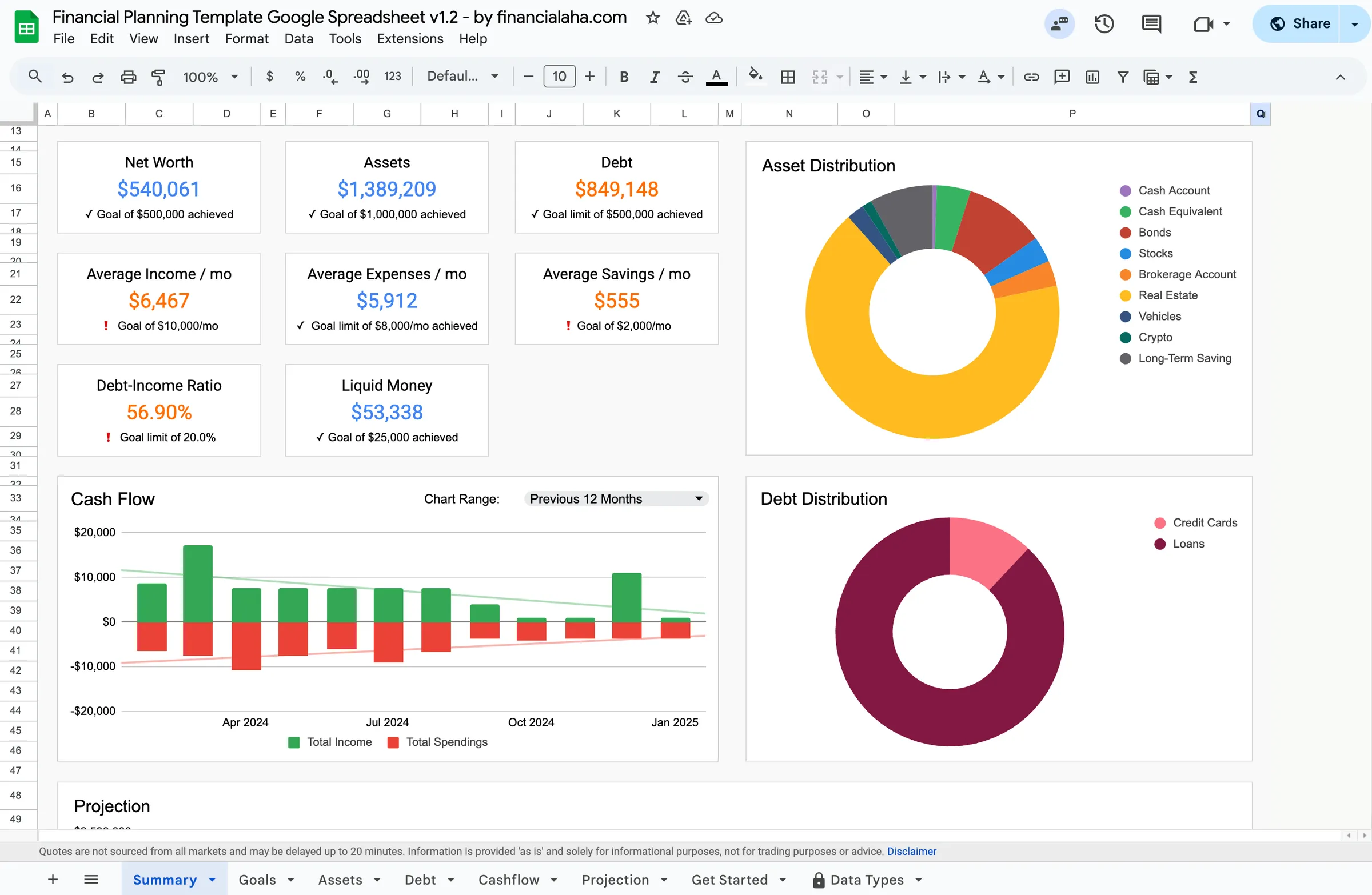
- Financial planning dashboard
- Monthly budget tracking
- Net worth over time
- Goal setting and tracking
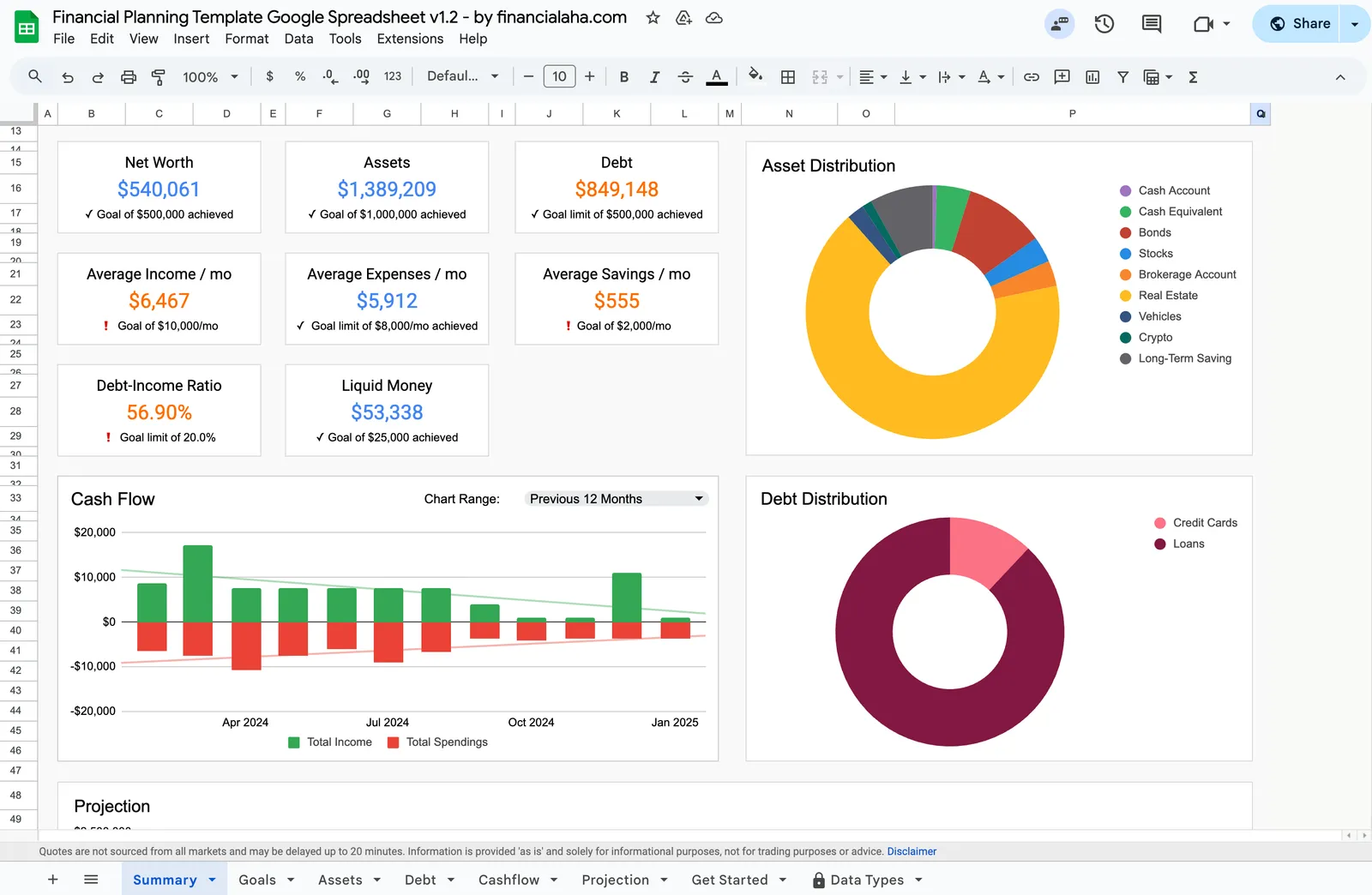

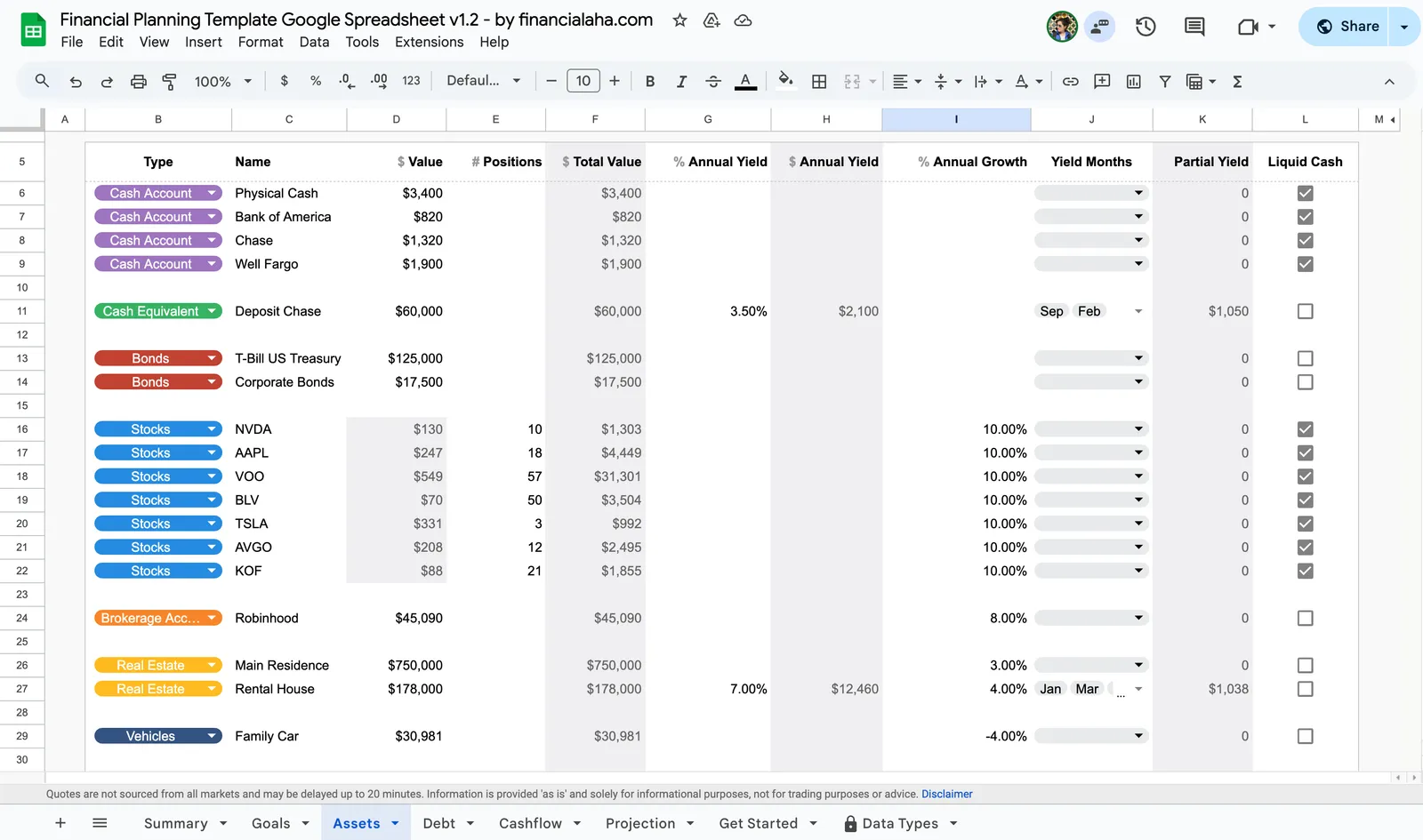
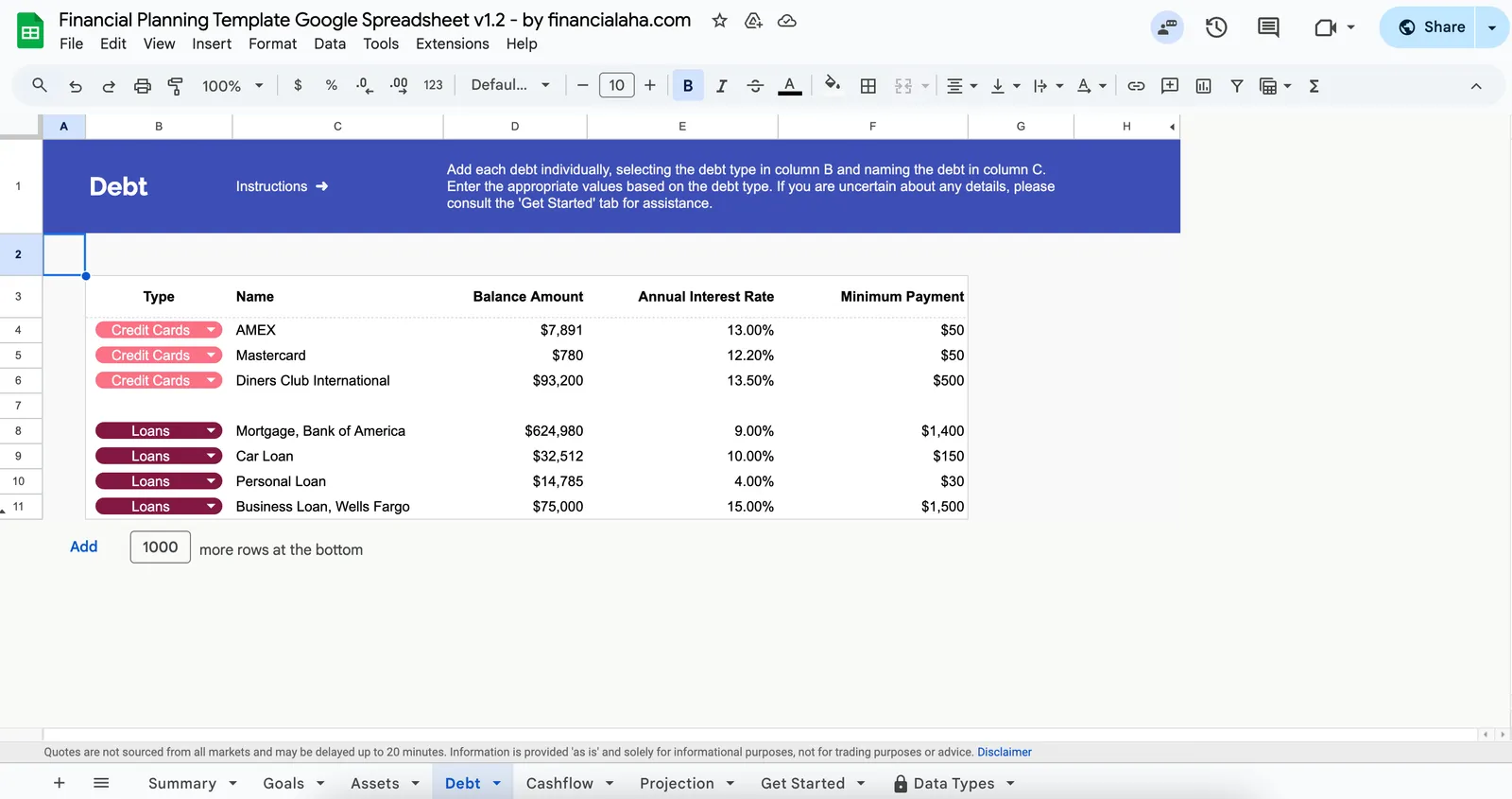
Complete financial overview with net worth and goals
Set and track progress toward financial milestones
Track all your assets in one place
Monitor and plan debt repayment
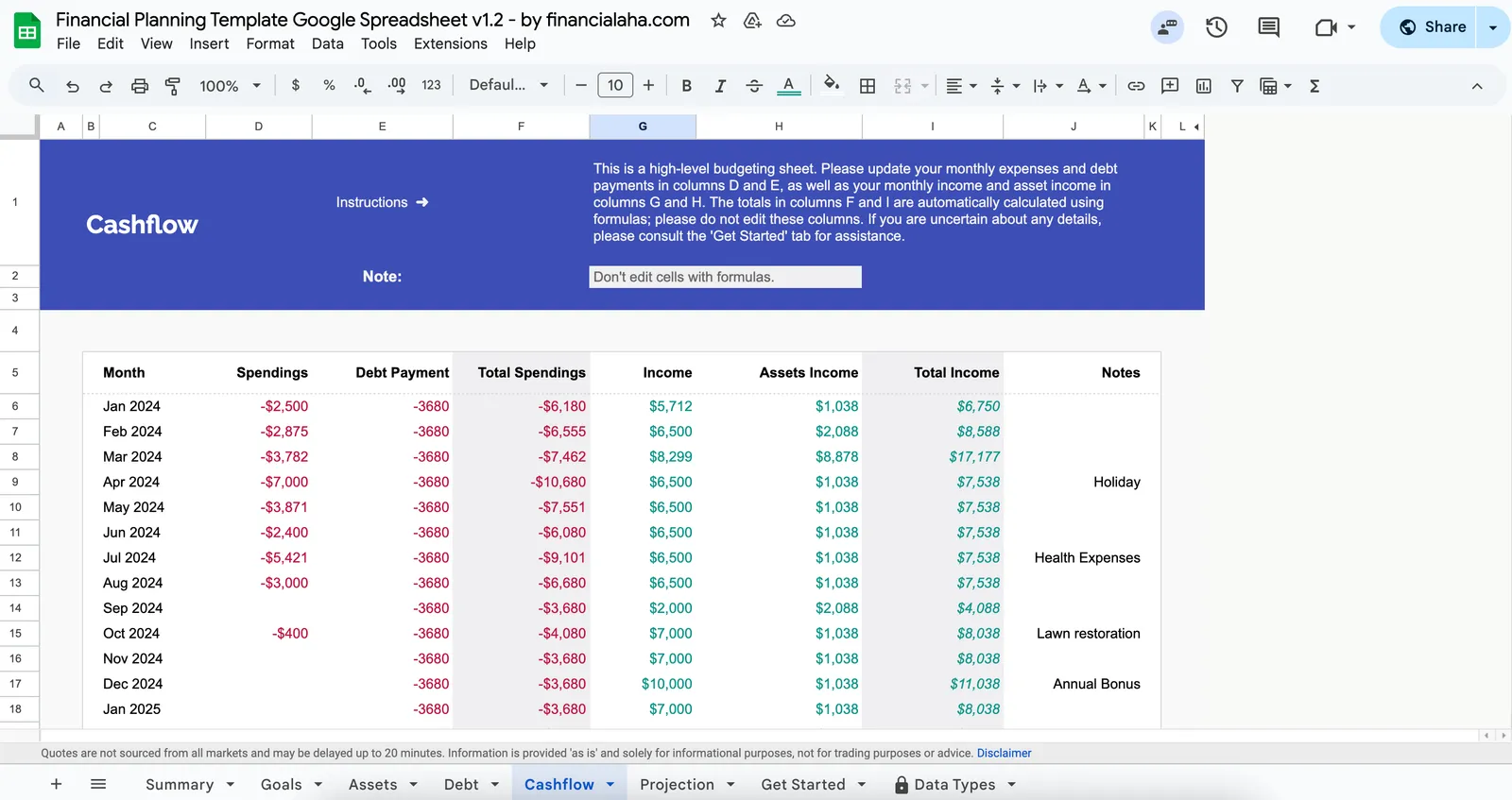
Visualize your income vs spending over time
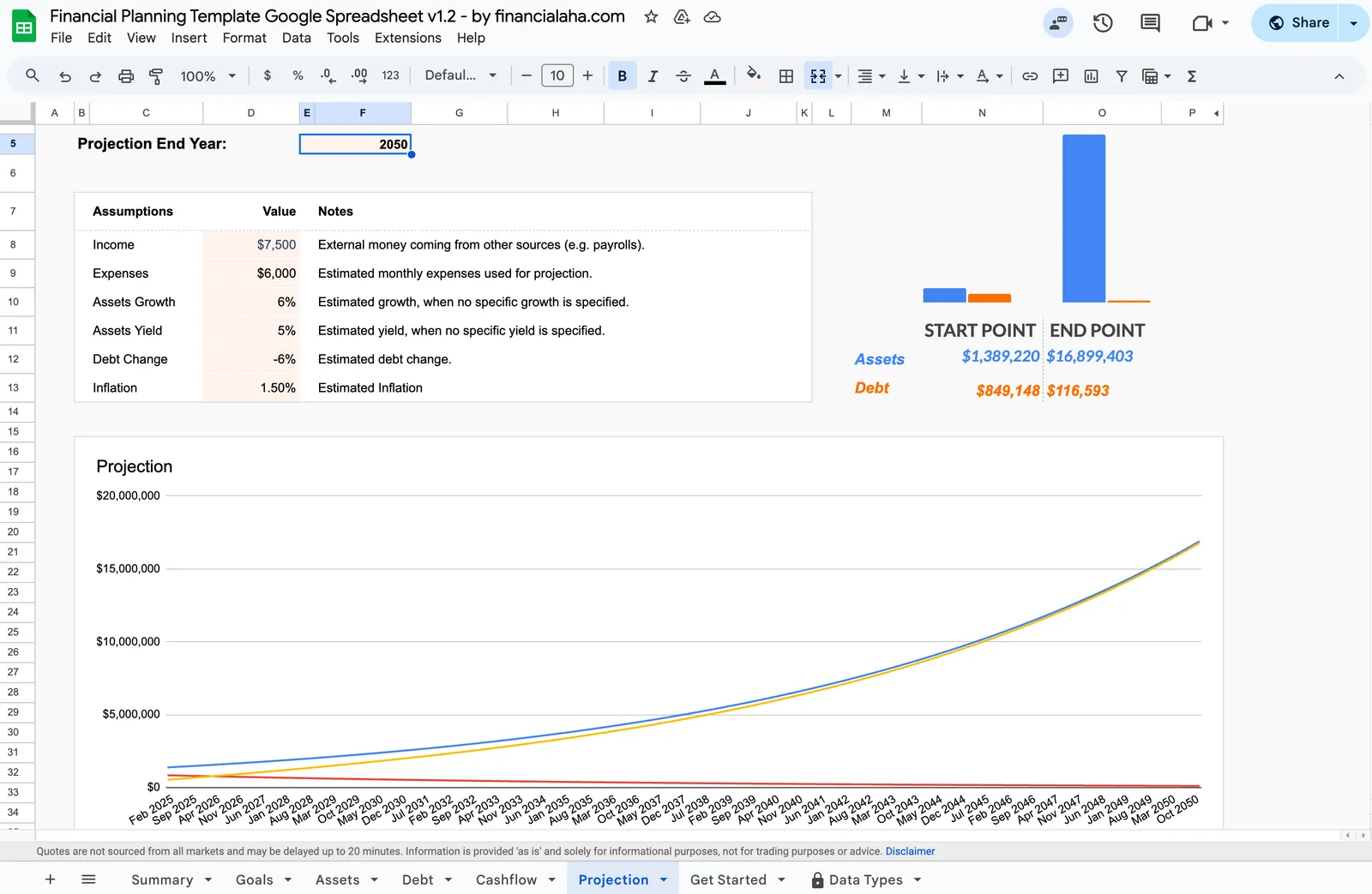
Project your financial future
Recommended Templates
Templates for Managing an Inheritance
An inheritance changes your financial picture overnight. These tools help you see the full impact:
Add inherited assets and see how they shift your overall financial position. Track the inheritance separately if you want to monitor how it is allocated over time.
View templateModel how the inheritance affects long-term projections. Useful for comparing scenarios - what does investing the full amount look like versus paying off the mortgage versus a combination?
View templateFree Tools
Calculators to Help You Plan
Common Questions
Receiving an Inheritance - Financial FAQ
Do I have to pay taxes on an inheritance?
It depends on the asset type. Cash and life insurance proceeds are generally not subject to income tax. Inherited retirement accounts (traditional IRAs, 401(k)s) are taxed as ordinary income when distributed. Real estate receives a stepped-up cost basis. Only six states have an inheritance tax. The federal estate tax applies only to estates over $13.61 million (2024), which affects very few people.
What is the best way to handle an inherited IRA?
Non-spouse beneficiaries generally must distribute the full balance within 10 years under the SECURE Act. The timing of distributions matters for tax purposes - spreading them out may keep you in a lower tax bracket compared to a lump sum withdrawal. Spouses have additional options, including rolling the IRA into their own account. The specifics depend on individual circumstances.
How do I value inherited property?
The fair market value at the date of death is the standard baseline - this becomes your "stepped-up basis" for calculating future capital gains. Getting a professional appraisal ($300-$500) establishes this value definitively. If you sell the property later for more than this value, only the gain above the stepped-up basis is subject to capital gains tax.
Can I track inherited assets separately in a spreadsheet?
Yes. The Net Worth Tracker allows you to tag or categorize assets however you prefer. Many people create a separate section for inherited assets to monitor how they grow or are allocated over time, while still seeing them as part of the total financial picture.
Can't find the answer you're looking for? Contact our team
Ready to get started?
Download instantly and start managing your finances, or contact us to design a custom template package for your needs.