Net Worth Tracker
Net Worth Tracker for Small Business Owners
Measure total wealth that includes your business - track business equity alongside personal assets and debts for a complete net worth picture.
In Depth
When Your Largest Asset Has No Ticker Symbol
For many small business owners, the business is the dominant asset on the balance sheet - often representing more than half of total net worth. Unlike publicly traded stocks or index funds, this asset has no market price, no daily quote, and no benchmark index. Its value depends on revenue, profitability, customer relationships, and factors that resist simple measurement. Including a business valuation estimate in a net worth tracker is inherently imprecise, but excluding it entirely is far less accurate than including a reasonable estimate.
The ratio between business equity and personal assets is a metric that many business owners find eye-opening when they first calculate it. If 75% of net worth is tied up in the business, then the financial wellbeing of the owner is almost entirely dependent on the fortunes of one enterprise. This is not inherently problematic - it is the nature of business ownership. But seeing the concentration clearly, tracked over time, helps frame decisions about whether to reinvest in the business or diversify into personal investments.
Tracking business equity over time also creates a record that can be valuable during major transitions - bringing in a partner, seeking financing, or eventually selling the business. A history of valuation estimates, updated quarterly or annually, tells a growth story in numbers. It also provides a reality check against the tendency to either undervalue or overvalue the business based on recent performance rather than long-term trends.
The Challenge
Why Business Owners Need to Track Total Net Worth
For small business owners, the business is often the largest asset. But business equity is harder to measure than a bank balance, which means net worth often goes untracked.
Business value dominates but is hard to quantify
Your business may represent 50% or more of your net worth, but unlike stocks, there is no daily price quote. Without periodic valuation estimates, your biggest asset is a question mark.
Personal and business assets blur together
Business cash, personal savings, business equipment, personal investments - the line between business and personal wealth gets fuzzy without structured tracking.
Business debts affect personal net worth
Business loans personally guaranteed, lines of credit, and accounts payable all reduce your true net worth even if they appear only in business books.
Over-reliance on business equity creates risk
If most of your net worth is in business equity, a downturn or competitor disruption threatens your entire financial position. Tracking the composition reveals concentration risk.
Ready to take control of your small business owner finances?
What You Get
Net Worth Features for Business Owners
Business equity tracker
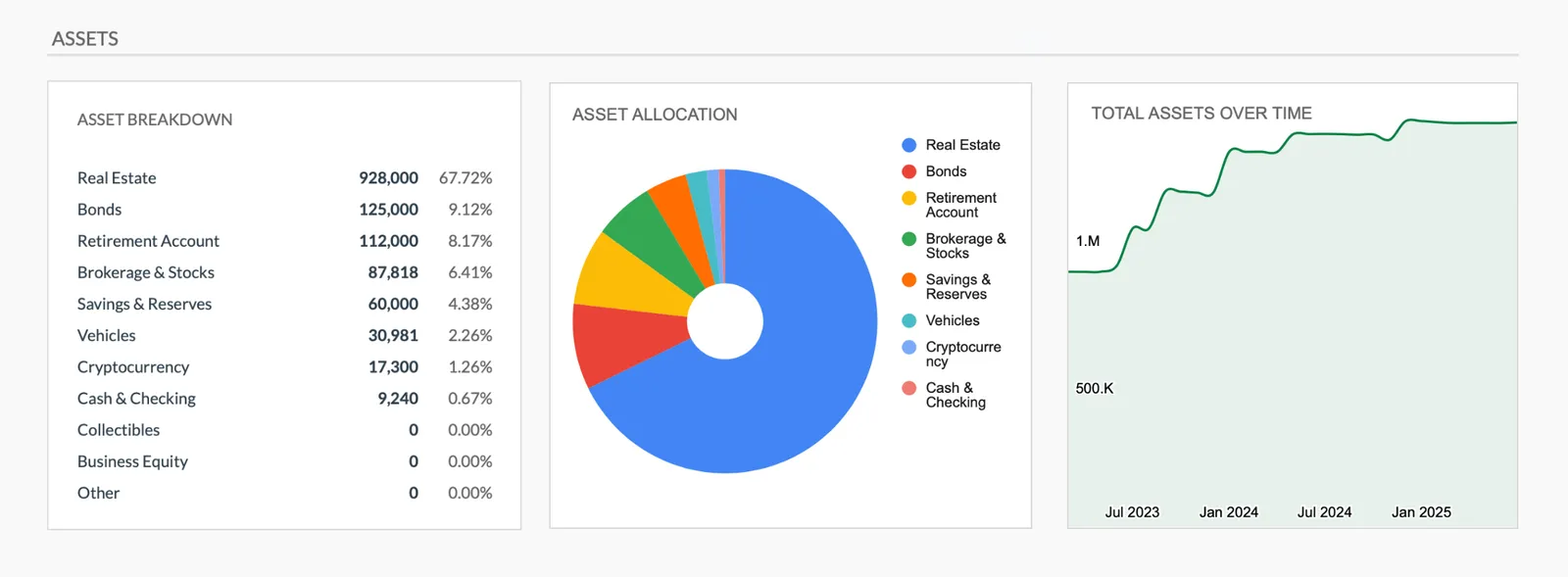
The Assets sheet carries a Business Equity category. Put your valuation estimate there, update it as it changes, and it counts toward total assets and net worth.
Personal asset tracker
Track savings, retirement accounts, investments, property, and other personal holdings separately from business assets.
Combined debt view
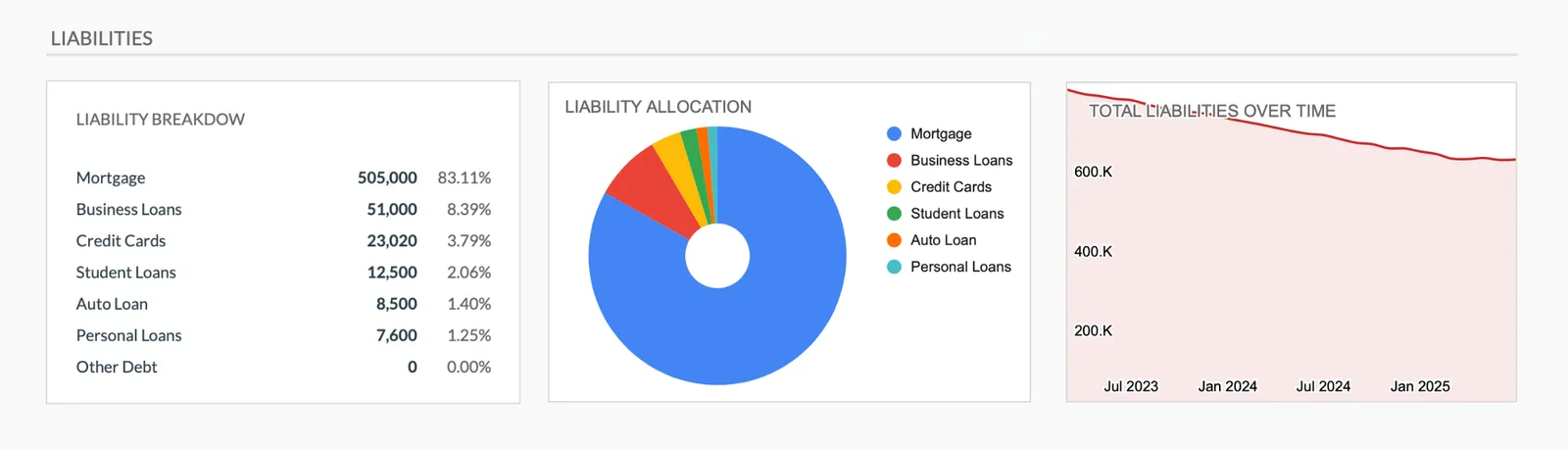
Business loans and personal debts in one view. See total obligations that reduce your net worth.
Monthly net worth snapshots
Record total net worth monthly - business equity plus personal assets minus all debts.
Business versus personal breakdown
The allocation column shows what share of total assets each category holds, and Business Equity is one of those categories, so its weight against everything else stays on the page.
Net worth trend over time
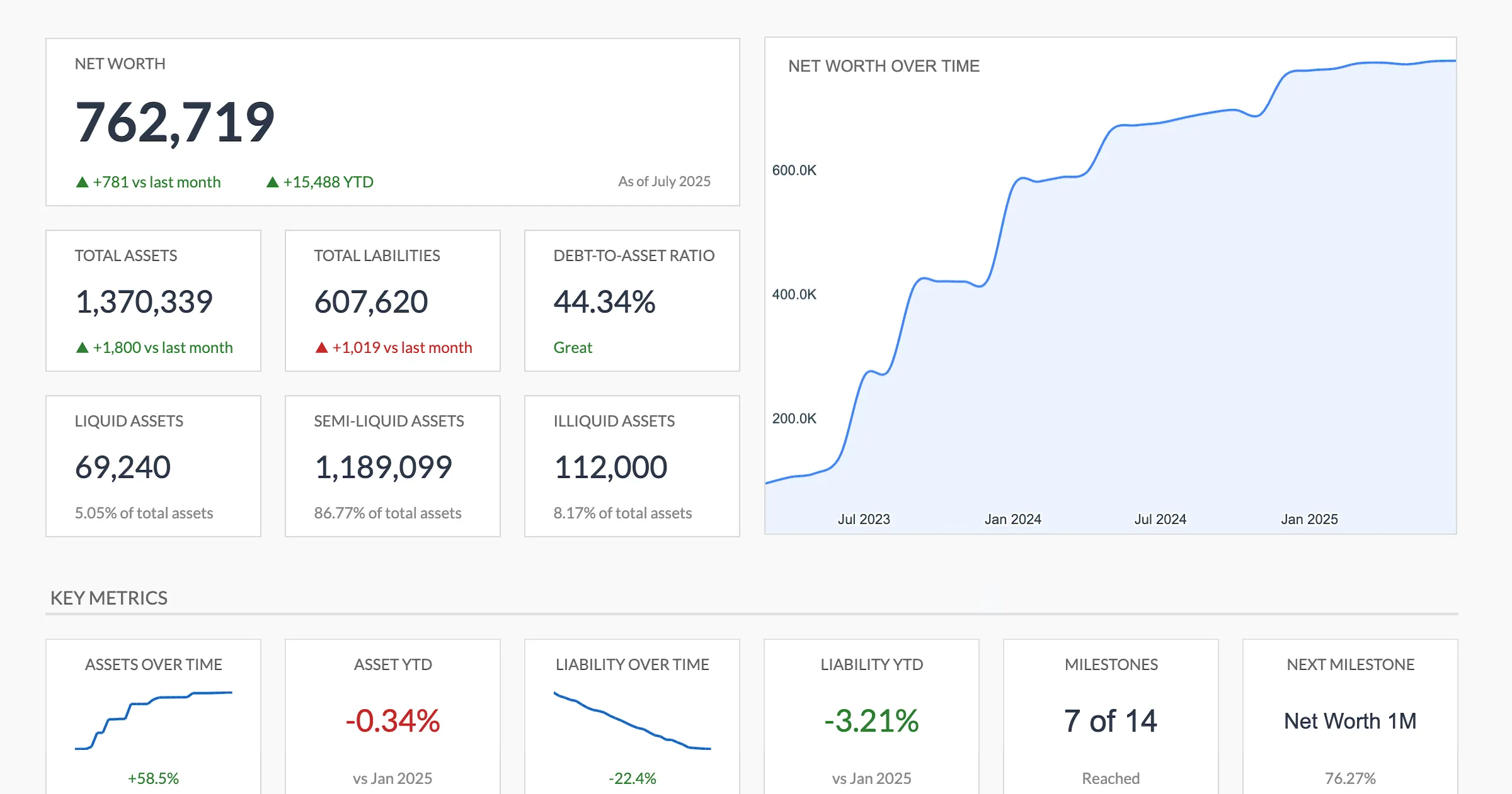
Chart showing total net worth evolution. See how business growth and personal savings contribute to the trend.
See It In Action
What the template looks like
Browse through the template to see how it handles asset tracking, liability management, and net worth analysis over time.
- Net worth dashboard with trends
- Asset and liability breakdown
- Key financial health metrics
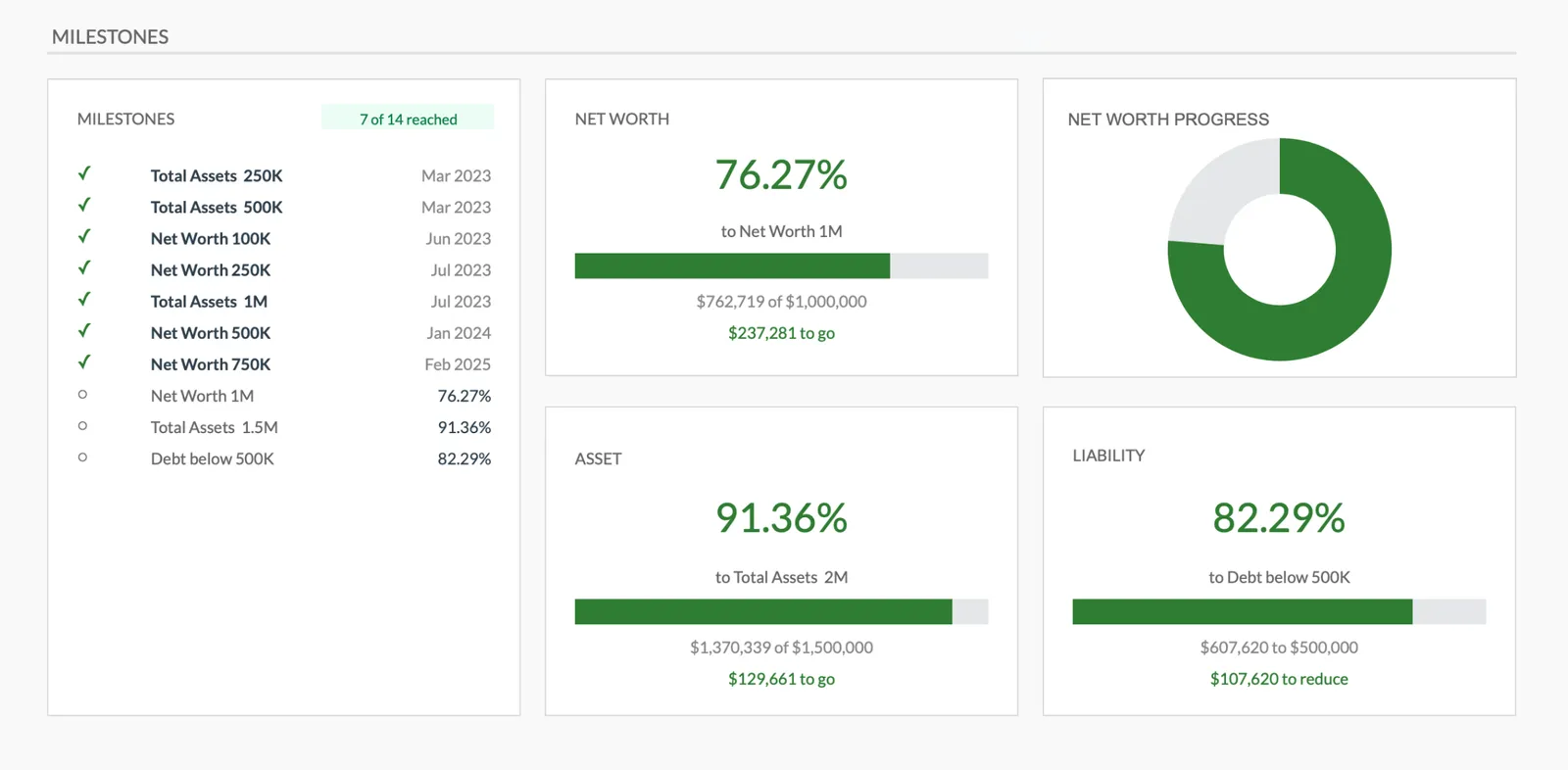
- Milestone tracking
- Historical net worth over time
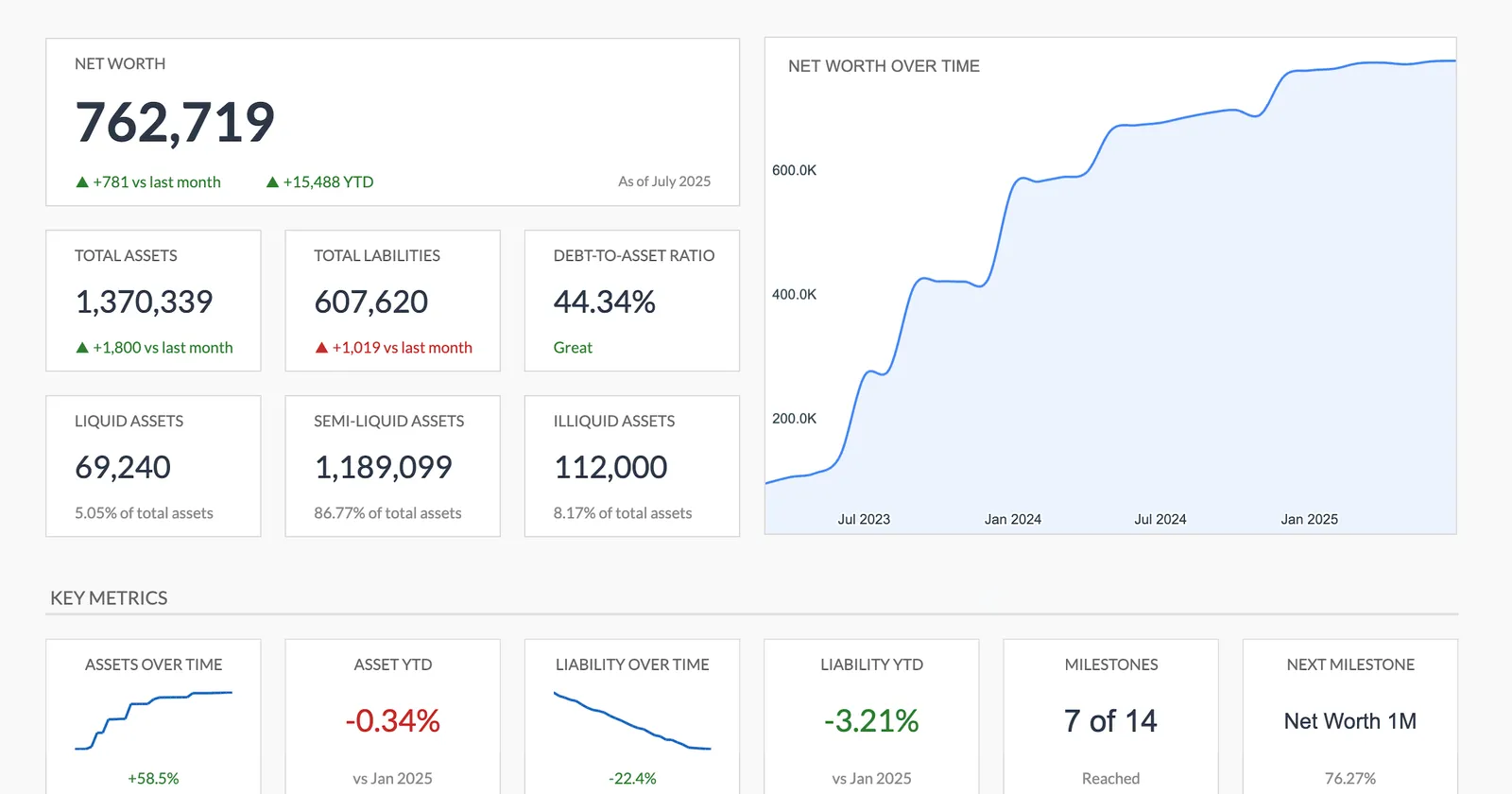

Track your net worth over time with charts
Breakdown of all your assets
Track all debts and liabilities
Key financial health indicators
Set and celebrate net worth milestones
Getting Started
Start Tracking Business and Personal Net Worth
Estimate your business value
Pick a method you can repeat, whether a revenue multiple, an earnings multiple, or net asset value, then enter the figure under the Business Equity category.
List all personal assets
Bank accounts, retirement accounts, investments, property - everything outside the business.
Record all debts
Business loans, personal mortgages, lines of credit, and any other obligations.
Update monthly
Refresh personal account balances monthly. Update business valuation quarterly or when significant changes occur.
Monitor the business-to-personal ratio
The allocation column puts a percentage next to Business Equity, so its weight against the rest of the asset list is a number rather than a feeling.
Common Questions
Net Worth Tracker for Small Business Owners- FAQ
How do I value my business?
Common methods include a multiple of annual revenue (1-3x), a multiple of earnings (3-5x for small businesses), or net asset value. Use a conservative estimate and update periodically.
Should I include business equipment?
Business equipment value is typically included in the business valuation. If you value the business based on earnings, the equipment is already factored in.
What about business cash reserves?
Business cash can be included in business equity or tracked separately. What matters is that it appears somewhere in your net worth calculation.
How often should I re-value the business?
Quarterly is reasonable for most businesses. Update more frequently after major changes like landing a big contract, losing a key client, or completing a significant investment.
What if my business has negative equity?
A business with more debts than assets has negative equity. Include this as it is - it reduces your total net worth, and tracking the improvement is important.
Should I track business and personal separately?
Each asset category carries its own total, Business Equity among them, and the summary combines every category into total assets and net worth. Both readings sit on the same page.
Can't find the answer you're looking for? Contact our team
Start tracking net worth as a small business owner
One-time purchase. No subscription. Your financial data stays in your Google Drive.