Indiana
Tax Planner Template for Indiana
Plan your federal and Indiana state taxes in Google Sheets. Indiana uses a flat tax rate with additional county-level taxes.
In Depth
Indiana's Two-Layer Income Tax System
Indiana has one of the lower flat state income tax rates in the country, but that is only part of the picture. Every Indiana county also levies its own income tax, and these county rates vary enough to change the effective rate meaningfully depending on where you live. Some counties add less than one percent, while others add close to three percent on top of the state rate. The combined rate for a resident in a high-rate county looks quite different from someone in a low-rate county.
The county tax is withheld from paychecks based on county of residence (not county of employment), so it is important that employers have the correct county on file. For self-employed residents, the county tax is paid alongside estimated state tax payments. When someone moves between counties mid-year, the county rate can change, which adds a wrinkle to estimated payment calculations.
Indiana also offers a state earned income tax credit calculated as a percentage of the federal EITC, and a credit for contributions to Indiana's CollegeChoice 529 plan. These credits reduce state tax liability directly. Social Security is exempt from state tax, and military retirement pay is fully exempt - but other retirement income like pensions and 401(k) distributions faces the flat state rate plus the applicable county rate.
Indiana
Tax Planning in Indiana
Indiana has a flat state income tax plus county income taxes that vary by location. Planning for both levels is important for accurate tax projections.
Flat State Income Tax
Indiana has a flat state income tax rate that is one of the lower flat rates among states that use this structure.
County Income Taxes
Indiana counties levy their own income taxes at varying rates. Your total effective rate depends on your county of residence. This adds complexity to tax planning.
Retirement Income
Indiana taxes most retirement income at the state rate, though Social Security benefits are exempt. Military retirement pay is fully exempt from state tax.
Tax Credits
Indiana offers several tax credits including a unified tax credit for dependents, an earned income tax credit (calculated as a percentage of the federal EITC), and credits for college contributions to Indiana 529 plans.
获取年度税务规划表
入门指南
Your Indiana Tax Planning Setup
Identify your county tax rate
Before entering income, look up your Indiana county's current income tax rate. County rates range from about 0.5% to over 3.4% and change periodically. Record both the 3.05% state rate and your county rate in the template notes - the combined figure is what you will use for state-level estimates throughout the year.
Enter income and separate retirement sources
Add all income sources. Flag Social Security (exempt from Indiana tax) and military retirement pay (also fully exempt) separately from other income. Pensions, 401(k) distributions, and earned income are all subject to both the state and county rate, so the distinction matters for accurate projections.
Track the 529 credit and earned income credit
If you contribute to Indiana's CollegeChoice 529 plan, record the contribution amount - it generates a state tax credit (not just a deduction). Similarly, if you qualify for the federal EITC, note that Indiana provides a state earned income credit calculated as a percentage. Both credits directly reduce your state tax owed.
Manage dual estimated payments
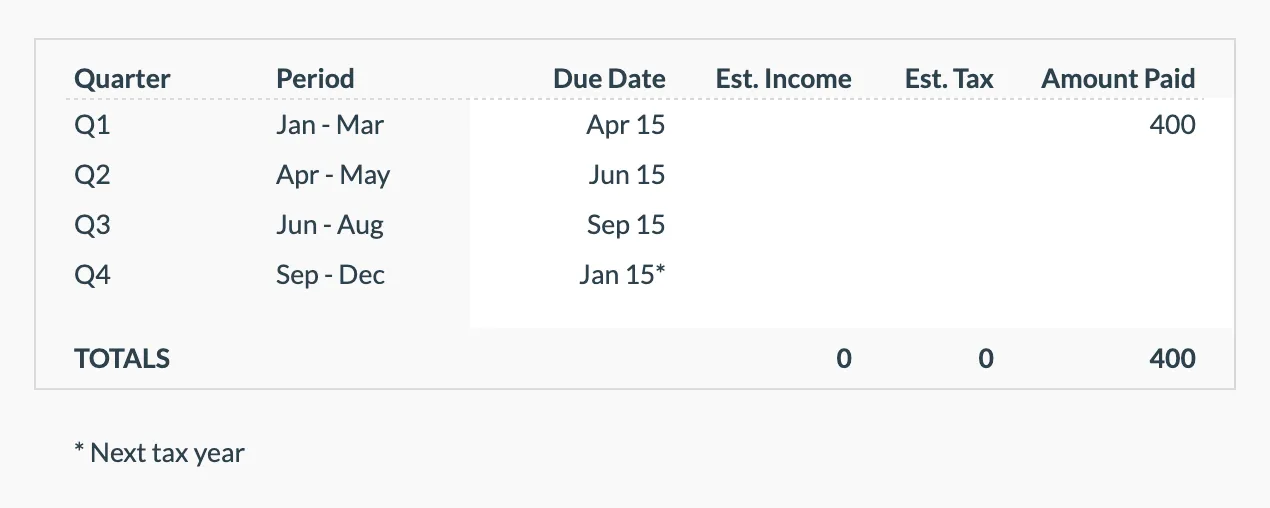
Self-employed Indiana residents owe estimated payments for both state and county tax combined. The quarterly tracker helps manage these alongside federal estimated payments. Apply your combined rate (state plus county) to projected taxable income and divide by four for quarterly installments.
Account for mid-year county changes
If you move between Indiana counties during the year, your county rate changes. Update your notes to reflect the new rate and adjust estimated payments accordingly. The state return will require reporting income earned under each county rate, so keeping a record of the move date and both rates is useful at filing time.
查看实际效果
税务规划器的界面预览
浏览模板,了解它如何跟踪收入、扣除项、抵免额以及预估季度税款。
- 年度税务概览仪表板
- 按来源跟踪收入
- 扣除项与抵免额整理工具
- 季度税款追踪器
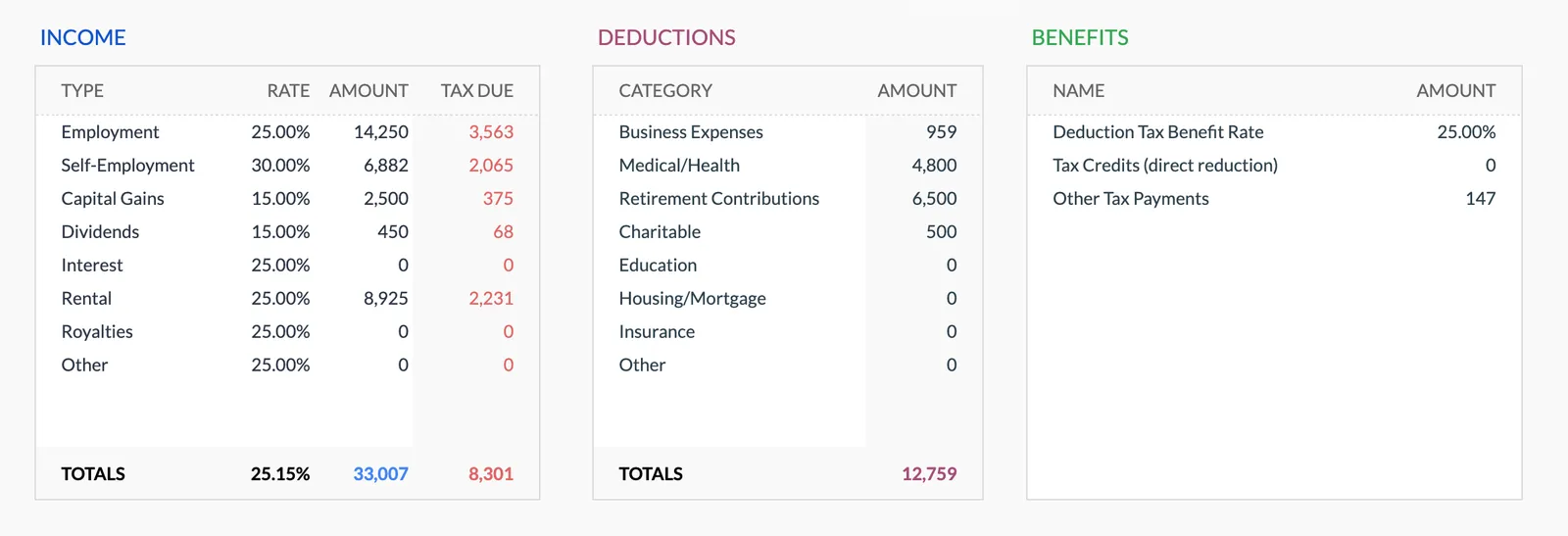
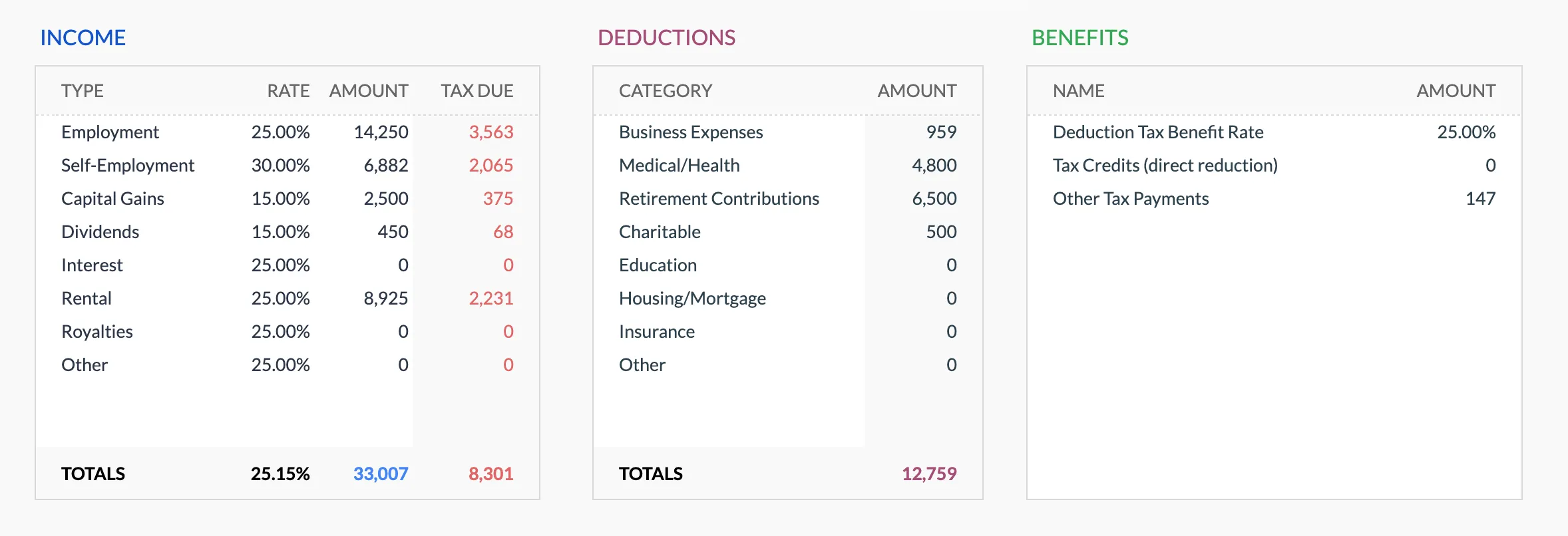
Annual tax overview with key figures
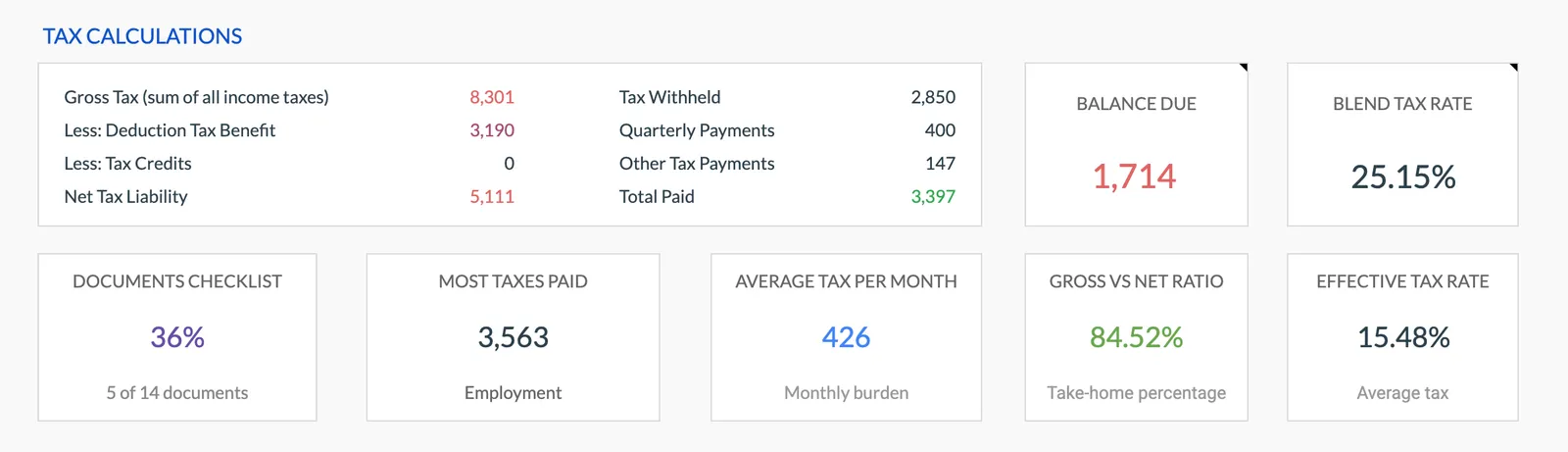
Detailed tax breakdown and projections
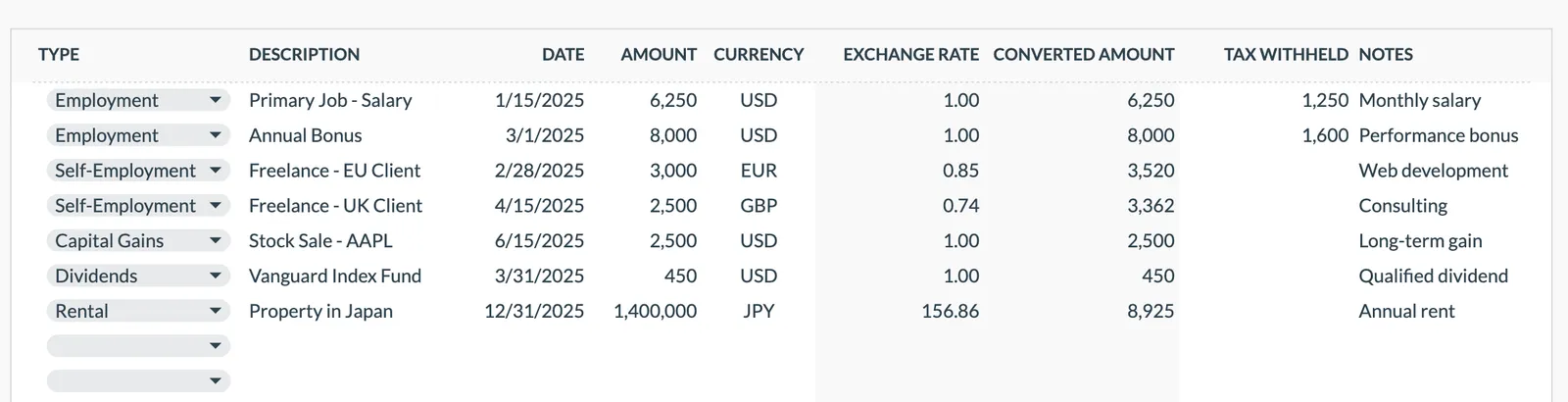
Track all income sources for tax purposes
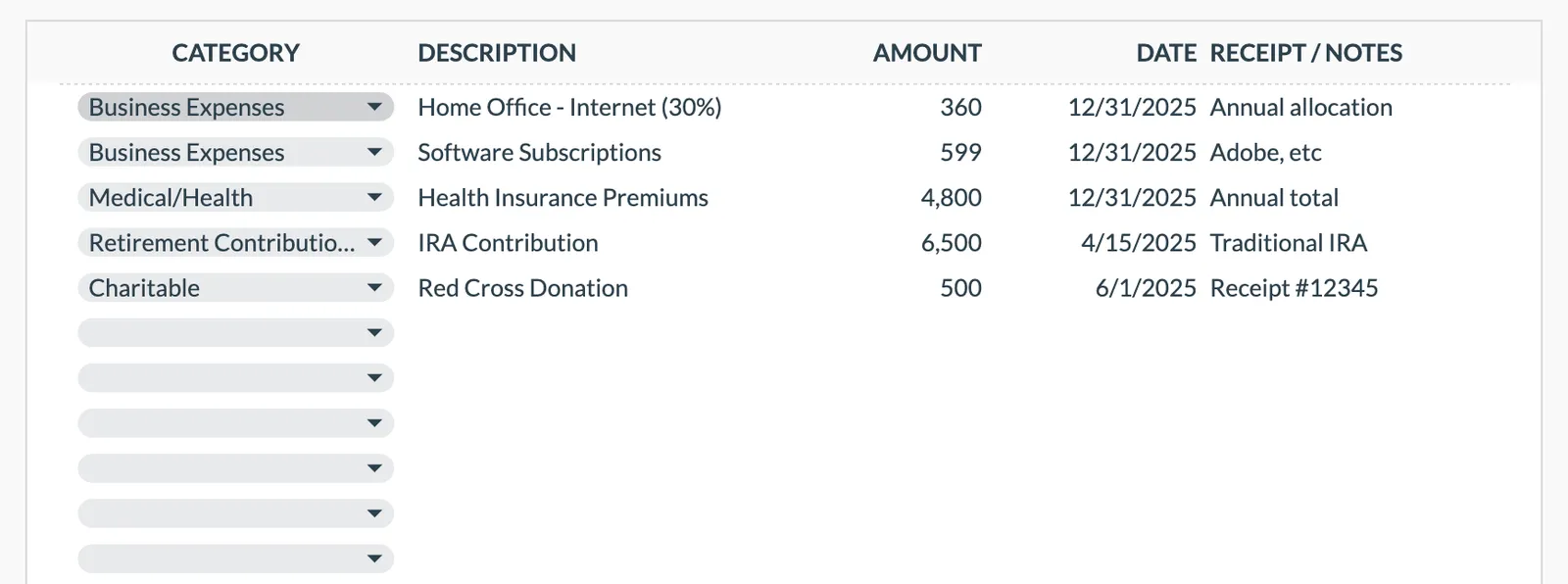
Organize and track tax deductions
Plan and track quarterly estimated tax payments
常见问题
Tax Planning in Indiana - FAQ
How do Indiana county income taxes work on top of the state rate?
Every Indiana county levies its own income tax at a rate set by the county council. These rates range from about 0.5% to over 3.4%, and they are added to the 3.05% state rate [1]. Your county of residence determines the rate - not where you work. So the combined effective rate varies significantly depending on which county you live in. Moving between counties mid-year can change your rate and complicate estimated payment calculations.
Is Indiana's 3.05% the lowest flat state rate?
Indiana's 3.05% state rate is among the lowest [2] flat rates in the country, though Pennsylvania's 3.07% is very close. However, the county tax adds meaningfully to the total. A resident in a county with a 2.5% rate pays an effective combined rate of 5.55%, which is comparable to many states with a single, higher flat rate. The county layer is what makes Indiana's system distinctive.
Does Indiana tax retirement income?
Indiana taxes most retirement income at the state rate, including pensions, 401(k) distributions, and IRA withdrawals. Social Security benefits are exempt from state tax. Military retirement pay is fully exempt. Indiana also offers a state earned income tax credit (a percentage of the federal EITC) and a credit for contributions to Indiana's CollegeChoice 529 plan, which can reduce the overall state tax bill.
How does withholding work with Indiana's dual-rate system?
Employers withhold both state and county income tax from paychecks based on the employee's county of residence. It is important that your employer has the correct county on file, since rates differ substantially. If you are self-employed, both the state and county tax are included in your estimated payment obligations. The Indiana Department of Revenue publishes the current county rates each year.
Can the template track state plus county obligations?
The template handles federal tax planning with income tracking, deductions, and estimated payments. For Indiana's dual-layer system, use the notes section to record your county rate alongside the 3.05% state rate. The combined rate can then be applied to your state taxable income for a full state-level projection next to your federal numbers.
Can't find the answer you're looking for? Contact our team
Sources
Organize your tax planning for Indiana
一次性购买。无需订阅。您的财务数据保存在您的 Google Drive 中。