Indiana
Modèle de planificateur fiscal pour Indiana
Planifiez vos impôts fédéraux et étatiques de l'Indiana dans Google Sheets. L'Indiana utilise un taux d'imposition fixe avec des impôts supplémentaires au niveau du comté.
In Depth
Le système d'imposition sur le revenu à deux niveaux de l'Indiana
L'Indiana a l'un des taux d'imposition sur le revenu fixes les plus bas du pays, mais ce n'est que la moitié de l'histoire. Chaque comté de l'Indiana prélève également son propre impôt sur le revenu, et ces taux de comté varient suffisamment pour changer le taux effectif de façon significative selon l'endroit où vous vivez. Certains comtés ajoutent moins d'un pour cent, tandis que d'autres ajoutent près de trois pour cent en plus du taux étatique. Le taux combiné pour un résident d'un comté à taux élevé semble très différent de celui d'une personne dans un comté à taux bas.
L'impôt du comté est retenu des chèques de paie en fonction du comté de résidence (pas du comté d'emploi), il est donc important que les employeurs aient le bon comté dans leurs dossiers. Pour les résidents indépendants, l'impôt du comté est payé parallèlement aux paiements d'impôt estimés de l'État. Lorsqu'une personne déménage entre les comtés au cours de l'année, le taux du comté peut changer, ce qui ajoute une complication aux calculs des paiements estimés.
L'Indiana offre également un crédit d'impôt sur le revenu gagné de l'État calculé en pourcentage de l'EITC fédéral, et un crédit pour les contributions au plan CollegeChoice 529 de l'Indiana. Ces crédits réduisent directement la responsabilité fiscale étatique. La Sécurité sociale est exonérée de l'impôt étatique, et les pensions de retraite militaires sont complètement exonérées - mais d'autres revenus de retraite comme les pensions et les distributions 401(k) sont soumis au taux fixe de l'État plus le taux de comté applicable.
Indiana
Planification fiscale en Indiana
L'Indiana a un impôt sur le revenu étatique fixe plus des impôts sur le revenu au niveau du comté qui varient selon le lieu. La planification des deux niveaux est importante pour des projections fiscales précises.
Impôt sur le revenu étatique fixe
L'Indiana a un taux d'imposition sur le revenu étatique fixe qui est l'un des plus bas parmi les États qui utilisent cette structure.
Impôts sur le revenu du comté
Les comtés de l'Indiana prélèvent leurs propres impôts sur le revenu à des taux variables. Votre taux effectif total dépend de votre comté de résidence. Cela ajoute de la complexité à la planification fiscale.
Revenus de retraite
L'Indiana impose la plupart des revenus de retraite au taux étatique, bien que les prestations de Sécurité sociale soient exonérées. Les pensions de retraite militaires sont complètement exonérées de l'impôt étatique.
Crédits d'impôt
L'Indiana offre plusieurs crédits d'impôt, notamment un crédit d'impôt unifié pour les personnes âgées, un crédit d'impôt sur le revenu gagné (calculé en pourcentage de l'EITC fédéral) et des crédits pour les contributions collégiales aux plans 529 de l'Indiana.
Obtenir le planificateur fiscal annuel
Premiers pas
Votre configuration de planification fiscale de l'Indiana
Identifiez le taux fiscal de votre comté
Avant de saisir les revenus, recherchez le taux d'impôt sur le revenu actuel de votre comté de l'Indiana. Les taux de comté vont d'environ 0.5% à environ 3.38% et changent périodiquement. Enregistrez à la fois le taux étatique de 2.95% pour l'année fiscale 2026 et le taux de votre comté dans les notes du modèle, car le chiffre combiné est celui que vous utiliserez pour les estimations au niveau de l'État tout au long de l'année.
Entrez les revenus et séparez les sources de retraite
Ajoutez toutes les sources de revenus. Marquez la Sécurité sociale (exonérée de l'impôt sur le revenu de l'Indiana) et les pensions de retraite militaires (également complètement exonérées) séparément des autres revenus. Les pensions, les distributions 401(k) et les revenus du travail sont tous assujettis à la fois au taux étatique et au taux du comté, de sorte que la distinction est importante pour des projections précises.
Suivez le crédit 529 et le crédit de revenu gagné
Si vous contribuez au plan CollegeChoice 529 de l'Indiana, enregistrez le montant de la contribution - il génère un crédit d'impôt étatique (pas seulement une déduction). De même, si vous êtes admissible à l'EITC fédéral, notez que l'Indiana offre un crédit d'impôt sur le revenu gagné de l'État calculé en pourcentage. Les deux crédits réduisent directement votre impôt étatique à payer.
Gérez les paiements estimés doubles
Les résidents indépendants de l'Indiana doivent effectuer des paiements estimés pour les impôts étatiques et de comté combinés. Le suivi trimestriel aide à gérer ceux-ci parallèlement aux paiements d'impôt estimés fédéraux. Appliquez votre taux combiné (État plus comté) au revenu imposable prévu et divisez par quatre pour les acomptes trimestriels.
Tenez compte des changements de comté en milieu d'année
Si vous déménagez entre les comtés de l'Indiana au cours de l'année, votre taux de comté change. Mettez à jour vos notes pour refléter le nouveau taux et ajustez les paiements estimés en conséquence. La déclaration d'impôt de l'État exigera la déclaration des revenus gagnés selon chaque taux de comté, il est donc utile de tenir un registre de la date du déménagement et des deux taux au moment du dépôt.
Voir en action
À quoi ressemble le planificateur fiscal
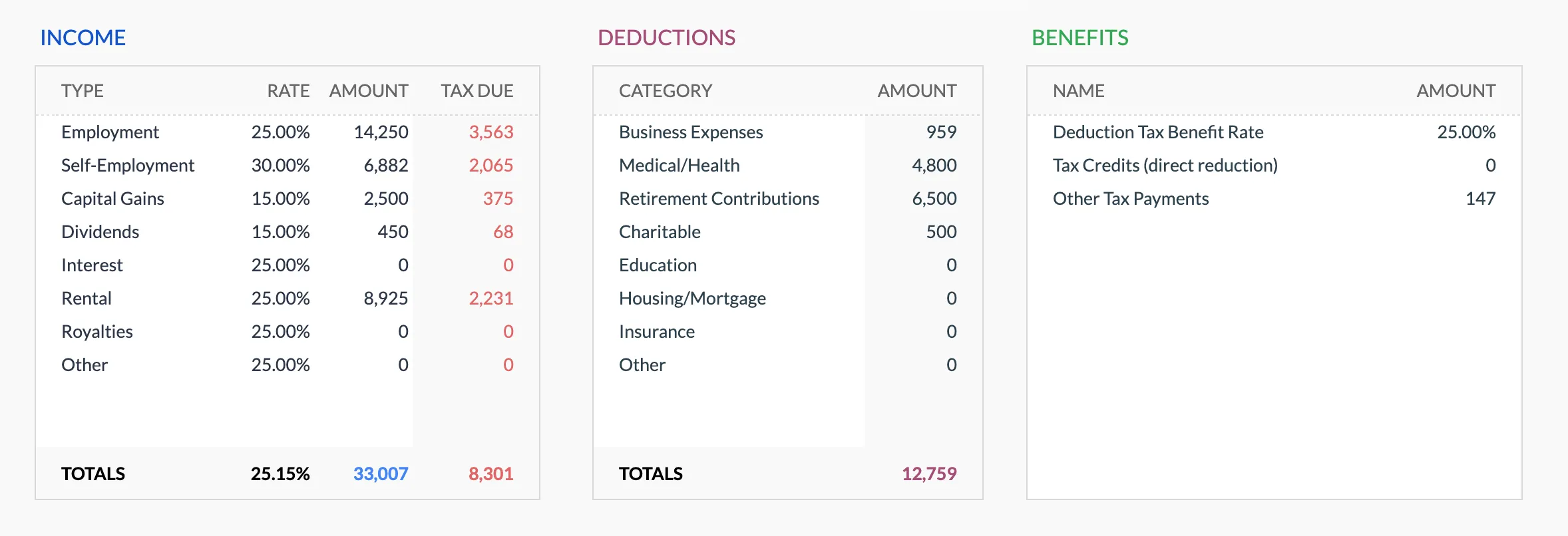
Parcourez le modèle pour voir comment il suit les revenus, les déductions, les crédits et les paiements trimestriels estimés.
- Tableau de bord fiscal annuel
- Suivi des revenus par source
- Organisateur de déductions et crédits
- Suivi des paiements trimestriels
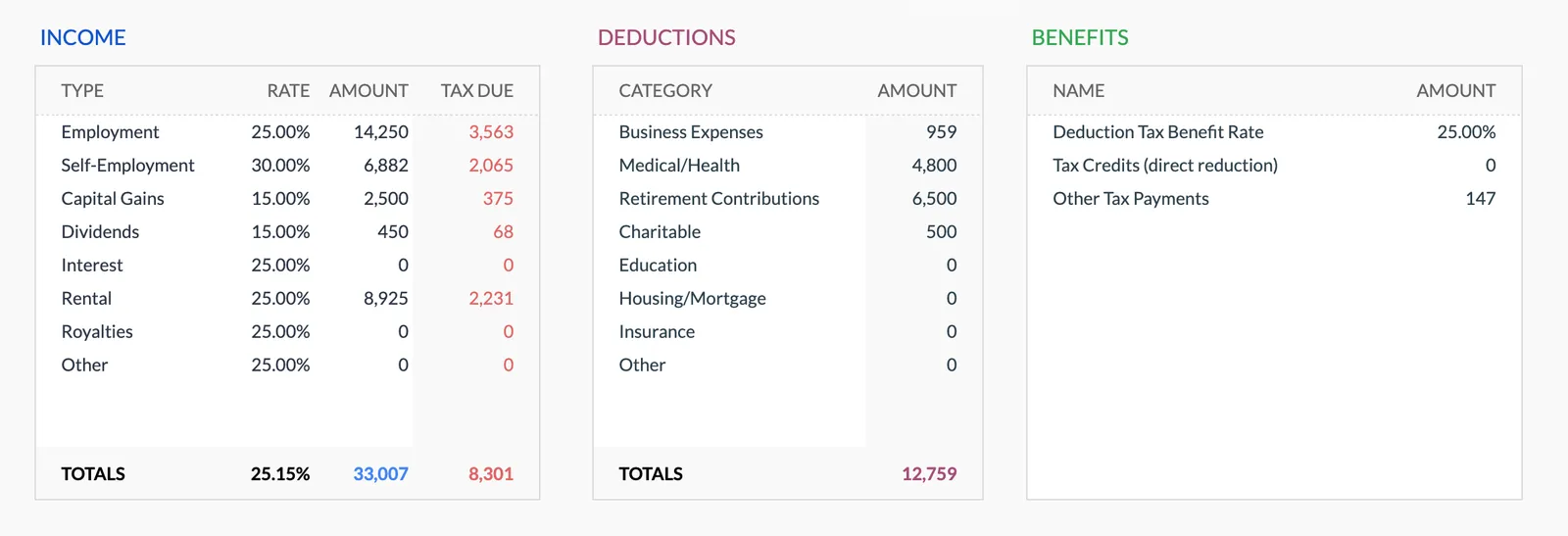
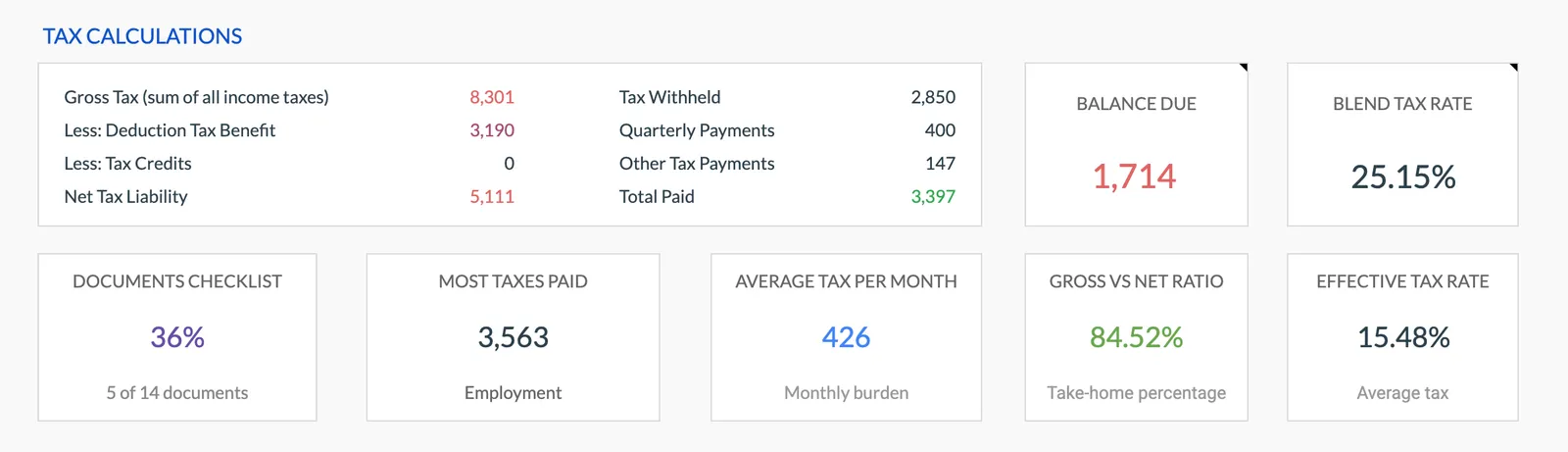
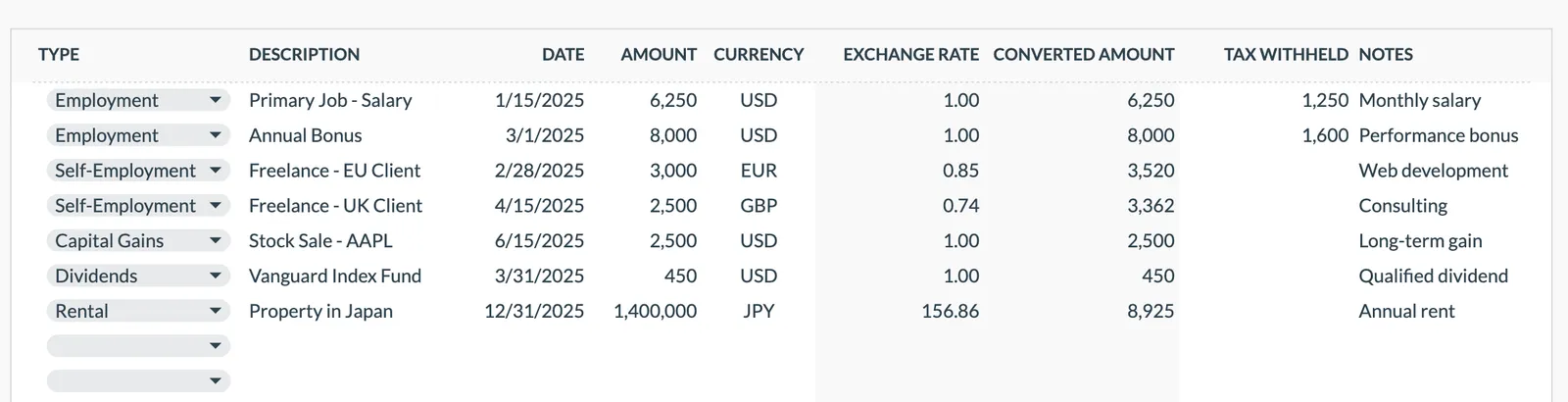
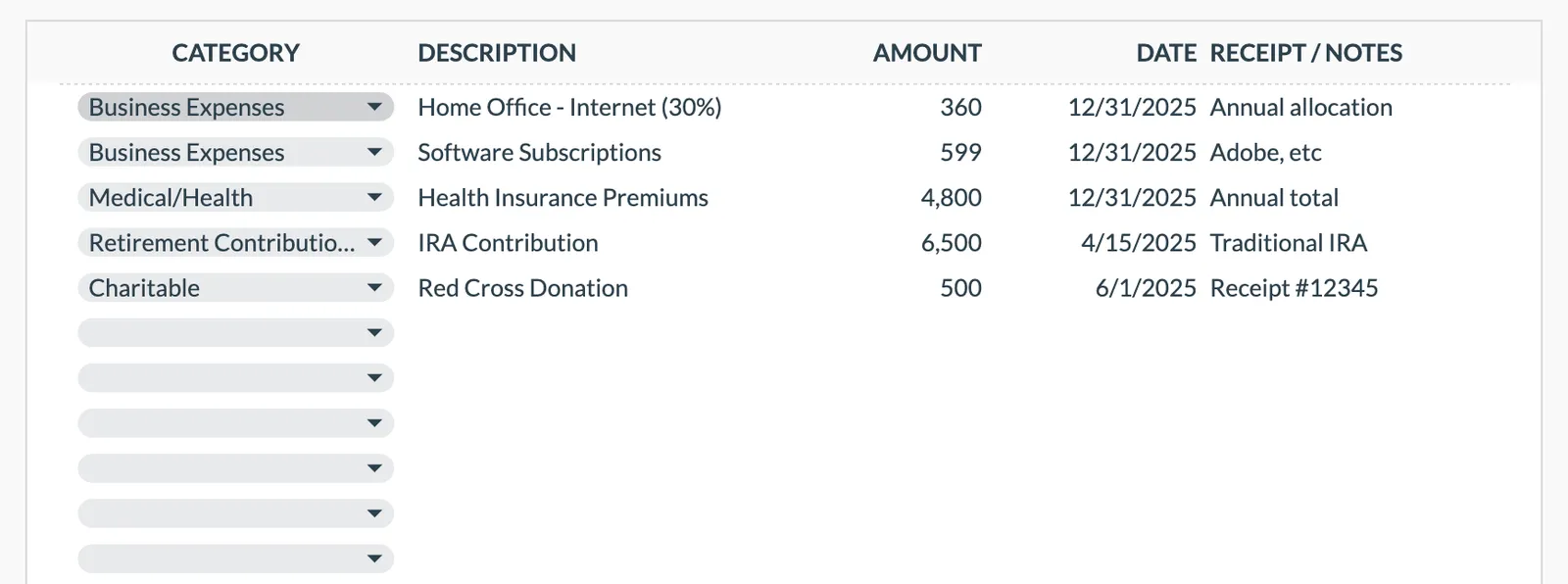
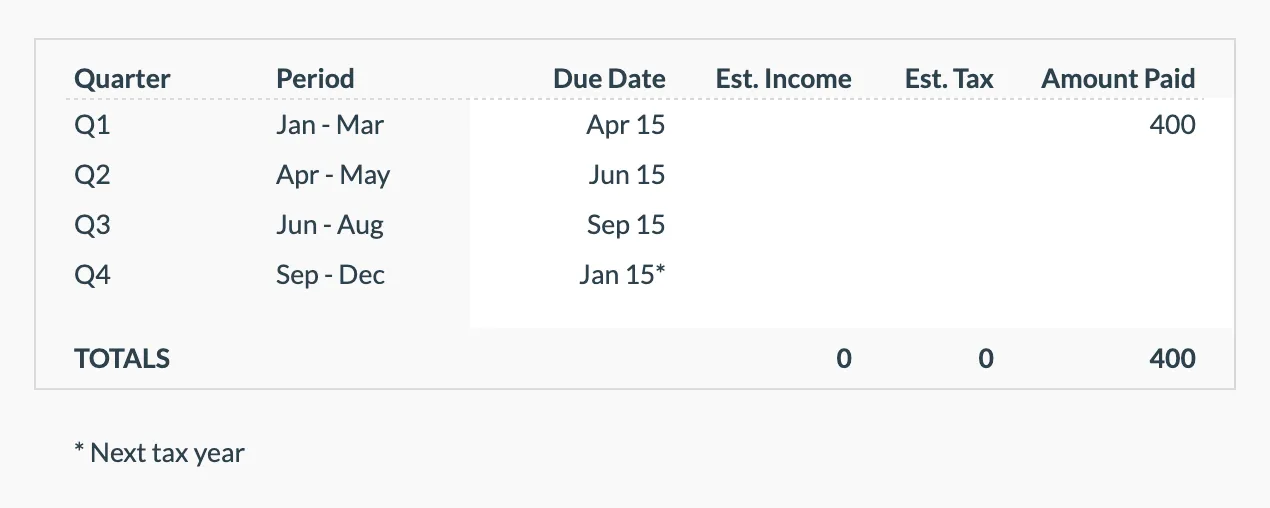
Annual tax overview with key figures
Detailed tax breakdown and projections
Track all income sources for tax purposes
Organize and track tax deductions
Plan and track quarterly estimated tax payments
Questions fréquentes
Planification fiscale en Indiana - FAQ
Comment fonctionnent les impôts sur le revenu du comté de l'Indiana en plus du taux étatique?
Chaque comté de l'Indiana prélève son propre impôt sur le revenu à un taux fixé par le conseil du comté. Ces taux vont d'environ 0.5% à environ 3.38%, et ils s'ajoutent au taux étatique de 2.95% qui s'applique pour l'année fiscale 2026 [1]. C'est votre comté de résidence qui détermine le taux, pas le lieu où vous travaillez. Le taux effectif combiné varie donc considérablement selon le comté où vous vivez. Déménager d'un comté à l'autre en cours d'année peut changer votre taux et compliquer le calcul des paiements estimés.
Le taux de 2.95% de l'Indiana est-il le taux fixe étatique le plus bas?
Le taux étatique de 2.95% de l'Indiana pour l'année fiscale 2026 figure parmi les taux fixes les plus bas [2] du pays, bien que l'Arizona à 2.5% et l'Ohio à 2.75% soient inférieurs. Cependant, l'impôt du comté s'ajoute de manière appréciable au total. Un résident d'un comté au taux de 2.5% paie un taux combiné effectif de 5.45%, comparable à celui de nombreux États ayant un taux fixe unique plus élevé. C'est la couche du comté qui rend le système de l'Indiana distinctif.
L'Indiana impose-t-il les revenus de retraite?
L'Indiana impose la plupart des revenus de retraite au taux étatique, y compris les pensions, les distributions 401(k) et les retraits d'IRA. Les prestations de Sécurité sociale sont exonérées de l'impôt étatique. Les pensions de retraite militaires sont complètement exonérées. L'Indiana offre également un crédit d'impôt sur le revenu gagné de l'État (un pourcentage de l'EITC fédéral) et un crédit pour les contributions au plan CollegeChoice 529 de l'Indiana, ce qui peut réduire la facture fiscale étatique globale.
Comment fonctionne la retenue à la source avec le système de taux dual de l'Indiana?
Les employeurs retiennent les impôts sur le revenu étatique et du comté des chèques de paie en fonction du comté de résidence de l'employé. Il est important que votre employeur ait le bon comté dans ses dossiers, car les taux diffèrent considérablement. Si vous êtes un travailleur indépendant, tant l'impôt étatique que celui du comté sont inclus dans vos obligations de paiement estimées. Le Département des revenus de l'Indiana publie les taux de comté actuels chaque année.
Le modèle peut-il suivre les obligations étatiques plus celles du comté?
Le modèle gère la planification fiscale fédérale avec le suivi des revenus, les déductions et les paiements estimés. Pour le système à deux niveaux de l'Indiana, utilisez la section notes pour enregistrer le taux de votre comté aux côtés du taux étatique de 2.95% qui s'applique pour l'année fiscale 2026. Le taux combiné peut ensuite être appliqué à votre revenu imposable étatique pour obtenir une projection complète au niveau de l'État à côté de vos chiffres fédéraux.
Vous ne trouvez pas la réponse que vous cherchez ? Contactez notre équipe
Ressources fiscales officielles
Pour les taux actuels, formulaires et délais de déclaration spécifiques à Indiana:
Sources
Organisez votre planification fiscale pour Indiana
Achat unique. Sans abonnement. Vos données financières restent dans votre Google Drive.
Tax rules, rates, and contribution limits change, and official publications can themselves lag behind the law in force. We review these figures on a best-effort basis against sources we consider authoritative, but we cannot guarantee they are current, complete, or that better sources do not exist, and nothing here is tax, legal, or financial advice. For decisions, the relevant government authority is the reference. Last reviewed: August 2026.