Rhode Island
Modèle de planificateur fiscal pour Rhode Island
Suivez votre planification fiscale fédérale et étatique de Rhode Island dans Google Sheets. Rhode Island a un impôt sur le revenu progressif avec trois tranches.
In Depth
Le Système Fiscal Compact de Rhode Island
Rhode Island garde sa structure d'impôt sur le revenu relativement simple, avec trois tranches et un taux maximal modéré comparé à ses voisins de Nouvelle-Angleterre. Le Connecticut et le Massachusetts ont tous deux des taux maximaux effectifs plus élevés pour l'année fiscale 2026, bien qu'une surtaxe sur les revenus supérieurs à $1 million adoptée en juin 2026 soit introduite progressivement de l'année fiscale 2027 à 2029 et porterait le taux maximal de Rhode Island à 8.99%. La structure à trois tranches signifie qu'il y a moins de complexité pour estimer quel taux s'applique à votre revenu.
Une caractéristique inhabituelle du code fiscal de Rhode Island est que la déduction standard disparaît progressivement aux niveaux de revenu plus élevés. Cela signifie que les déclarants à revenu plus élevé peuvent recevoir une déduction standard plus petite - ou aucune - ce qui augmente effectivement leur revenu imposable par rapport à un État où la déduction standard est disponible pour tous. Cette phase ajoute une couche cachée à la structure des taux effectifs au-delà de ce que les trois tranches indiquées suggèrent.
Les taxes foncières à Rhode Island sont supérieures à la moyenne nationale et varient selon la municipalité. Providence, Cranston et Warwick ont des taux effectifs différents. Pour les fins fédérales, ces taxes foncières combinées avec l'impôt sur le revenu étatique comptent pour le plafond SALT. L'exemption de Sécurité Sociale de Rhode Island est basée sur le revenu - les résidents ayant un RBG fédéral inférieur au seuil ne paient pas d'impôt d'État sur les prestations, tandis que ceux au-dessus peuvent devoir une taxe sur une portion.
Rhode Island
Planification Fiscale à Rhode Island
Rhode Island a un impôt sur le revenu progressif avec une structure à trois tranches simple. L'État propose également divers crédits et déductions qui peuvent réduire le passif fiscal.
Impôt sur le Revenu Progressif
Rhode Island a trois tranches avec un taux maximal modéré. La structure est plus simple que dans de nombreux États.
Exemption de la Sécurité Sociale
Rhode Island exempte les prestations de Sécurité Sociale de l'impôt étatique pour les individus dont le RBG fédéral est inférieur à certains seuils.
Taxe Foncière
Les taux de taxe foncière à Rhode Island varient selon la municipalité mais sont généralement supérieurs à la moyenne nationale [2]. Le crédit d'impôt foncier sur la déclaration d'État peut offrir un certain allègement.
Déduction Standard
Rhode Island propose une déduction standard basée sur le statut de déclaration qui disparaît progressivement aux niveaux de revenu plus élevés.
Obtenir le planificateur fiscal annuel
Premiers pas
Commencer avec la Planification Fiscale de Rhode Island
Entrez les revenus selon les trois tranches de Rhode Island
Ajoutez toutes les sources de revenu - salaires, travail indépendant, investissements et autres revenus. Le système à trois tranches de Rhode Island (3,75%, 4,75%, 5,99%) est plus simple que dans de nombreux États. Le modèle montre où vos revenus se situent à la fois dans les tranches de Rhode Island et la structure des tranches fédérales.
Vérifiez si la phase de déduction standard vous affecte
La déduction standard de Rhode Island disparaît progressivement aux niveaux de revenu plus élevés. Entrez votre revenu pour voir si vous recevez la déduction standard complète, un montant réduit ou aucune. Cette phase peut augmenter considérablement votre taux d'imposition effectif au-delà de ce que suggèrent les taux indiqués, il vaut donc la peine d'en assurer le suivi.
Suivez la Sécurité Sociale par rapport au seuil de revenu
Si vous recevez des prestations de Sécurité Sociale, entrez-les aux côtés de vos autres revenus. Rhode Island exempte la Sécurité Sociale pour les déclarants qui ont atteint l'âge de la retraite à taux plein et dont le RBG fédéral reste inférieur à $107,000 (célibataire) ou $133,750 (conjoint) pour l'année fiscale 2025, les seuils étant indexés chaque année. Le modèle vous aide à voir où se situe votre revenu total par rapport à ce seuil et si l'exemption s'applique.
Notez les taxes foncières supérieures à la moyenne pour la planification SALT
Les taxes foncières de Rhode Island sont supérieures à la moyenne nationale et peuvent s'approcher du plafond de déduction SALT fédéral lorsqu'elles sont combinées avec l'impôt sur le revenu étatique. Entrez votre montant de taxe foncière par municipalité, car les taux varient entre Providence, Cranston, Warwick et autres villes.
Consultez votre comparaison fiscale de Nouvelle-Angleterre
Le tableau de bord affiche le passif fédéral et étatique projeté. Les taux de Rhode Island se situent en dessous de ceux du Connecticut et du Massachusetts pour l'année fiscale 2026, bien que la surtaxe sur les revenus supérieurs à $1 million, introduite progressivement à partir de l'année fiscale 2027, modifie ce tableau dans le haut de l'échelle. Consultez-le trimestriellement pour maintenir les paiements estimés à jour.
Voir en action
À quoi ressemble le planificateur fiscal
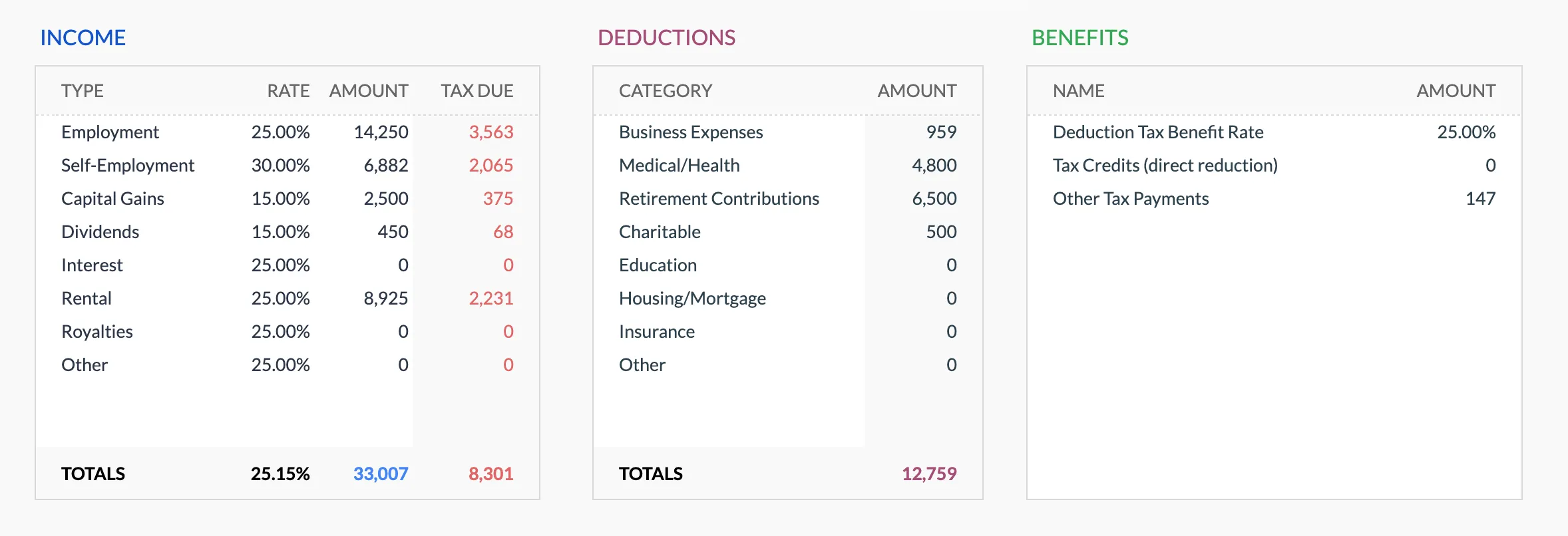
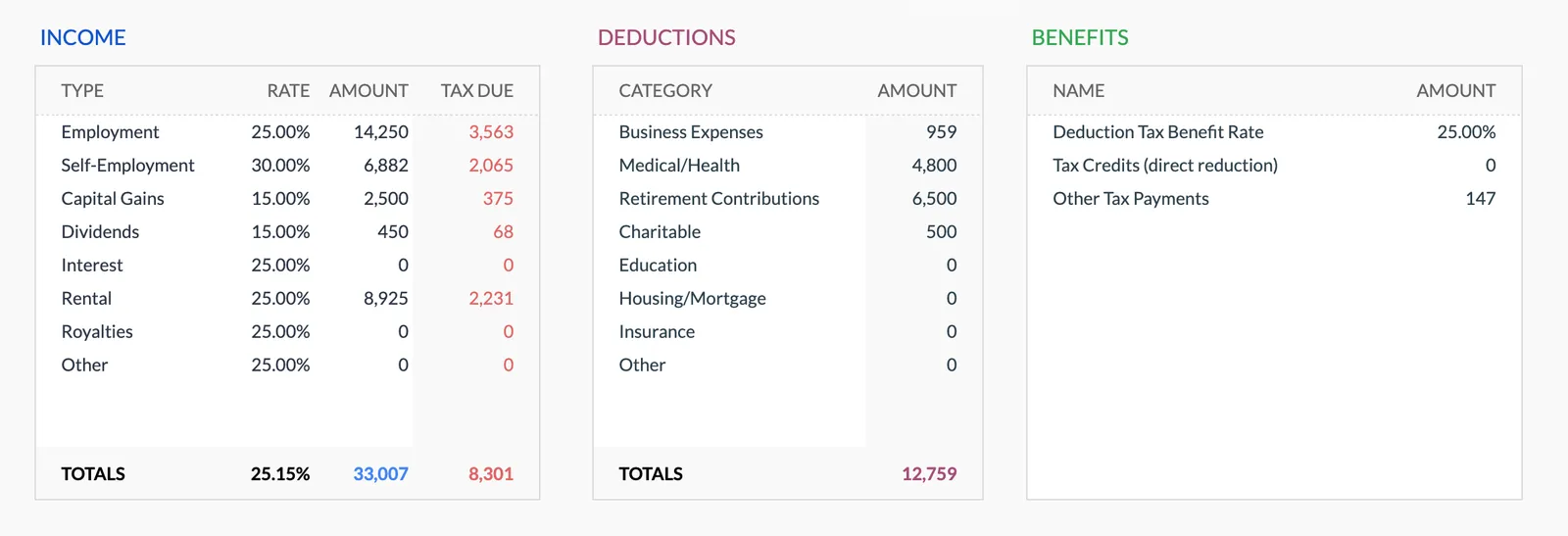
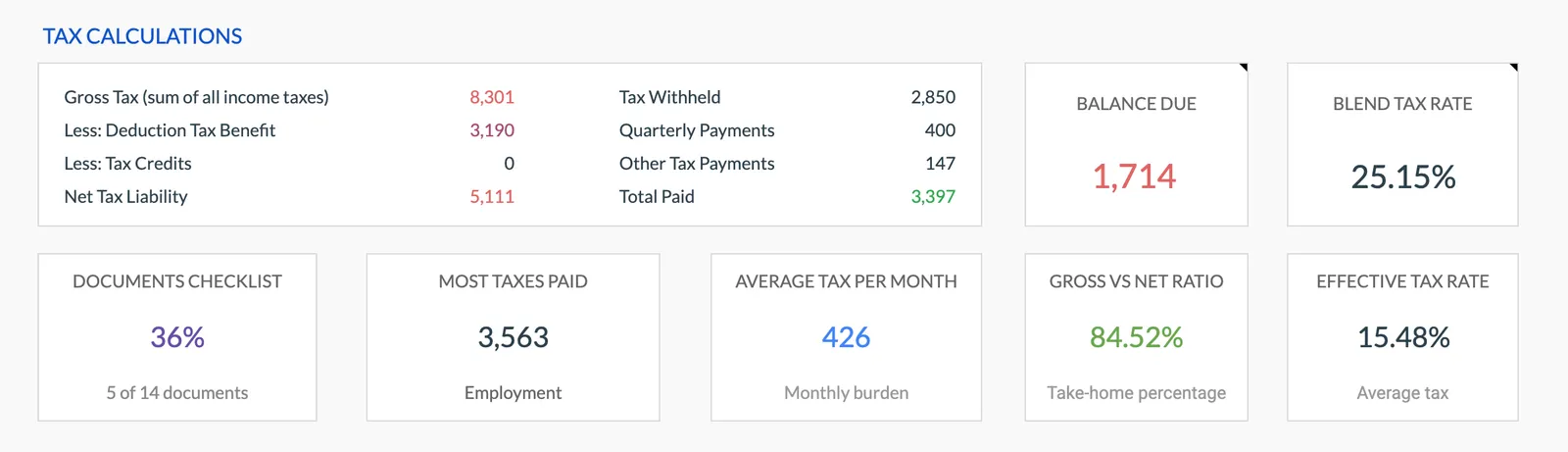
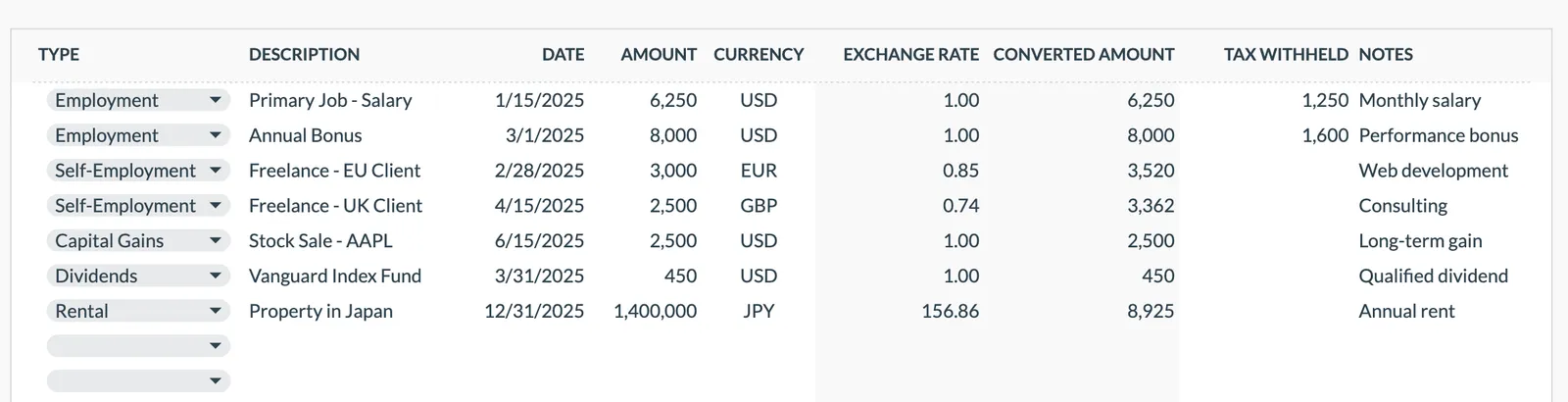
Parcourez le modèle pour voir comment il suit les revenus, les déductions, les crédits et les paiements trimestriels estimés.
- Tableau de bord fiscal annuel
- Suivi des revenus par source
- Organisateur de déductions et crédits
- Suivi des paiements trimestriels
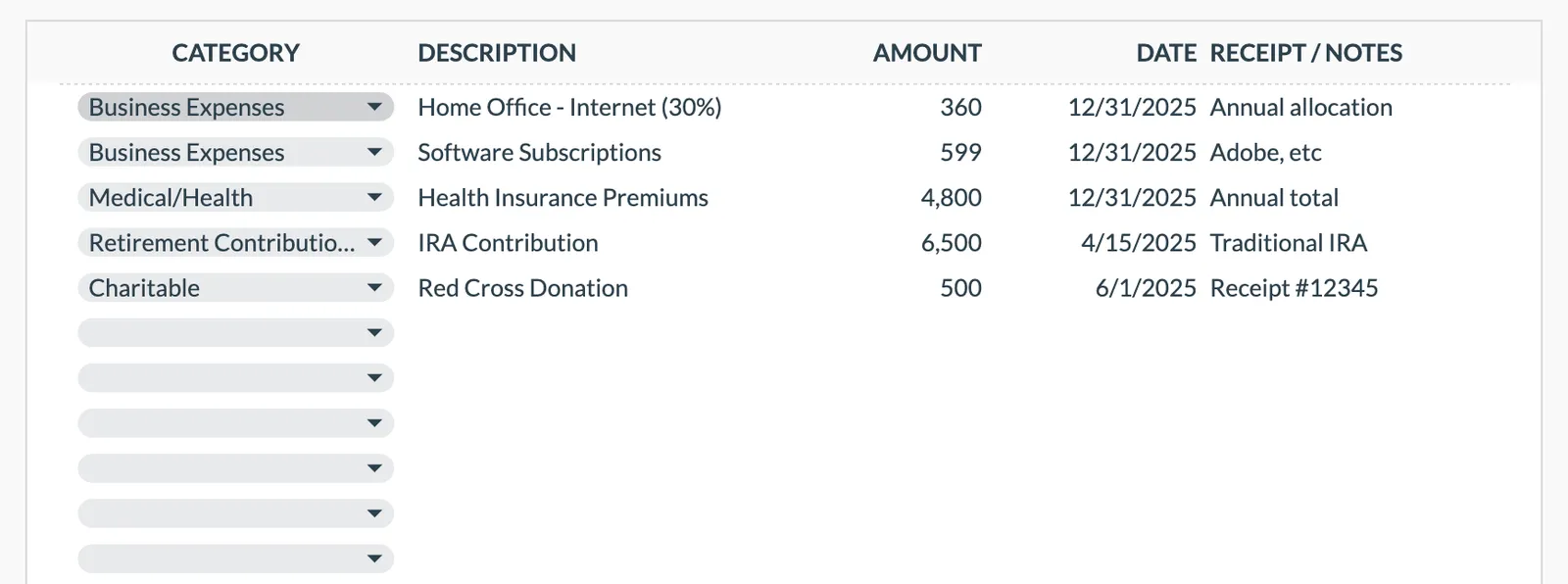
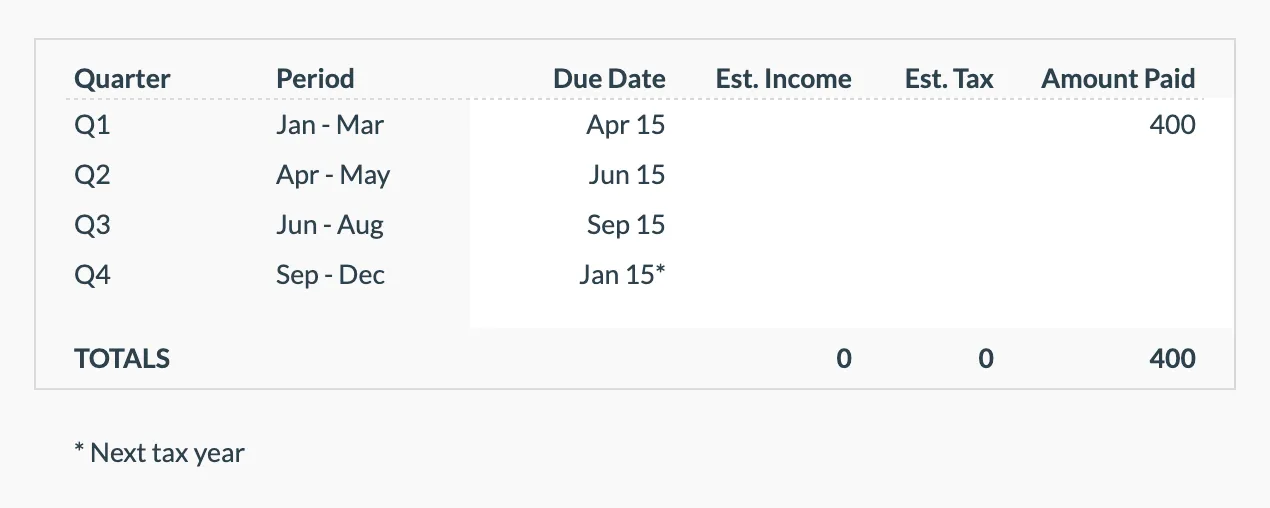
Annual tax overview with key figures
Detailed tax breakdown and projections
Track all income sources for tax purposes
Organize and track tax deductions
Plan and track quarterly estimated tax payments
Questions fréquentes
Planification fiscale en Rhode Island - FAQ
Quels sont les taux d'impôt sur le revenu de Rhode Island?
Rhode Island a un impôt sur le revenu progressif avec trois tranches et des taux de 3.75%, 4.75% et 5.99% [1]. La structure à trois tranches est plus simple que dans de nombreux États, ce qui rend relativement direct d'estimer quel taux s'applique à votre revenu. Pour l'année fiscale 2026, la tranche supérieure commence au-delà de $186,450 de revenu imposable. Une surtaxe sur les revenus de plus de $1 million, adoptée en juin 2026, est introduite progressivement à 1% pour l'année fiscale 2027, 2% en 2028 et 3% en 2029, ce qui porterait le taux maximal à 8.99% [2].
Rhode Island impose-t-il les prestations de Sécurité Sociale?
Rhode Island exempte les prestations de Sécurité Sociale de l'impôt étatique pour les individus dont le revenu brut ajusté fédéral est inférieur à $107,000 (célibataire) ou $133,750 (conjoint) pour l'année fiscale 2025, les seuils étant indexés annuellement. La modification exige également d'avoir atteint l'âge de la retraite à taux plein, et au-dessus des seuils les prestations sont imposées comme elles le sont au niveau fédéral. Le revenu total, et non le seul montant de la Sécurité Sociale, détermine si l'exemption s'applique.
Comment fonctionne la phase de déduction standard de Rhode Island?
Rhode Island propose une déduction standard basée sur le statut de déclaration, mais elle disparaît progressivement aux niveaux de revenu plus élevés. Cela signifie que les déclarants à revenu plus élevé peuvent recevoir une déduction standard réduite ou aucune, augmentant effectivement leur revenu imposable. Cette phase crée une couche supplémentaire de progressivité au-delà de ce que les trois tranches indiquées suggèrent.
Comment les taxes foncières de Rhode Island affectent-elles la planification fiscale?
Les taxes foncières de Rhode Island sont généralement supérieures à la moyenne nationale et varient selon la municipalité - Providence, Cranston et Warwick ont des taux effectifs différents. Un crédit d'impôt foncier sur la déclaration d'État peut offrir un certain allègement. Pour les fins fédérales, ces taxes foncières combinées avec l'impôt sur le revenu étatique comptent pour le plafond SALT.
Comment Rhode Island traite-t-il les gains en capital?
Rhode Island impose les gains en capital comme revenu régulier, appliquant les mêmes taux progressifs à trois tranches. Il n'y a pas de taux d'État préférentiel pour les gains en capital à long terme comme au niveau fédéral. Cela signifie que les gains provenant de la vente de placements ou de biens immobiliers font face aux mêmes taux que le revenu salarial sur votre déclaration de Rhode Island.
Vous ne trouvez pas la réponse que vous cherchez ? Contactez notre équipe
Ressources fiscales officielles
Pour les taux actuels, formulaires et délais de déclaration spécifiques à Rhode Island:
Sources
Organisez votre planification fiscale pour Rhode Island
Achat unique. Sans abonnement. Vos données financières restent dans votre Google Drive.
Tax rules, rates, and contribution limits change, and official publications can themselves lag behind the law in force. We review these figures on a best-effort basis against sources we consider authoritative, but we cannot guarantee they are current, complete, or that better sources do not exist, and nothing here is tax, legal, or financial advice. For decisions, the relevant government authority is the reference. Last reviewed: August 2026.