Rhode Island
Modelo de Planejador Fiscal para Rhode Island
Acompanhe seu planejamento fiscal federal e estadual de Rhode Island no Google Sheets. Rhode Island tem um imposto de renda progressivo com três alíquotas.
In Depth
Sistema Fiscal Compacto de Rhode Island
Rhode Island mantém sua estrutura de imposto de renda relativamente simples, com três faixas e uma alíquota máxima moderada em comparação com seus vizinhos da Nova Inglaterra. Connecticut e Massachusetts têm alíquotas máximas efetivas mais altas no ano fiscal de 2026, embora uma sobretaxa sobre a renda acima de $1 million aprovada em junho de 2026 entre em vigor gradualmente do ano fiscal de 2027 até 2029 e elevaria a alíquota máxima de Rhode Island para 8.99%. A estrutura de três faixas significa menos complexidade ao estimar qual alíquota se aplica à sua renda.
Uma característica incomum do código tributário de Rhode Island é que a dedução padrão é reduzida em níveis de renda mais altos. Isso significa que os declarantes com renda mais alta podem receber uma dedução padrão menor - ou nenhuma - o que aumenta efetivamente sua renda tributável comparada a um estado onde a dedução padrão está disponível para todos. Esse encerramento adiciona uma camada oculta à estrutura de alíquota efetiva além do que as três alíquotas indicadas sugerem.
Os impostos sobre a propriedade em Rhode Island estão acima da média nacional e variam por município. Providence, Cranston e Warwick têm alíquotas efetivas diferentes. Para fins federais, esses impostos sobre a propriedade combinados com o imposto de renda estadual contam para o limite SALT. A isenção do Seguro Social de Rhode Island é baseada em renda - residentes com AGI federal abaixo do limite não pagam imposto estadual sobre benefícios, enquanto os que estão acima podem dever imposto em uma parte.
Rhode Island
Planejamento Fiscal em Rhode Island
Rhode Island tem um imposto de renda progressivo com uma estrutura simples de três alíquotas. O estado também oferece vários créditos e deduções que podem reduzir a responsabilidade fiscal.
Imposto de Renda Progressivo
Rhode Island tem três alíquotas com uma alíquota máxima moderada. A estrutura é mais simples que em muitos estados.
Isenção do Seguro Social
Rhode Island isenta benefícios do Seguro Social do imposto estadual para indivíduos com AGI federal abaixo de certos limites.
Imposto sobre a Propriedade
As alíquotas de imposto sobre a propriedade em Rhode Island variam por município, mas geralmente estão acima da média nacional [2]. O crédito de imposto sobre a propriedade na declaração estadual pode oferecer algum alívio.
Dedução Padrão
Rhode Island oferece uma dedução padrão baseada no status de declaração que é reduzida em níveis de renda mais altos.
Obter o Planejador Anual de Impostos
Primeiros Passos
Começando com Planejamento Fiscal de Rhode Island
Insira a renda nas três alíquotas de Rhode Island
Adicione todas as fontes de renda - salários, trabalho autônomo, investimentos e outros ganhos. O sistema de três alíquotas de Rhode Island (3,75%, 4,75%, 5,99%) é mais simples que em muitos estados. O modelo mostra onde sua renda se enquadra nas alíquotas de Rhode Island e na estrutura de alíquotas federal.
Verifique se o encerramento da dedução padrão o afeta
A dedução padrão de Rhode Island é reduzida em níveis de renda mais altos. Insira sua renda para ver se você recebe a dedução padrão completa, um valor reduzido ou nenhuma. Esse encerramento pode aumentar significativamente sua alíquota de imposto efetivo além do que as alíquotas indicadas sugerem, então vale a pena acompanhar.
Acompanhe o Seguro Social em relação ao limite de renda
Se você recebe benefícios do Seguro Social, insira-os junto com sua outra renda. Rhode Island isenta o Seguro Social para declarantes que atingiram a idade plena de aposentadoria e cujo AGI federal permanece abaixo de $107,000 (solteiro) ou $133,750 (conjunto) no ano fiscal de 2025, com os limites indexados a cada ano. O modelo ajuda você a ver onde sua renda total se situa em relação a esse limite e se a isenção se aplica.
Observe impostos sobre a propriedade acima da média para planejamento SALT
Os impostos sobre a propriedade em Rhode Island estão acima da média nacional e, combinados com o imposto de renda estadual, podem se aproximar do limite de dedução SALT federal. Insira seu valor de imposto sobre a propriedade por município, pois as alíquotas variam entre Providence, Cranston, Warwick e outras cidades.
Revise sua comparação fiscal de Nova Inglaterra
O painel mostra a responsabilidade fiscal federal e estadual projetada. As alíquotas de Rhode Island ficam abaixo das de Connecticut e Massachusetts no ano fiscal de 2026, embora a sobretaxa sobre a renda acima de $1 million, que entra em vigor gradualmente a partir do ano fiscal de 2027, mude esse quadro no topo da escala. Revise trimestralmente para manter os pagamentos estimados em dia.
Ver em Ação
Como é o planejador de impostos
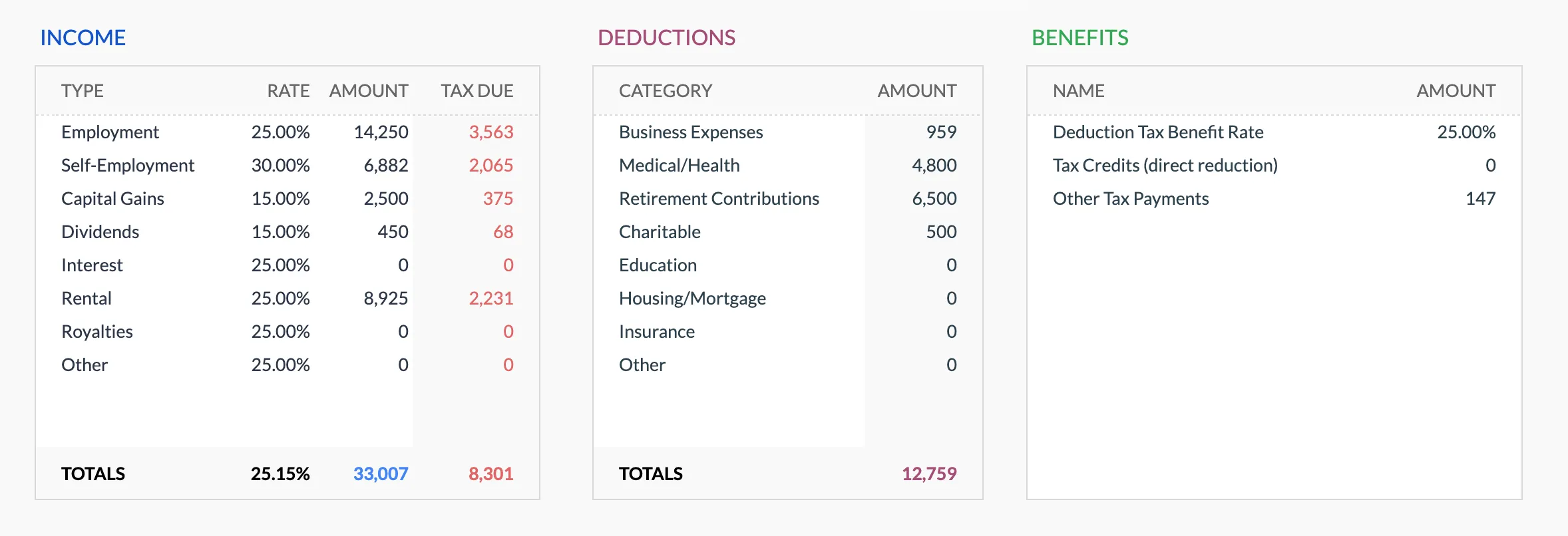
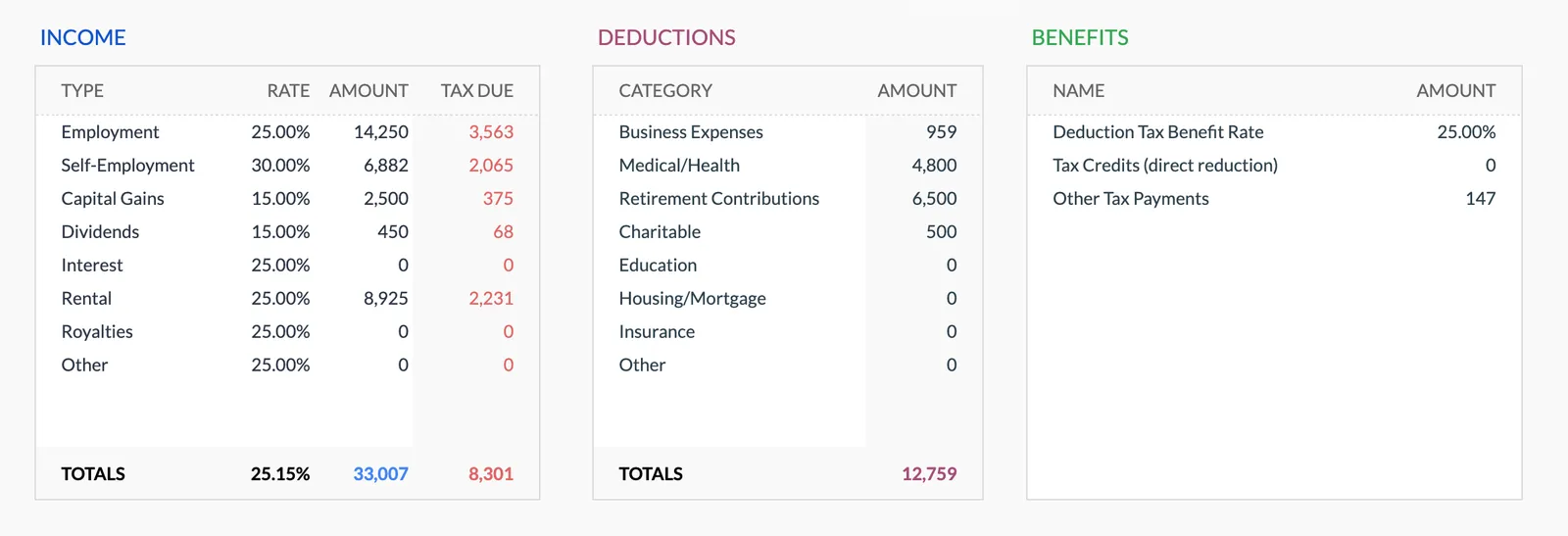
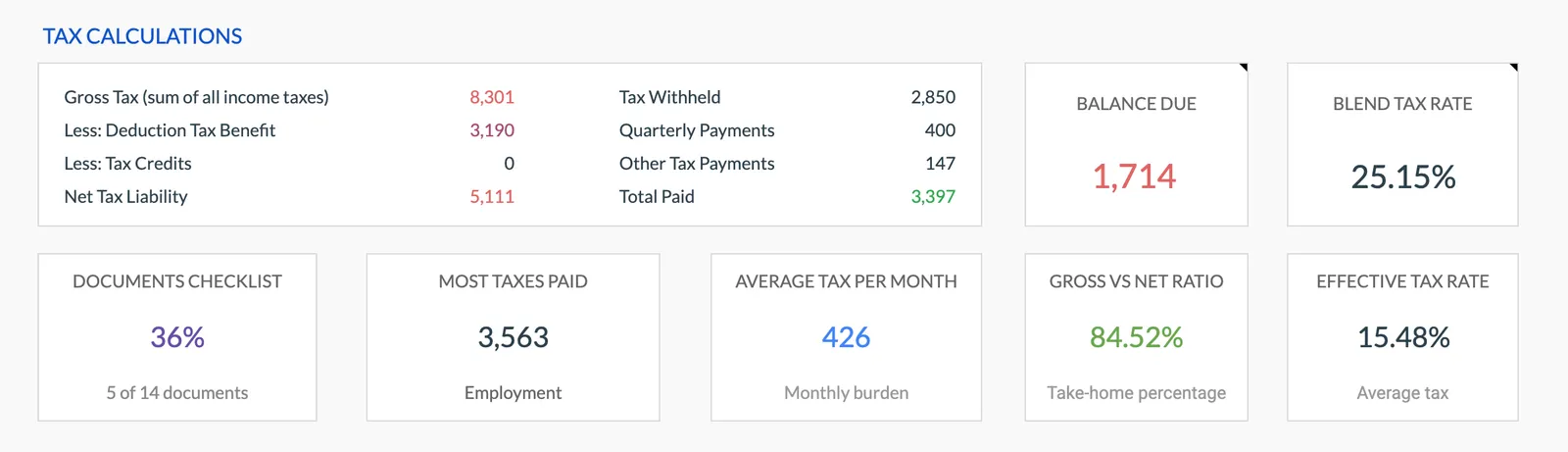
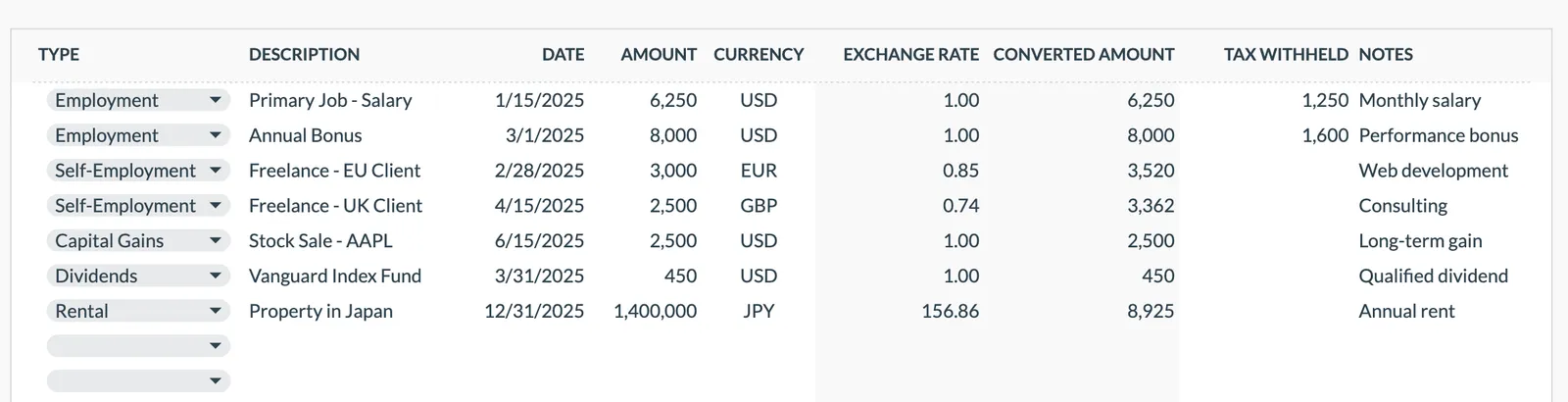
Explore o modelo para ver como ele registra renda, deduções, créditos e pagamentos trimestrais estimados.
- Painel geral de impostos anuais
- Acompanhamento de renda por fonte
- Organizador de deduções e créditos
- Rastreador de pagamentos trimestrais
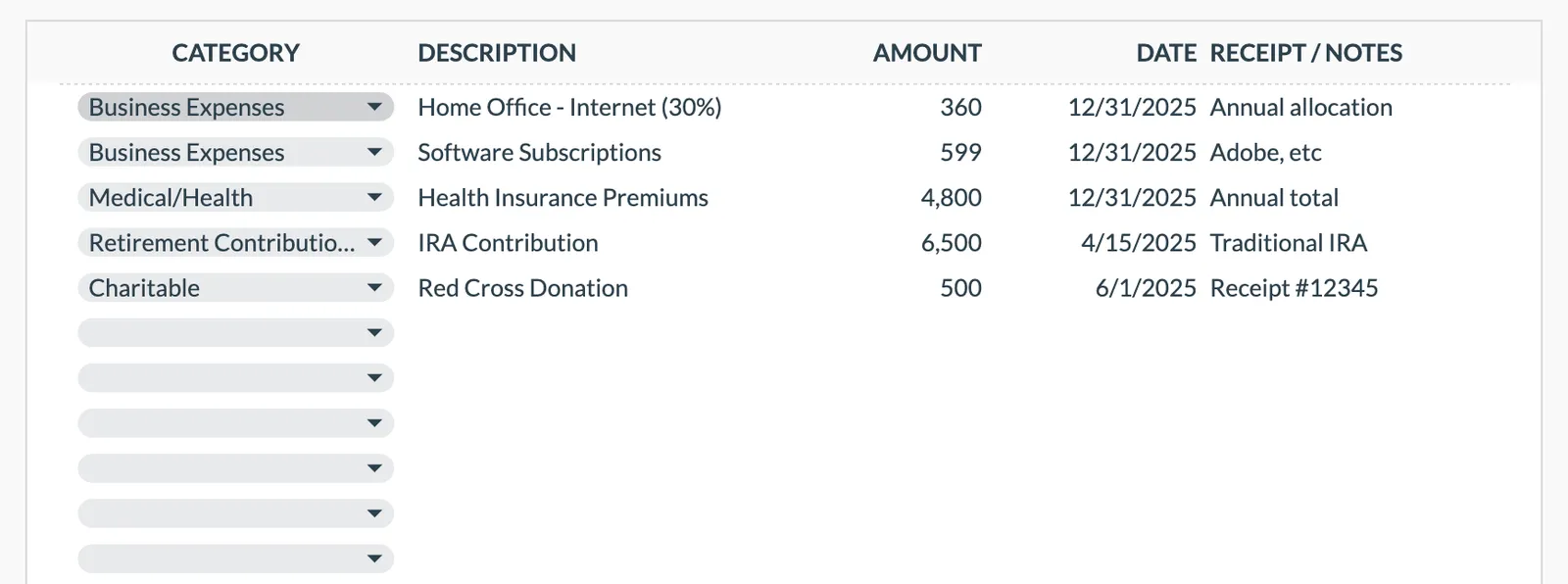
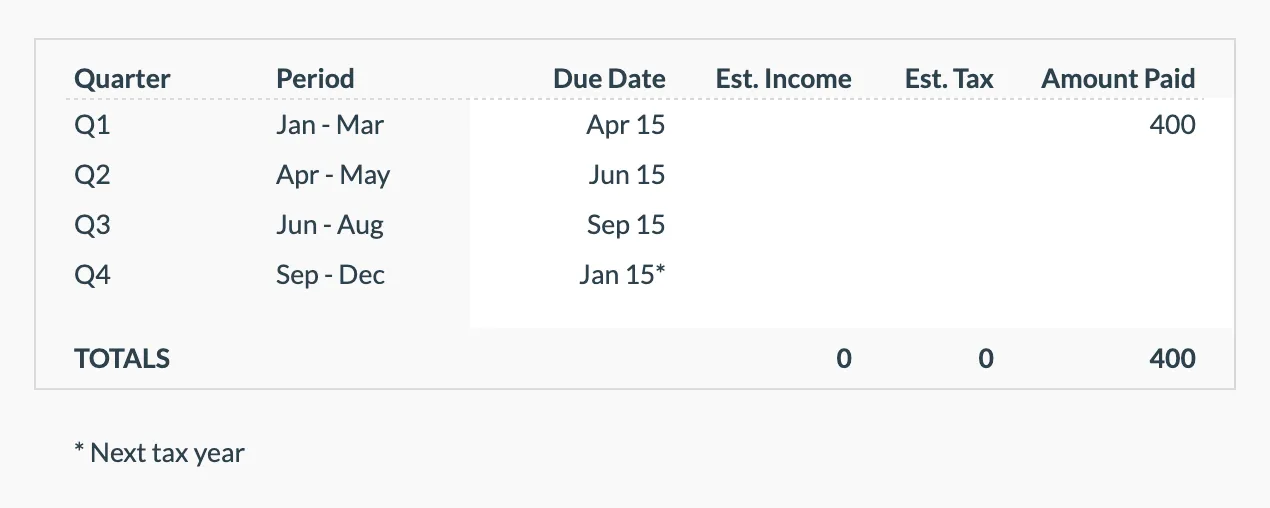
Annual tax overview with key figures
Detailed tax breakdown and projections
Track all income sources for tax purposes
Organize and track tax deductions
Plan and track quarterly estimated tax payments
Perguntas Frequentes
Planejamento tributário em Rhode Island - Perguntas Frequentes
Quais são as alíquotas de imposto de renda de Rhode Island?
Rhode Island tem um imposto de renda progressivo com três faixas e alíquotas de 3.75%, 4.75% e 5.99% [1]. A estrutura de três faixas é mais simples que a de muitos estados, o que torna relativamente direto estimar qual alíquota se aplica à sua renda. No ano fiscal de 2026, a faixa mais alta começa acima de $186,450 de renda tributável. Uma sobretaxa sobre a renda acima de $1 million, aprovada em junho de 2026, entra em vigor gradualmente com 1% no ano fiscal de 2027, 2% em 2028 e 3% em 2029, o que elevaria a alíquota máxima para 8.99% [2].
Rhode Island tributa os benefícios do Seguro Social?
Rhode Island isenta os benefícios do Seguro Social do imposto estadual para pessoas com renda bruta ajustada federal abaixo de $107,000 (solteiro) ou $133,750 (conjunto) no ano fiscal de 2025, com os limites indexados anualmente. A modificação também exige ter atingido a idade plena de aposentadoria, e acima dos limites os benefícios são tributados como no nível federal. A renda total, e não apenas o valor do Seguro Social, determina se a isenção se aplica.
Como funciona o encerramento da dedução padrão de Rhode Island?
Rhode Island oferece uma dedução padrão baseada no status de declaração, mas ela é reduzida em níveis de renda mais altos. Isso significa que os declarantes com renda mais alta podem receber uma dedução padrão reduzida ou nenhuma, aumentando efetivamente sua renda tributável. Esse encerramento cria uma camada adicional de progressividade além do que as três alíquotas indicadas sugerem.
Como os impostos sobre a propriedade de Rhode Island afetam o planejamento fiscal?
Os impostos sobre a propriedade em Rhode Island geralmente estão acima da média nacional e variam por município - Providence, Cranston e Warwick têm alíquotas efetivas diferentes. Um crédito de imposto sobre a propriedade na declaração estadual pode oferecer algum alívio. Para fins federais, esses impostos sobre a propriedade combinados com o imposto de renda estadual contam para o limite de dedução SALT.
Como Rhode Island trata ganhos de capital?
Rhode Island tributa ganhos de capital como renda regular, aplicando as mesmas alíquotas progressivas de três alíquotas. Não há uma alíquota estadual preferencial para ganhos de capital de longo prazo como existe no nível federal. Isso significa que os ganhos da venda de investimentos ou propriedade enfrentam as mesmas alíquotas que a renda salarial em sua declaração de Rhode Island.
Não encontrou a resposta que procura? Entre em contato com nossa equipe
Recursos Fiscais Oficiais
Para alíquotas atuais, formulários e prazos de declaração específicos para Rhode Island:
Sources
Organize seu planejamento tributário para Rhode Island
Compra única. Sem assinatura. Seus dados financeiros ficam no seu Google Drive.
Tax rules, rates, and contribution limits change, and official publications can themselves lag behind the law in force. We review these figures on a best-effort basis against sources we consider authoritative, but we cannot guarantee they are current, complete, or that better sources do not exist, and nothing here is tax, legal, or financial advice. For decisions, the relevant government authority is the reference. Last reviewed: August 2026.