California
Modello Pianificatore Fiscale per California
Pianifica le tue imposte federali e statali della California in Google Sheets. Con alcuni dei tassi di imposta sul reddito più alti del paese, la pianificazione fiscale organizzata è particolarmente preziosa per i residenti della California.
In Depth
Pianificazione Fiscale nello Stato d'Oro
La California ha l'aliquota fiscale marginale massima più alta di qualsiasi stato USA, e la sua struttura a scaglioni graduati significa che le aliquote salgono attraverso molti livelli. L'Imposta sui Servizi di Salute Mentale aggiunge una sovrattassa sul reddito imponibile al di sopra di un milione di dollari, spingendo ancora più in alto l'aliquota marginale massima effettiva. Anche i contribuenti a reddito medio affrontano aliquote statali che superano le aliquote fisse di molti altri stati.
Un aspetto della fiscalità della California che confonde molti residenti è il trattamento delle plusvalenze. A differenza del sistema federale, che tassa le plusvalenze a lungo termine a aliquote preferenziali, la California tassa tutte le plusvalenze come reddito ordinario. Per chiunque venda azioni, eserciti opzioni o realizzi guadagni su investimenti, questo significa che i guadagni vengono tassati all'aliquota marginale che si applica al loro reddito totale. In uno stato con aliquote così elevate, la differenza dal trattamento federale è sostanziale.
Il limite di deduzione SALT federale colpisce particolarmente i residenti della California. Tra l'imposta sul reddito statale e le imposte sulla proprietà - che sono elevate in termini assoluti anche se l'aliquota per dollaro di valore stimato è moderata - molte famiglie della California raggiungono rapidamente il limite. Questo significa effettivamente che una porzione di imposte statali e locali non fornisce alcun beneficio fiscale federale, il che rende utile tracciare il quadro completo degli obblighi federali e statali fianco a fianco.
California
Pianificazione Fiscale in California
La California ha l'aliquota fiscale marginale massima più alta tra gli stati USA. La struttura di aliquote graduate significa che la pianificazione fiscale è particolarmente rilevante per i residenti con redditi più alti o fonti di reddito multiple.
Aliquote Marginali Elevate
La California ha una delle strutture fiscali più progressive della nazione, con molti scaglioni che vanno da aliquote basse sui redditi modesti all'aliquota massima più alta di qualsiasi stato al 13,3% [1]. Una sovrattassa di Imposta sui Servizi di Salute Mentale si applica ai redditi molto elevati.
Trattamento delle Plusvalenze
La California tassa le plusvalenze come reddito ordinario - non c'è un'aliquota preferenziale per i guadagni a lungo termine a livello statale [2]. Questo è un fattore significativo per i residenti con reddito da investimenti o stock option.
Impatto del Limite di Deduzione SALT
Il limite federale di deduzione SALT è particolarmente impattante per i residenti della California, che spesso pagano imposte statali e sulla proprietà significative. Questo rende la pianificazione fiscale federale particolarmente importante.
Reddito da Pensione
La California tassa la maggior parte del reddito da pensione, incluse le pensioni e le distribuzioni di 401(k), come reddito regolare. I benefici della Sicurezza Sociale sono esenti dall'imposta statale.
Ottieni il Pianificatore Fiscale Annuale
Per Iniziare
Configurazione del Pianificatore Fiscale per la California
Inserisci il reddito prestando attenzione alle plusvalenze
Aggiungi tutte le fonti di reddito - salari, lavoro autonomo, investimenti e compenso in azioni. La California tassa le plusvalenze come reddito ordinario senza aliquota preferenziale, quindi è utile separare i guadagni realizzati dal resto del reddito. Se possiedi stock option o RSU, il tracciamento delle date di esercizio o di acquisizione insieme all'importo del reddito aiuta a chiarire il quadro fiscale dello stato.
Contabilizza la sovrattassa di Imposta sui Servizi di Salute Mentale
Per reddito imponibile superiore a $1 milione, la California aggiunge una sovrattassa di Imposta sui Servizi di Salute Mentale dell'1% oltre l'aliquota massima del 12,3%, portando l'aliquota marginale massima effettiva al 13,3%. Se il tuo reddito si avvicina o supera quella soglia, il modello ti aiuta a vedere come la sovrattassa influisce sulla tua responsabilità fiscale statale totale. Il reddito che fluttua da anno a anno - come i bonus o i grandi guadagni in conto capitale - può spingerti oltre la soglia in alcuni anni ma non in altri.
Rivedi l'esposizione all'AMT della California
La California ha il suo Imposta Minima Alternativa che funziona indipendentemente dall'AMT federale. Determinate deduzioni e tipi di reddito - come l'esercizio di stock option di incentivo - possono scatenarla. Usa la sezione note per contrassegnare gli elementi che potrebbero creare esposizione all'AMT in modo da poter contattare un professionista fiscale se necessario.
Traccia l'impatto del limite SALT sulla tua dichiarazione federale
L'imposta sul reddito statale della California più l'imposta sulla proprietà possono comunque raggiungere il limite federale di deduzione SALT, che è salito a $40,000 per l'anno fiscale 2025 e si riduce progressivamente verso $10,000 ai redditi più elevati. Inserisci sia l'imposta sul reddito statale stimata sia gli importi dell'imposta sulla proprietà per vedere quanta parte delle tue imposte statali e locali combinate riduce effettivamente il tuo reddito imponibile federale, e quanta invece non porta alcun beneficio federale.
Monitora gli obblighi di pagamento trimestrale stimato
La California richiede pagamenti stimati quando la ritenuta d'acconto non copre l'intera responsabilità. L'Ufficio delle Imposte sul Franchising utilizza regole di porto sicuro diverse da quelle dell'IRS - incluso un metodo di rata di reddito annualizzato. Usa il tracker trimestrale per stare al passo con i pagamenti stimati federali e della California, soprattutto se il reddito varia durante l'anno.
Guarda in Azione
Come appare il pianificatore fiscale
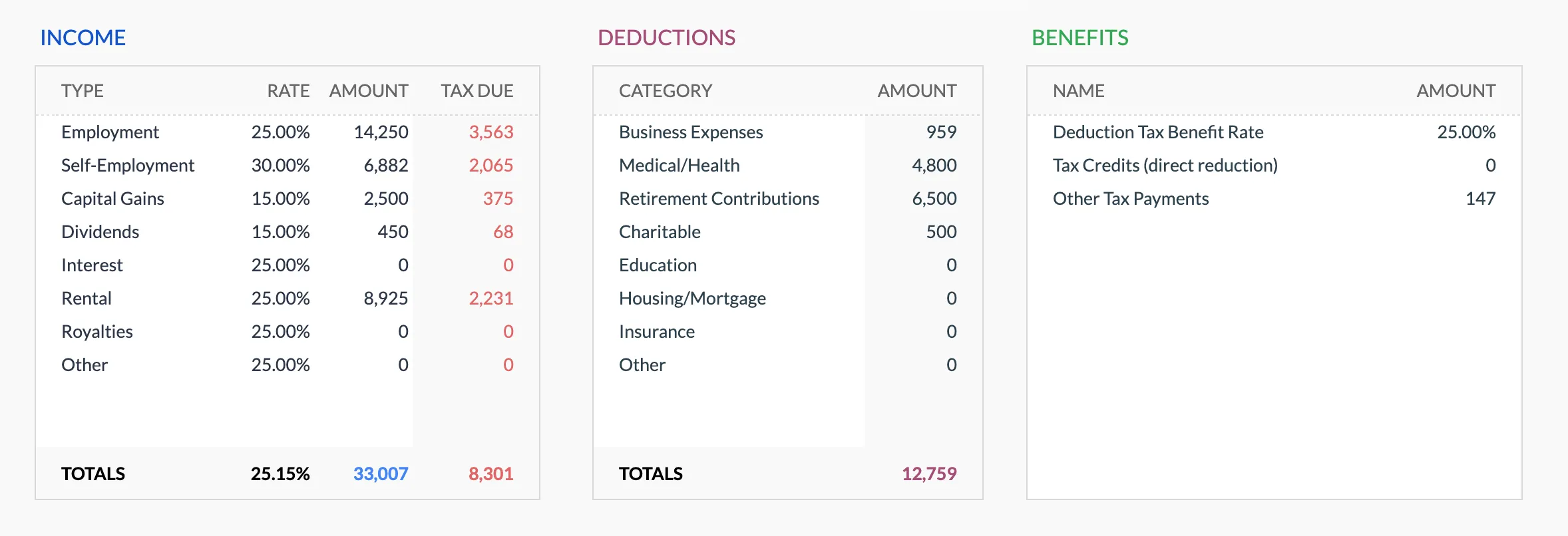
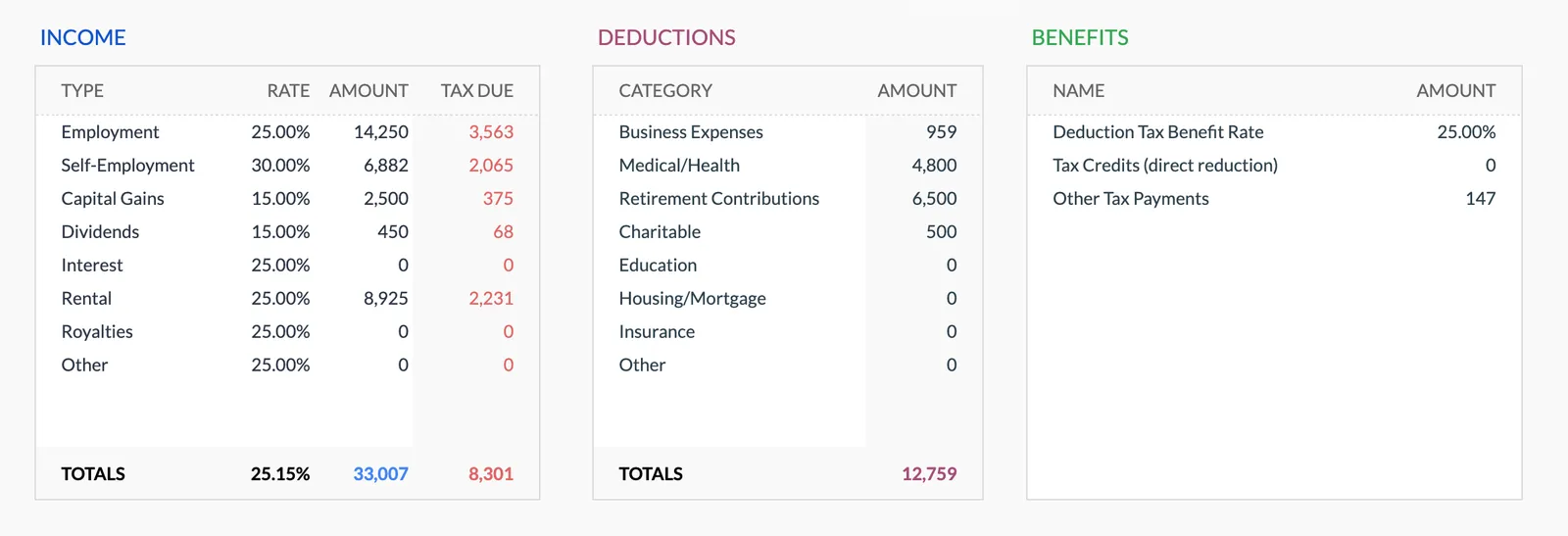
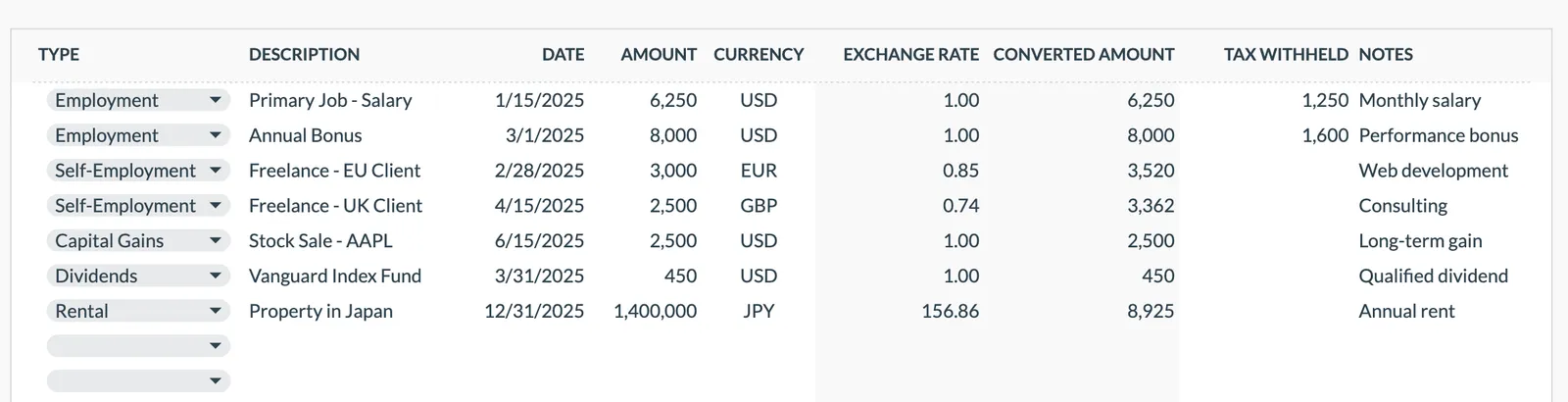
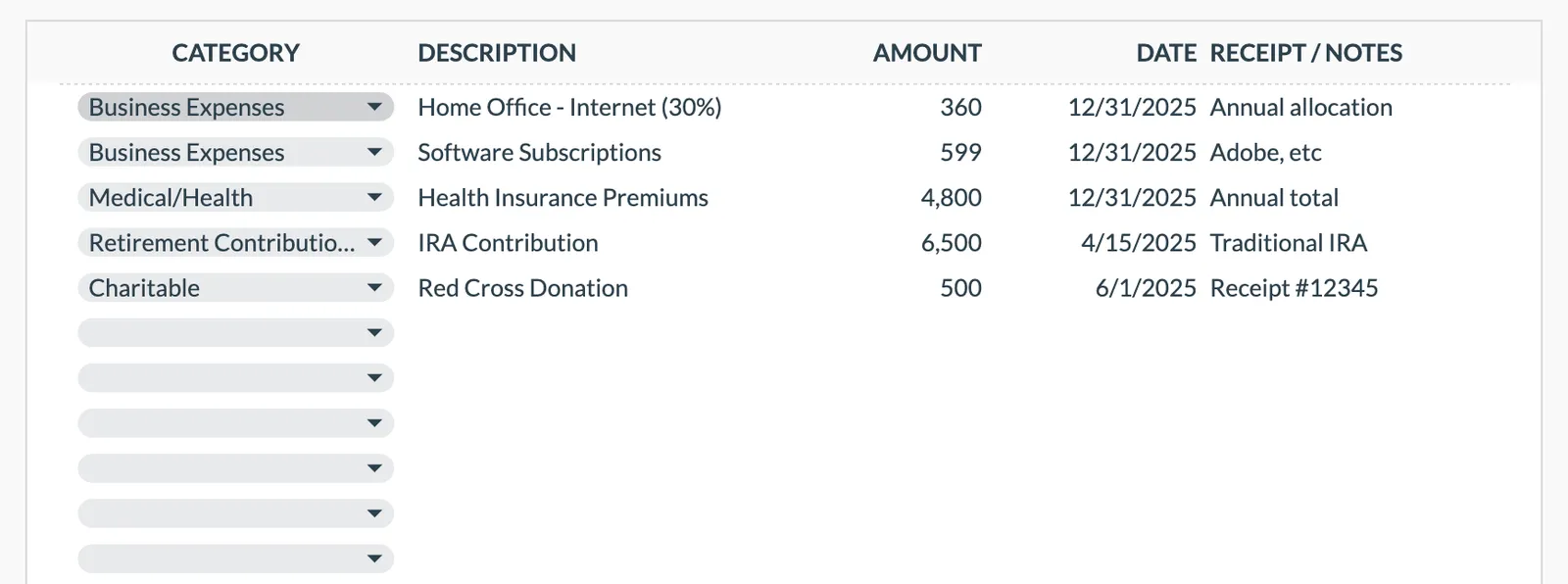
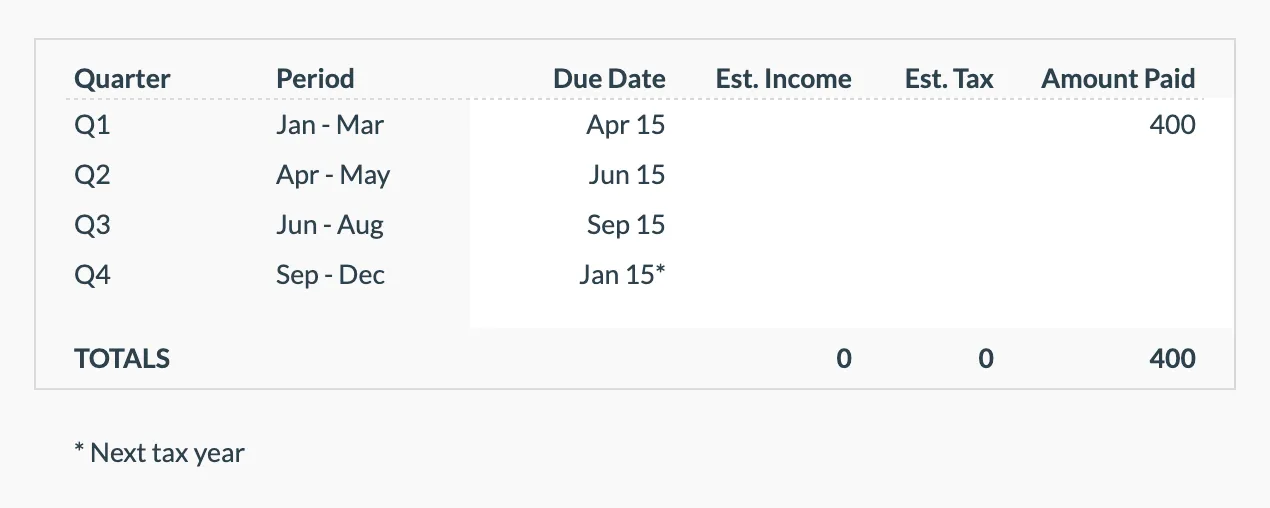
Esplora il modello per vedere come tiene traccia di redditi, detrazioni, crediti e pagamenti trimestrali stimati.
- Dashboard di riepilogo fiscale annuale
- Monitoraggio del reddito per fonte
- Organizzatore di detrazioni e crediti
- Registro dei pagamenti trimestrali
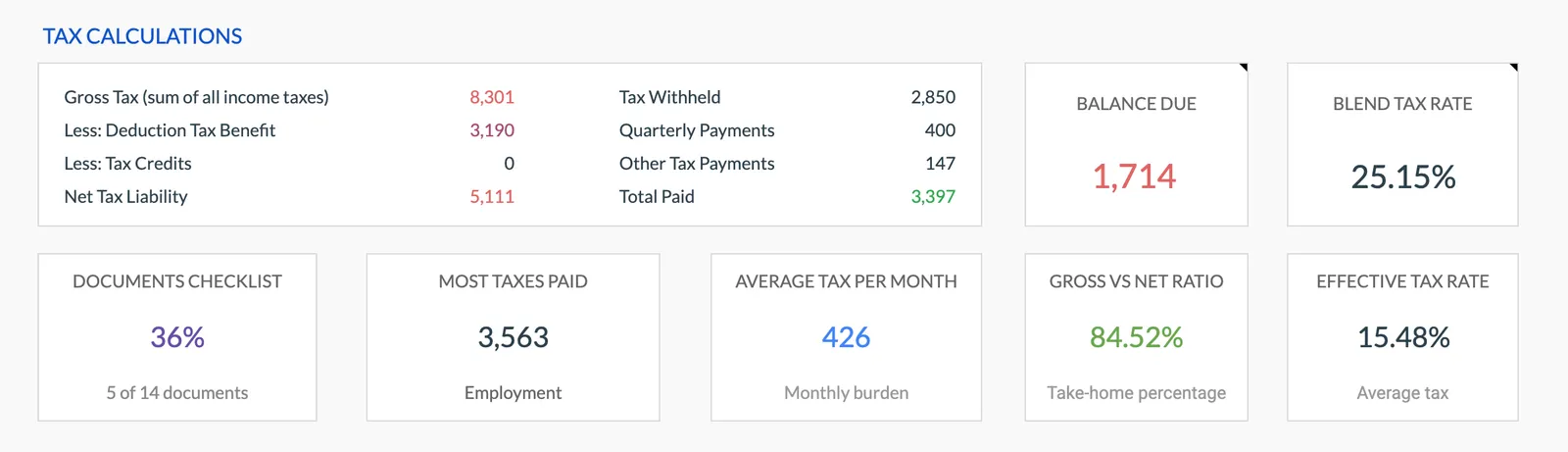
Annual tax overview with key figures
Detailed tax breakdown and projections
Track all income sources for tax purposes
Organize and track tax deductions
Plan and track quarterly estimated tax payments
Domande Frequenti
Pianificazione fiscale in California - FAQ
Come la California tassa le plusvalenze diversamente dal governo federale?
La California tassa tutte le plusvalenze - sia a breve che a lungo termine - come reddito ordinario alle aliquote graduate complete. Non c'è un'aliquota preferenziale per le plusvalenze a lungo termine a livello statale. Questo significa che un guadagno a lungo termine che affronta un'aliquota federale massima del 20% potrebbe affrontare fino al 13,3% di imposta statale della California in aggiunta. Per i residenti con reddito da investimenti significativo, questa distinzione è una delle differenze più consequenziali tra il trattamento fiscale federale e californiano.
Qual è la sovrattassa di Imposta sui Servizi di Salute Mentale?
La California aggiunge una sovrattassa dell'1% sul reddito imponibile che supera $1 milione, in aggiunta all'aliquota massima regolare del 12,3% [1]. Questo porta l'aliquota marginale massima effettiva al 13,3%. La sovrattassa si applica indipendentemente dallo stato civile - la soglia di $1 milione è la stessa per i dichiaranti single e coniugati. Negli anni con grandi eventi di reddito una tantum come vendite di azioni o dismissioni aziendali, la sovrattassa può applicarsi anche se il reddito annuale tipico scende al di sotto della soglia.
La California ha il suo AMT?
Sì. La California ha un Imposta Minima Alternativa a livello statale che funziona indipendentemente dall'AMT federale. Utilizza aliquote ed esenzioni diverse. Determinati elementi - come l'esercizio di stock option di incentivo, gli interessi su obbligazioni di attività private e alcune differenze di ammortamento - possono scatenare l'AMT della California. Il calcolo è sufficientemente complesso che i residenti con questi tipi di reddito spesso beneficiano della consulenza professionale.
Come il limite SALT influisce specificamente sui residenti della California?
Il limite federale sulle deduzioni delle imposte statali e locali è salito a $40,000 per l'anno fiscale 2025, ma si riduce progressivamente verso $10,000 una volta che il reddito supera all'incirca $500,000, quindi resta rilevante per chi guadagna di più. Con aliquote dell'imposta sul reddito statale che arrivano al 13.3% e imposte sulla proprietà elevate in termini assoluti (anche se l'aliquota per dollaro di valore stimato è moderata grazie alla Proposition 13), le famiglie californiane a reddito più alto possono superare il limite applicabile con la sola imposta sul reddito. Ciò significa che le imposte sulla proprietà potrebbero non fornire alcuna deduzione federale aggiuntiva, il che è utile da considerare nella pianificazione complessiva.
Quali crediti specifici della California sono disponibili?
La California offre crediti tra cui il Credito Fiscale sul Reddito del Lavoro della California (CalEITC), il Credito Fiscale per Bambini Piccoli, un credito per gli affittuari per i dichiaranti a reddito più basso e crediti per le spese di assistenza ai figli e ai familiari a carico. Alcuni crediti sono rimborsabili, il che significa che possono ridurre la tua responsabilità fiscale statale a zero e risultare in un rimborso. L'idoneità dipende dai limiti di reddito e dallo stato civile.
Non trovi la risposta che cerchi? Contatta il nostro team
Risorse fiscali ufficiali
Per aliquote aggiornate, moduli e scadenze di presentazione specifici per California:
Sources
Organizza la tua pianificazione fiscale per California
Acquisto una tantum. Nessun abbonamento. I tuoi dati finanziari rimangono nel tuo Google Drive.
Tax rules, rates, and contribution limits change, and official publications can themselves lag behind the law in force. We review these figures on a best-effort basis against sources we consider authoritative, but we cannot guarantee they are current, complete, or that better sources do not exist, and nothing here is tax, legal, or financial advice. For decisions, the relevant government authority is the reference. Last reviewed: August 2026.