New Jersey
Modello Pianificatore Fiscale per New Jersey
Organizzi la Sua pianificazione fiscale federale e dello stato di New Jersey in Google Sheets. Con imposte sulla proprietà elevate e molteplici scaglioni di reddito, la pianificazione organizzata è particolarmente preziosa.
In Depth
Il Doppio Sistema di Imposte Elevate del New Jersey
New Jersey presenta una sfida duplice per la pianificazione fiscale - lo stato ha sia una delle aliquote marginali di imposta sul reddito più elevate del paese che le aliquote di tassazione sulla proprietà effettive più elevate della nazione. Gli scaglioni dell'imposta sul reddito includono un salto netto ai livelli di reddito superiore, dove l'aliquota aumenta significativamente. Per la maggior parte dei residenti a reddito moderato, gli scaglioni inferiori mantengono l'aliquota dell'imposta sul reddito statale effettiva ragionevole, ma l'onere dell'imposta sulla proprietà è inevitabile indipendentemente dal livello di reddito.
Le imposte sulla proprietà a New Jersey superano regolarmente quelle che i proprietari di case pagano nella maggior parte degli altri stati, anche su case di valore modesto. L'aliquota effettiva media è approssimativamente il doppio della media nazionale. Per i fini dell'imposta federale, questo crea un conflitto immediato con il tetto della deduzione SALT - molti proprietari di case del New Jersey raggiungono il tetto solo dalle imposte sulla proprietà, non lasciando spazio per detrarre l'imposta sul reddito statale. Il monitoraggio di entrambi gli obblighi fianco a fianco rende visibile l'impatto del tetto SALT.
New Jersey non consente le imposte sul reddito locali, il che è un lato positivo rispetto agli stati come il Maryland o l'Ohio dove i livelli locali aggiungono ulteriore complessità. Per i pensionati, la previdenza sociale è completamente esentata e i residenti di 62 anni o più con reddito al di sotto di soglie stabilite possono escludere un importo significativo di reddito da pensione e pensione. Le soglie di reddito per questa esclusione vale la pena monitorare, poiché superarle può modificare sostanzialmente il quadro fiscale statale.
New Jersey
Pianificazione Fiscale a New Jersey
New Jersey ha un'imposta sul reddito progressiva con una delle aliquote marginali massime più elevate del paese e alcune delle imposte sulla proprietà più elevate della nazione. La combinazione rende la pianificazione fiscale completa particolarmente importante.
Imposta sul Reddito Progressiva
New Jersey ha un'imposta sul reddito progressiva con molteplici scaglioni e un'aliquota marginale massima del 10,75% [1]. L'aliquota massima si applica ai percettori di reddito molto elevato, con un aumento significativo dell'aliquota ai livelli di reddito superiori.
Imposte sulla Proprietà Più Elevate
New Jersey ha le aliquote di tassazione sulla proprietà effettive più elevate del paese [2]. Ciò incide in modo significativo sul tetto della deduzione SALT federale e sulla pianificazione fiscale complessiva.
Reddito da Pensione
New Jersey esonera i benefici della previdenza sociale dall'imposta statale. I residenti di 62 anni o più con reddito al di sotto di determinati livelli possono escludere una parte del reddito da pensione, incluse pensioni, rendite e prelievi da IRA.
Nessuna Imposta sul Reddito Locale
New Jersey non consente le imposte sul reddito locali. L'aliquota statale è l'unica imposta sul reddito da pianificare, sebbene le imposte sulla proprietà a livello locale siano un fattore importante.
Ottieni il Pianificatore Fiscale Annuale
Per Iniziare
Come Utilizzare il Modello per le Imposte di New Jersey
Immettere il reddito prestando attenzione alla soglia dell'imposta sul milionario
Aggiunga tutte le fonti di reddito - salari, reddito aziendale, investimenti e altri guadagni. L'aliquota dello scaglione superiore del New Jersey del 10,75% si applica al reddito superiore a $1 milione. Se il Suo reddito si avvicina a quella soglia, il modello La aiuta a vedere come il superamento della stessa influisce sulla Sua responsabilità fiscale statale. I redditi che fluttuano - come bonus, vendite di azioni o distribuzioni aziendali - possono spingerLa oltre la linea in alcuni anni.
Tracciare le imposte sulla proprietà insieme al tetto SALT
New Jersey ha le aliquote di tassazione sulla proprietà effettive più elevate del paese. Immettere l'importo annuale dell'imposta sulla proprietà nella sezione detrazioni - molti proprietari di case del New Jersey raggiungono il tetto SALT federale di $10.000 solo dalle imposte sulla proprietà, senza spazio per le detrazioni dell'imposta sul reddito statale. Vedere questo nel modello rende l'impatto del tetto SALT concreto piuttosto che astratto.
Esaminare l'esclusione del reddito da pensione se applicabile
I residenti di 62 anni o più con reddito lordo al di sotto di determinati livelli possono escludere una parte del reddito da pensione dall'imposta statale del New Jersey. Se Si sta avvicinando alla pensione o è già in pensione, immettere separatamente il reddito da pensione, rendita e IRA in modo che possa determinare se l'esclusione si applica e quanto del Suo reddito da pensione può essere protetto. Il superamento della soglia di reddito elimina completamente l'esclusione.
Notare l'imposta di uscita per la pianificazione della vendita di proprietà
New Jersey richiede ai venditori di proprietà immobiliari di pagare un'imposta stimata alla chiusura - a volte chiamata "imposta di uscita" - calcolata come percentuale del prezzo di vendita o del guadagno stimato. Se prevede di vendere una proprietà, utilizzi la sezione note per segnalare questo obbligo. Il pagamento viene accreditato sulla Sua dichiarazione fiscale finale del New Jersey, ma richiede contanti alla chiusura.
Monitorare i pagamenti stimati trimestrali a entrambi i livelli
New Jersey richiede pagamenti stimati sul reddito non soggetto a ritenuta d'acconto. Con le aliquote elevate dello stato, le sanzioni per mancato pagamento possono essere significative. Utilizzi il tracker trimestrale per gli obblighi federali e del New Jersey. Le regole del porto sicuro dello stato differiscono dall'IRS - richiedono generalmente il pagamento di una percentuale della responsabilità dell'anno corrente o precedente per evitare sanzioni.
Guarda in Azione
Come appare il pianificatore fiscale
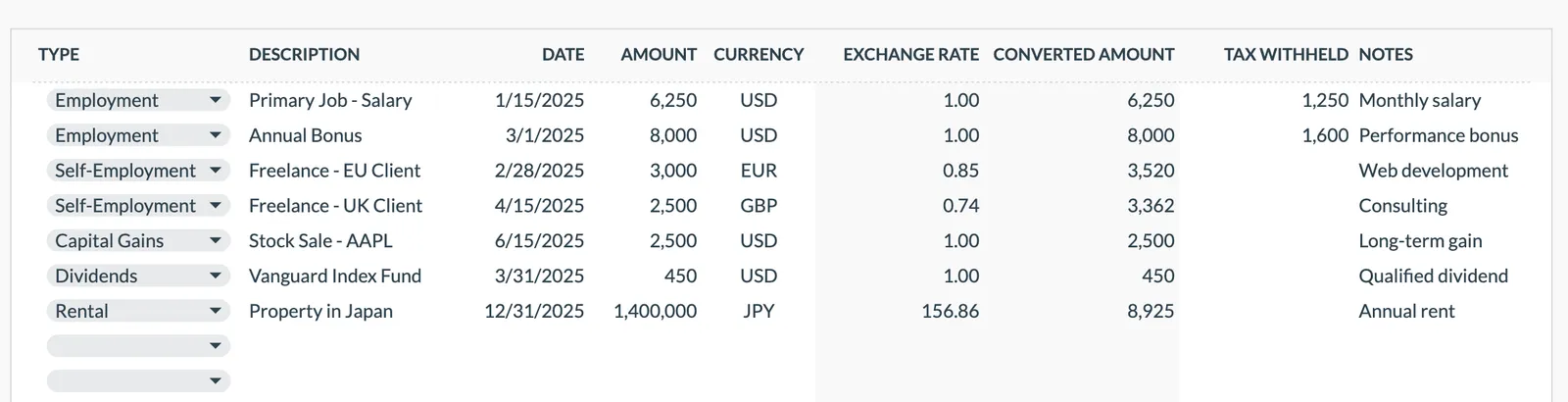
Esplora il modello per vedere come tiene traccia di redditi, detrazioni, crediti e pagamenti trimestrali stimati.
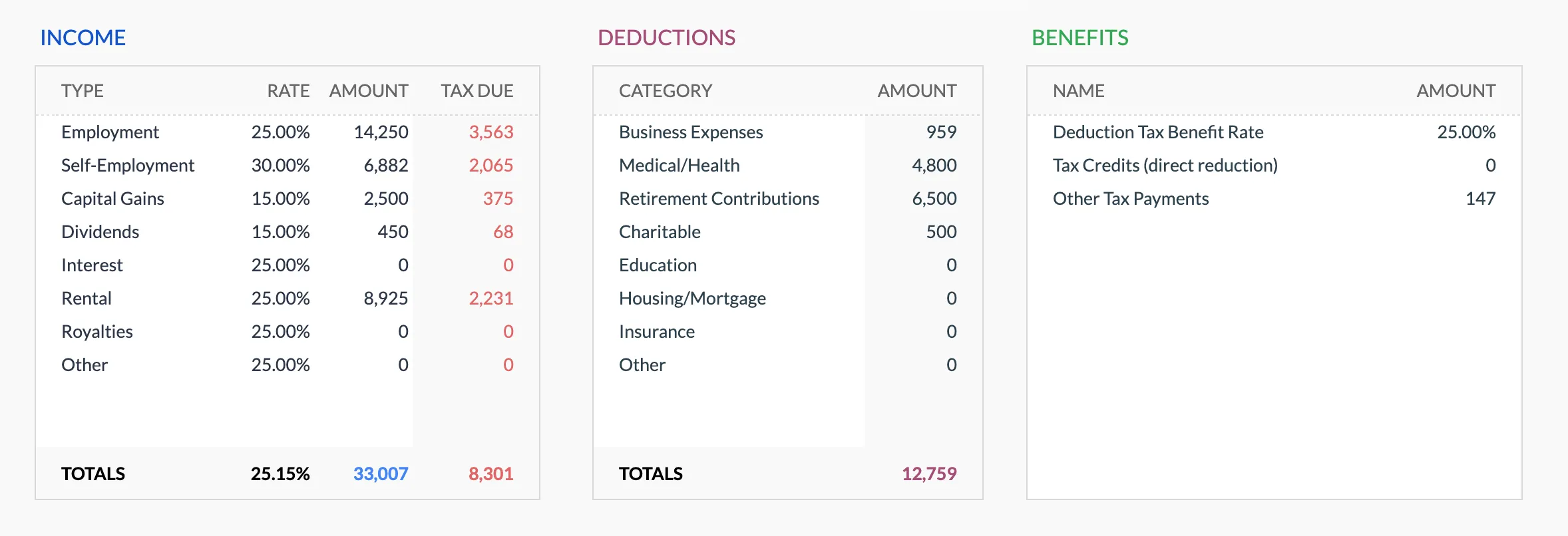
- Dashboard di riepilogo fiscale annuale
- Monitoraggio del reddito per fonte
- Organizzatore di detrazioni e crediti
- Registro dei pagamenti trimestrali
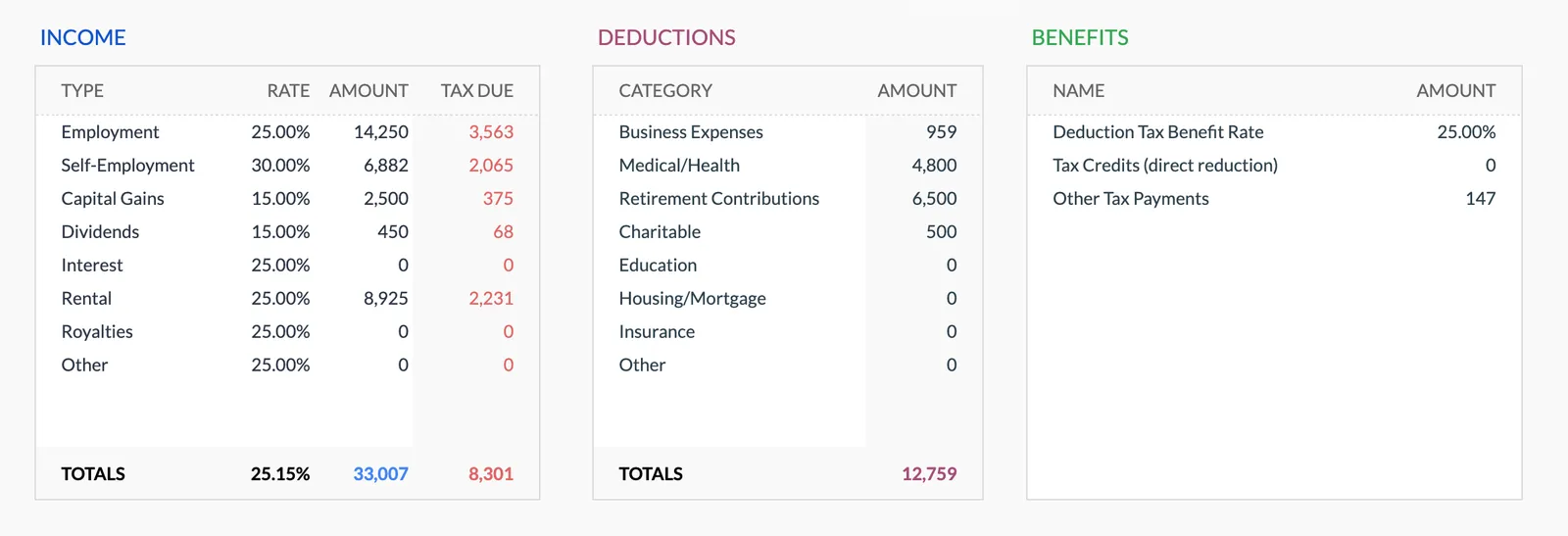
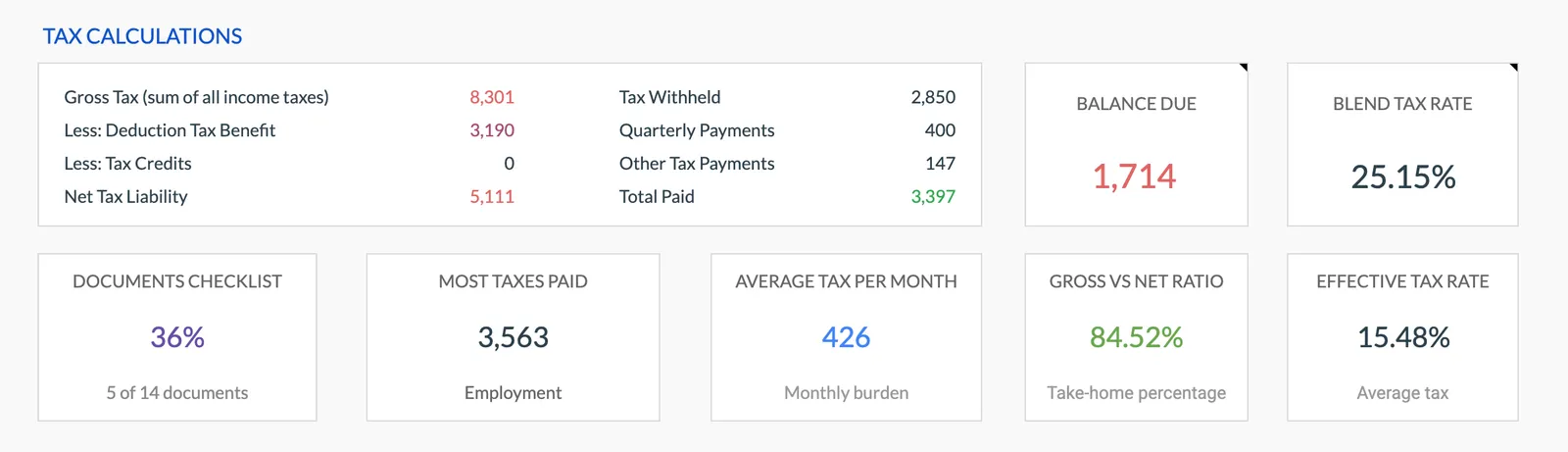
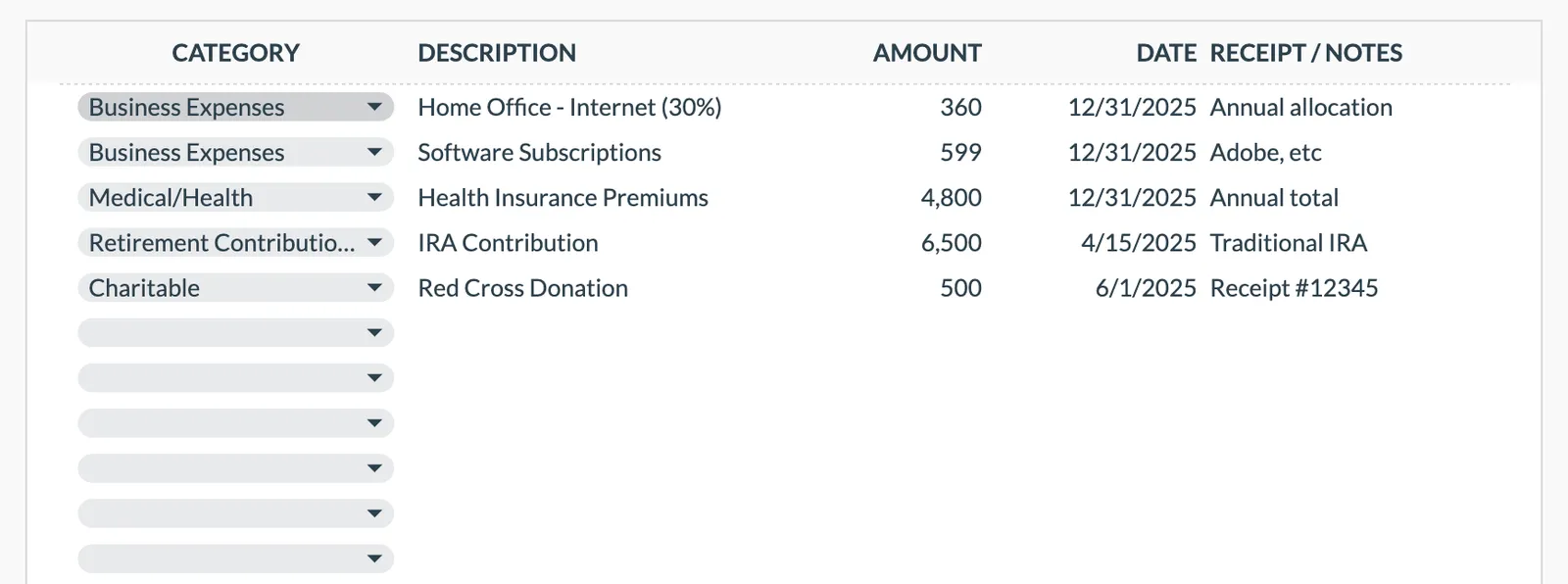
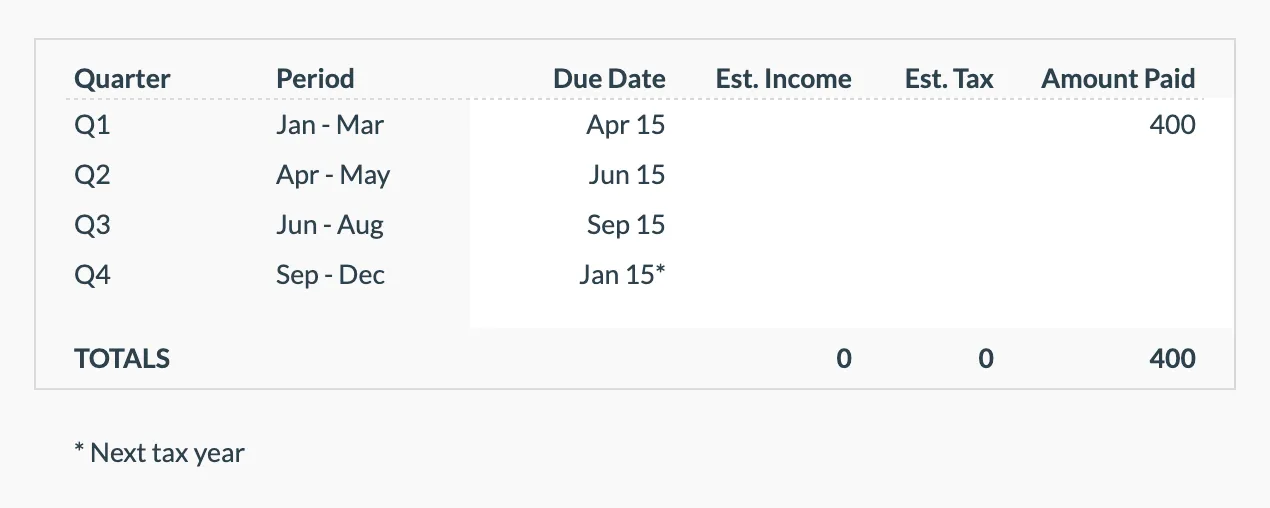
Annual tax overview with key figures
Detailed tax breakdown and projections
Track all income sources for tax purposes
Organize and track tax deductions
Plan and track quarterly estimated tax payments
Domande Frequenti
Pianificazione fiscale in New Jersey - FAQ
Qual è l'imposta sul milionario del New Jersey?
New Jersey applica un'aliquota marginale massima del 10,75% sul reddito imponibile superiore a $1 milione [1]. Questa aliquota rappresenta un salto significativo rispetto all'aliquota che si applica al reddito appena al di sotto di quella soglia. La soglia di $1 milione si applica per dichiarazione, non per persona in una dichiarazione congiunta. Per i percettori di reddito elevato il cui reddito fluttua vicino a questo livello, il salto di scaglione può modificare significativamente la fattura fiscale statale da un anno all'altro.
Come influiscono le imposte sulla proprietà del New Jersey sulla pianificazione fiscale federale?
New Jersey ha le aliquote di tassazione sulla proprietà effettive più elevate della nazione - il proprietario medio paga sostanzialmente più della media nazionale. Con il tetto della deduzione SALT federale di $10.000, molte famiglie del New Jersey raggiungono il limite solo dalle imposte sulla proprietà. Ciò significa che l'imposta sul reddito statale pagata non fornisce una detrazione federale aggiuntiva per molti residenti, rendendo utile vedere insieme gli importi delle imposte sulla proprietà e sul reddito durante la pianificazione.
Qual è l'imposta di uscita del New Jersey sulla vendita di proprietà?
Quando si vende proprietà immobiliare a New Jersey, i venditori sono tenuti a pagare un'imposta stimata alla chiusura. Questo è a volte chiamato imposta di uscita. Il pagamento è calcolato come percentuale del prezzo di vendita o del guadagno stimato, a seconda di quale sia maggiore. Si applica sia ai residenti che ai non residenti. Per i residenti che rimangono a New Jersey, il pagamento viene accreditato sulla dichiarazione fiscale statale finale - è essenzialmente un pagamento anticipato, non un'imposta aggiuntiva. Per coloro che stanno effettivamente abbandonando lo stato, garantisce che il New Jersey raccolga l'imposta sul guadagno prima che il venditore se ne vada.
New Jersey offre una detrazione dell'imposta sulla proprietà sulla dichiarazione statale?
New Jersey consente una detrazione limitata per le imposte sulla proprietà nella dichiarazione dell'imposta sul reddito statale. La detrazione è limitata a un importo stabilito, che è ben al di sotto di quello che la maggior parte dei proprietari di case paga effettivamente. Questo limite è stato un punto di discussione date le aliquote di tassazione sulla proprietà estremamente elevate dello stato. Alcuni residenti potrebbero trarre più vantaggio dal credito d'imposta sulla proprietà disponibile per i proprietari di case e gli inquilini a basso reddito.
Come tratta New Jersey il reddito da pensione?
I benefici della previdenza sociale sono completamente esentati dall'imposta statale del New Jersey. I residenti di 62 anni o più con reddito lordo al di sotto di determinati livelli possono escludere una parte del reddito da pensione, rendita e IRA. L'importo dell'esclusione è aumentato negli ultimi anni. Tuttavia, il superamento della soglia di reddito elimina completamente l'esclusione piuttosto che eliminarla gradualmente - questo effetto cliff è importante saperlo per i pensionati che gestiscono i loro livelli di reddito.
Non trovi la risposta che cerchi? Contatta il nostro team
Risorse fiscali ufficiali
Per aliquote aggiornate, moduli e scadenze di presentazione specifici per New Jersey:
Organizza la tua pianificazione fiscale per New Jersey
Acquisto una tantum. Nessun abbonamento. I tuoi dati finanziari rimangono nel tuo Google Drive.
Tax rules, rates, and contribution limits change, and official publications can themselves lag behind the law in force. We review these figures on a best-effort basis against sources we consider authoritative, but we cannot guarantee they are current, complete, or that better sources do not exist, and nothing here is tax, legal, or financial advice. For decisions, the relevant government authority is the reference. Last reviewed: August 2026.