Pennsylvania
Modello Pianificatore Fiscale per Pennsylvania
Pianificate le vostre imposte federali e statali della Pennsylvania in Google Sheets. La Pennsylvania utilizza un'aliquota fiscale statale fissa con imposte sul reddito locali aggiuntive.
In Depth
La struttura fiscale unica della Pennsylvania
Il sistema fiscale della Pennsylvania ha diverse caratteristiche che la distinguono da quasi tutti gli altri stati. L'aliquota fiscale statale fissa è bassa, ma non c'è deduzione standard o esenzione personale - l'imposta viene calcolata sul reddito lordo meno solo deduzioni specificamente consentite. Ciò significa che l'aliquota effettiva è vicina all'aliquota dichiarata per la maggior parte dei contribuenti, con meno rettifiche per ridurre il reddito imponibile rispetto agli stati che si conformano alle definizioni federali.
Lo strato dell'imposta sul reddito guadagnato locale aggiunge complessità. Quasi tutti i comuni e distretti scolastici della Pennsylvania riscuotono le proprie imposte sul reddito guadagnato, e le aliquote variano. L'imposta sui salari combinata di Filadelfia è la più alta dello stato e si applica a chiunque lavori in città, indipendentemente dal fatto che ci viva o no (i residenti pagano l'aliquota completa; i lavoratori non residenti pagano un'aliquota inferiore). Al di fuori di Filadelfia, l'EIT locale è generalmente diviso tra il comune e il distretto scolastico, con un'aliquota combinata che varia per posizione.
Per i pensionati, la Pennsylvania è notevolmente favorevole. Lo stato non tassa i benefici della previdenza sociale, i redditi pensionistici, le distribuzioni 401(k), i prelievi da IRA o la maggior parte delle altre forme di reddito da pensione. Questa esenzione generale è più ampia di quella offerta da molti altri stati. Combinato con il fatto che le imposte sul reddito guadagnato locali si applicano solo al reddito guadagnato (non al reddito da pensione), l'aliquota fiscale effettiva per i pensionati della Pennsylvania può essere vicina a zero a livello statale e locale.
Pennsylvania
Pianificazione fiscale in Pennsylvania
La Pennsylvania ha un'imposta sul reddito statale fissa più imposte sul reddito guadagnato locali nella maggior parte dei comuni. Lo stato inoltre non tassa la maggior parte dei redditi da pensione, il che è notevole per la pianificazione fiscale.
Imposta sul reddito fissa
La Pennsylvania ha un'aliquota fissa dell'imposta sul reddito del 3.07% per l'anno fiscale 2026 [1], una delle aliquote fisse più basse tra gli stati. Si applica alla maggior parte dei tipi di reddito, ma prevede regole particolari per le diverse classi di reddito.
Imposta sul reddito guadagnato locale
La maggior parte dei comuni e distretti scolastici della Pennsylvania riscuotono un'imposta sul reddito guadagnato locale con aliquote variabili. Filadelfia ha l'aliquota locale combinata più alta [2]. Questo può aumentare significativamente l'aliquota fiscale effettiva.
Redditi da pensione esenti
La Pennsylvania non tassa la maggior parte dei redditi da pensione, inclusi i benefici della previdenza sociale, i redditi pensionistici, le distribuzioni 401(k) e i prelievi da IRA [1]. Questo la rende uno degli stati più favorevoli per i pensionati.
Nessuna deduzione standard
La Pennsylvania non offre una deduzione standard o esenzioni personali nel senso tradizionale. L'imposta è calcolata sul reddito imponibile totale dopo specifiche esclusioni e deduzioni.
Ottieni il Pianificatore Fiscale Annuale
Per Iniziare
Come utilizzare il modello per le imposte della Pennsylvania
Inserire il reddito per tipo secondo il sistema di classificazione della Pennsylvania
La Pennsylvania divide il reddito in otto classi, ognuna con le proprie regole di deduzione. Mentre inserite il reddito nel modello, annotate a quale classe della Pennsylvania appartiene ciascuna fonte - compenso, interessi, dividendi, reddito commerciale e altri. Questa organizzazione aiuta nella preparazione della dichiarazione statale, poiché le perdite in una classe non possono compensare i guadagni in un'altra.
Registrate la vostra aliquota EIT locale
Cercate l'aliquota combinata dell'imposta sul reddito guadagnato locale per il vostro comune e distretto scolastico. Se lavorate a Filadelfia, annotate anche l'aliquota dell'imposta sui salari (aliquote diverse per residenti vs. non residenti). Registrate questi dati nelle note del modello insieme all'aliquota statale del 3,07%. Ricordate che le imposte locali si applicano solo al reddito guadagnato, non al reddito da investimento o da pensione.
Contrassegnate il reddito da pensione come completamente esente
La Pennsylvania non tassa i benefici della previdenza sociale, i redditi pensionistici, le distribuzioni 401(k) o i prelievi da IRA. Contrassegnate tutti i redditi da pensione come esenti dalle imposte statali nel vostro modello. Poiché le imposte sul reddito guadagnato locali escludono anche i redditi da pensione, i pensionati possono monitorare queste fonti separatamente sapendo che non hanno imposte statali e locali.
Calcolate l'imposta statale senza deduzioni
A differenza delle imposte federali dove le deduzioni riducono significativamente il reddito imponibile, la Pennsylvania consente praticamente nessuna deduzione. Applicate l'aliquota del 3,07% al vostro reddito imponibile lordo totale per classe. La sezione note del modello può monitorare questo semplice calcolo - il lato statale è molto più diretto del lato federale, anche se la regola senza deduzioni significa che la base è maggiore di quanto potreste aspettarvi.
Gestite i pagamenti stimati su tre livelli
I residenti autonomi della Pennsylvania potrebbero dover pagare imposte federali stimate, imposte statali stimate al 3,07% e imposta sul reddito guadagnato locale. Il tracker trimestrale può gestire tutti e tre. Poiché l'EIT locale è solo sul reddito guadagnato e lo stato non ha deduzioni da monitorare, i calcoli sono moltiplicazioni dirette - è il lato federale che richiede la maggior attenzione.
Guarda in Azione
Come appare il pianificatore fiscale
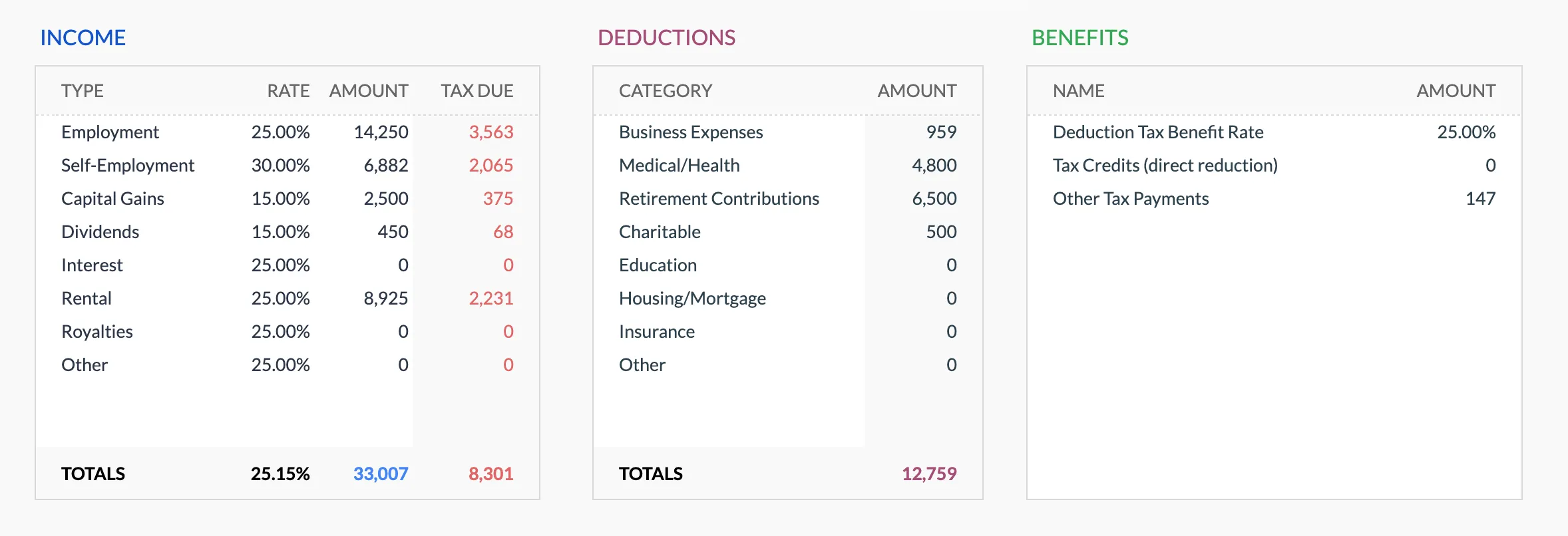
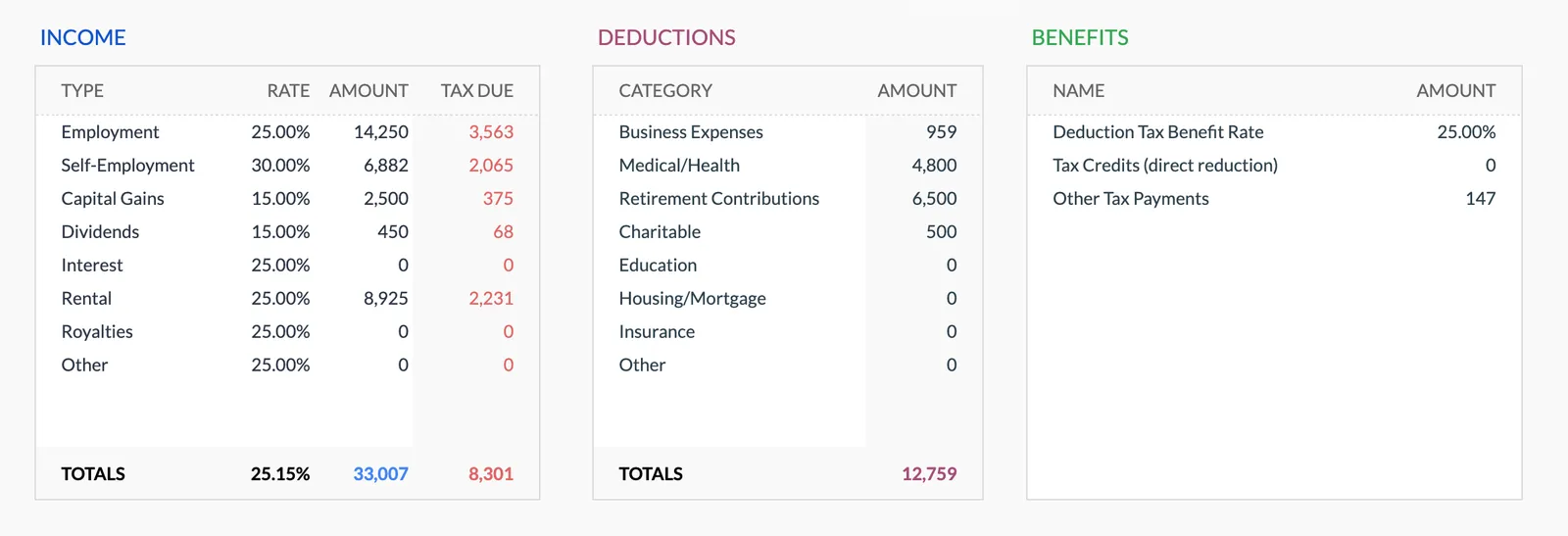
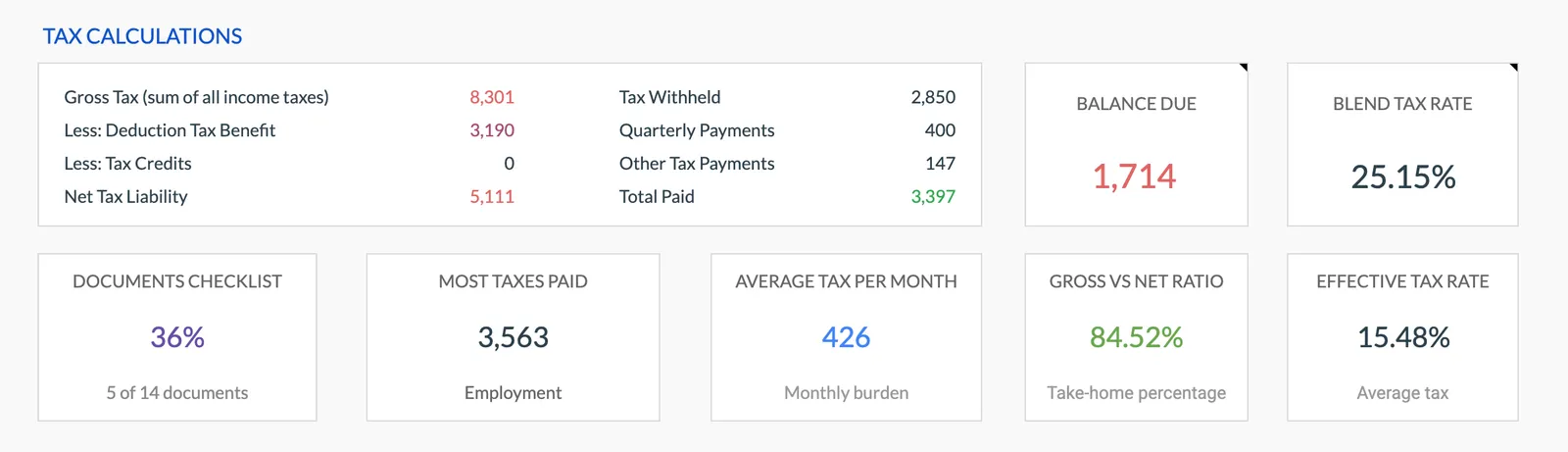
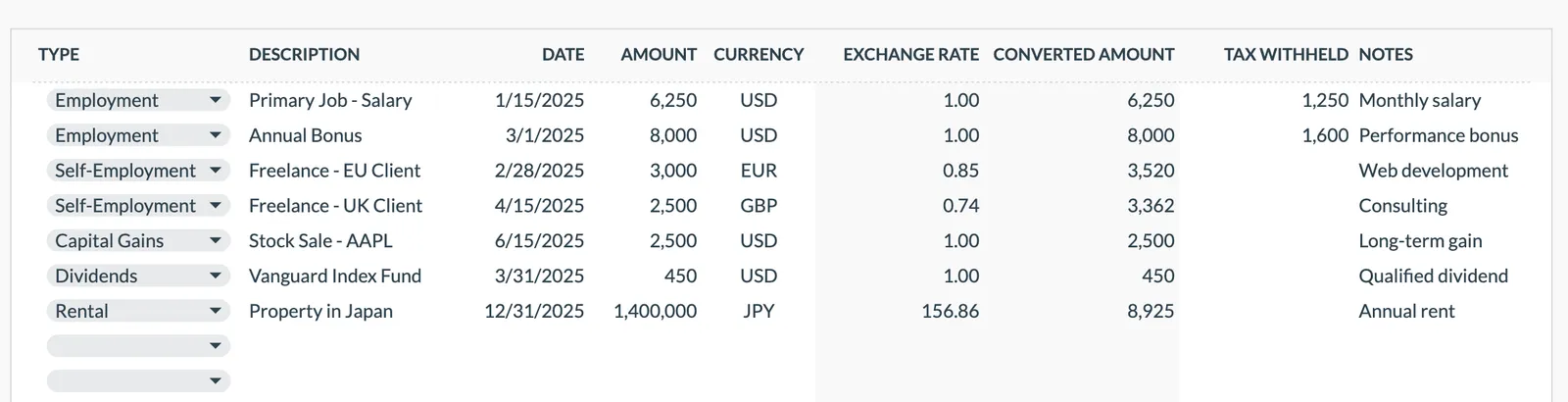
Esplora il modello per vedere come tiene traccia di redditi, detrazioni, crediti e pagamenti trimestrali stimati.
- Dashboard di riepilogo fiscale annuale
- Monitoraggio del reddito per fonte
- Organizzatore di detrazioni e crediti
- Registro dei pagamenti trimestrali
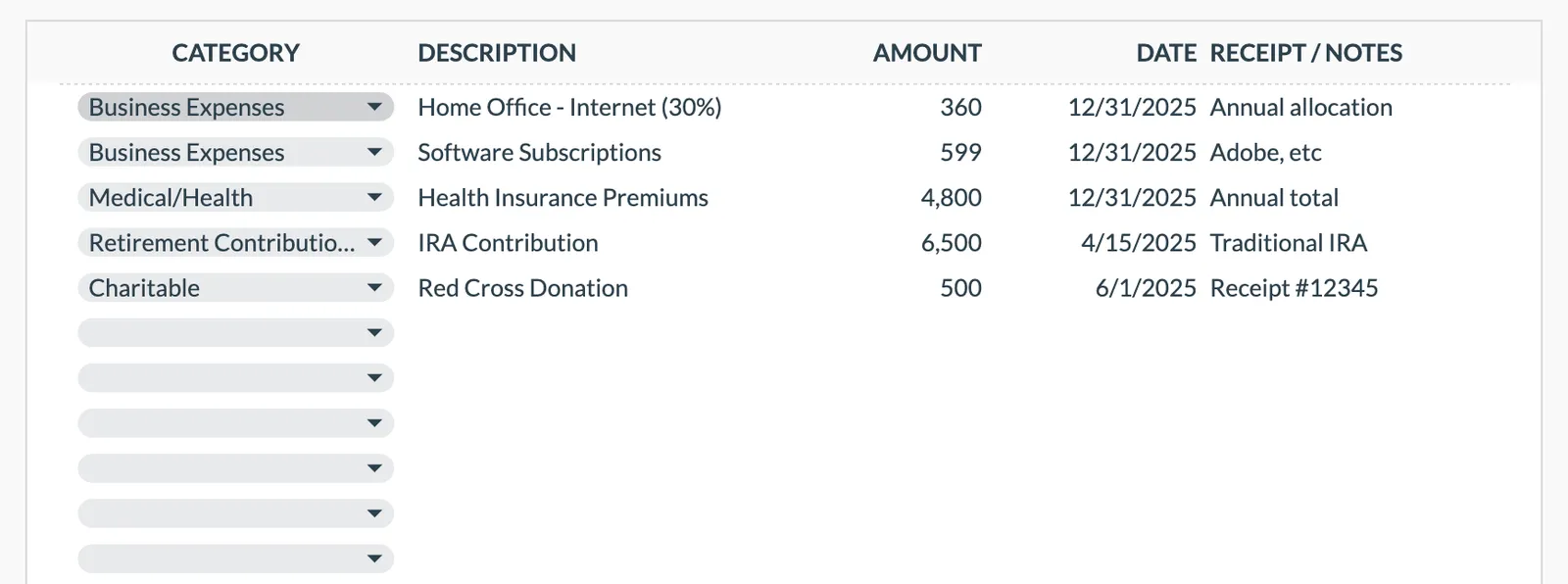
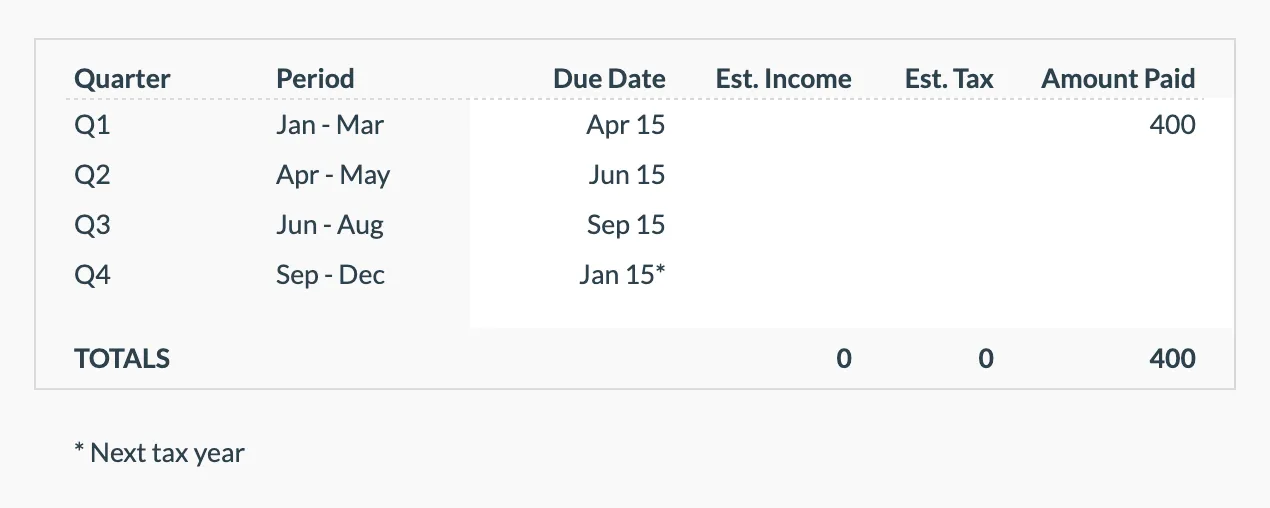
Annual tax overview with key figures
Detailed tax breakdown and projections
Track all income sources for tax purposes
Organize and track tax deductions
Plan and track quarterly estimated tax payments
Domande Frequenti
Pianificazione fiscale in Pennsylvania - FAQ
Perché l'aliquota del 3,07% della Pennsylvania viene applicata senza deduzioni o esenzioni?
La Pennsylvania calcola l'imposta statale sul reddito imponibile lordo con deduzioni molto limitate consentite - non c'è deduzione standard, nessuna esenzione personale, e solo specifiche esclusioni si applicano. L'imposta viene calcolata sull'importo totale di ogni classe di reddito (compenso, interessi, dividendi, reddito commerciale, ecc.) meno solo costi strettamente definiti. Ciò significa che l'aliquota del 3,07% si applica a una base più ampia rispetto a molti altri stati, rendendo l'aliquota fiscale effettiva più vicina all'aliquota dichiarata per praticamente tutti.
Come funziona l'imposta sul reddito guadagnato locale in Pennsylvania?
Quasi tutti i comuni e distretti scolastici della Pennsylvania riscuotono un'imposta sul reddito guadagnato locale. L'imposta sui salari combinata di Filadelfia è la più alta e si applica a chiunque lavori in città, indipendentemente dal fatto che ci viva o no (i residenti pagano l'aliquota completa; i lavoratori non residenti pagano un'aliquota inferiore). Al di fuori di Filadelfia, l'EIT locale è generalmente diviso tra il vostro comune di residenza e il distretto scolastico, con un'aliquota combinata che varia per posizione. Le imposte locali si applicano solo al reddito guadagnato - non al reddito da investimento o da pensione.
È vero che la Pennsylvania non tassa nessun reddito da pensione?
La Pennsylvania non tassa i benefici della previdenza sociale, i redditi pensionistici o le distribuzioni 401(k) e i prelievi da IRA effettuati dopo l'età pensionabile, insieme alla maggior parte degli altri redditi da piani pensionistici qualificati, anche se le distribuzioni anticipate possono essere tassabili. Nemmeno le imposte locali sul reddito guadagnato si applicano ai redditi da pensione, poiché riguardano solo il reddito guadagnato. Questo significa che l'aliquota fiscale statale e locale effettiva per i pensionati della Pennsylvania senza reddito guadagnato può essere sostanzialmente pari a zero.
Come funziona il sistema di classificazione del reddito della Pennsylvania?
La Pennsylvania divide il reddito in otto classi: compenso, interessi, dividendi, reddito commerciale netto, guadagni netti da proprietà, affitti/royalties, reddito da eredità/trust e reddito da gioco. Ogni classe ha le proprie regole su quali costi possono essere compensati contro di essa. Le perdite in una classe generalmente non possono compensare il reddito in un'altra. Questo sistema basato su classi è diverso da molti altri stati che iniziano con il reddito lordo rettificato federale come un'unica cifra.
Il modello può gestire la struttura fiscale unica della Pennsylvania?
Il modello è progettato per la pianificazione fiscale federale con monitoraggio completo del reddito. Per la Pennsylvania, le categorie di reddito nel modello possono essere mappate alle otto classi di reddito dello stato utilizzando la sezione note. Poiché l'aliquota del 3,07% si applica a tutte le classi in modo uniforme (senza scaglioni), il calcolo statale è semplice una volta identificato l'importo imponibile in ciascuna classe.
Non trovi la risposta che cerchi? Contatta il nostro team
Risorse fiscali ufficiali
Per aliquote aggiornate, moduli e scadenze di presentazione specifici per Pennsylvania:
Sources
Organizza la tua pianificazione fiscale per Pennsylvania
Acquisto una tantum. Nessun abbonamento. I tuoi dati finanziari rimangono nel tuo Google Drive.
Tax rules, rates, and contribution limits change, and official publications can themselves lag behind the law in force. We review these figures on a best-effort basis against sources we consider authoritative, but we cannot guarantee they are current, complete, or that better sources do not exist, and nothing here is tax, legal, or financial advice. For decisions, the relevant government authority is the reference. Last reviewed: August 2026.